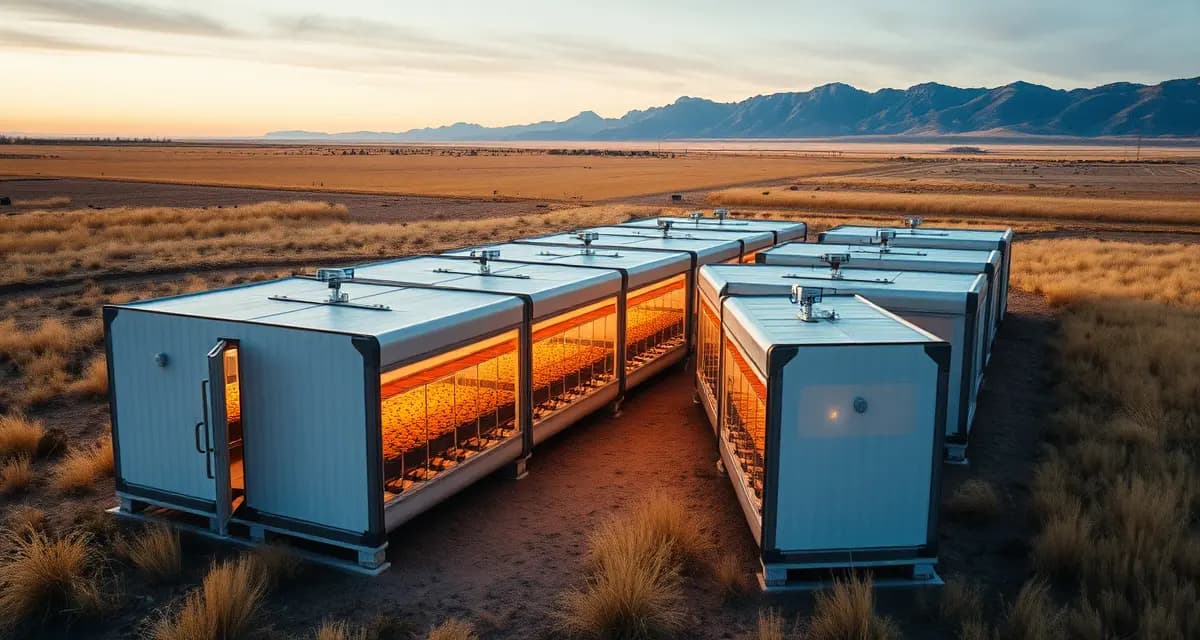
Cricket Farming in Wyoming: High Plains Climate and WLSB Requirements
Cheyenne, Wyoming averages just 14 inches of annual precipitation, creating severe humidity challenges for cricket farming. Combined with cold winters (Cheyenne January average low 17°F) and Cheyenne's 6,100-foot elevation, Wyoming cricket farming combines two of the most demanding management challenges simultaneously: the cold climate requirements of Zone 5 and the active humidification demands of high-altitude arid conditions.
TL;DR
- Cheyenne, Wyoming averages just 14 inches of annual precipitation, creating severe humidity challenges for cricket farming
- Casper (Zone 4b, 5,100 ft): Wyoming's second city
- Jackson Hole (Zone 4a-4b, 6,100 ft): Mountain resort area
- Laramie (Zone 4b-5a, 7,200 ft): High elevation
- Local county permits: Wyoming's 23 counties have individual permit frameworks
- Cheyenne (Zone 5a, 6,100 ft): Cold winters, very dry (14 inches annual precipitation), consistent Wyoming winds
- Casper (Zone 4b, 5,100 ft): Wyoming's second city
Casper (Zone 4b, 5,100 ft): Wyoming's second city.
- Semi-arid. notable heating requirements October through May.
Jackson Hole (Zone 4a-4b, 6,100 ft): Mountain resort area.
- The luxury resort economy creates a premium food market, but extreme cold makes cricket farming infrastructure very expensive.
Laramie (Zone 4b-5a, 7,200 ft): High elevation.
- Agricultural zoning across most of Wyoming is permissive.
- Federal FSMA compliance: Required for interstate cricket flour shipments.
- The practical result: your climate infrastructure investment per bin is higher in Wyoming than in most other states.
- This is not a market for operators who want to minimize facility investment.
Wyoming Regulations for Insect Farming
Cricket farming in Wyoming falls under the Wyoming Livestock Board (WLSB).
Key requirements:
- WLSB livestock producer registration: Wyoming's Livestock Board classifies insect farming under its livestock producer framework. Contact WLSB for current insect producer registration requirements.
- Wyoming Department of Agriculture food safety license: Required for cricket flour or human-consumption insect products.
- Wyoming Department of Health: May have additional food manufacturing requirements.
- Local county permits: Wyoming's 23 counties have individual permit frameworks. Agricultural zoning across most of Wyoming is permissive.
- Federal FSMA compliance: Required for interstate cricket flour shipments.
See cricket farm zoning and permits guide for national context and high-altitude-cricket-farm-management for the altitude-specific management guide.
Wyoming Climate: Cold, Dry, and High
Wyoming is Zone 3-5, with most of the state's populated areas falling in Zone 4b-5b:
Cheyenne (Zone 5a, 6,100 ft): Cold winters, very dry (14 inches annual precipitation), consistent Wyoming winds. January average low 17°F. The state capital and largest city.
Casper (Zone 4b, 5,100 ft): Wyoming's second city. Even colder than Cheyenne. January average low 12°F. Semi-arid. notable heating requirements October through May.
Jackson Hole (Zone 4a-4b, 6,100 ft): Mountain resort area. Very cold and snowy winters. The luxury resort economy creates a premium food market, but extreme cold makes cricket farming infrastructure very expensive.
Laramie (Zone 4b-5a, 7,200 ft): High elevation. Cold and dry. Home to University of Wyoming.
For a Cheyenne or Casper operation:
- Winter heating: $250-500/month for well-insulated 500 sq ft facility during coldest months
- Humidification: Year-round, continuous (14-20% ambient RH typical)
- Altitude combustion heating: Size propane/gas heaters 15% above sea-level calculations
The Dual Management Challenge
The combination of cold + arid requires managing two systems simultaneously that don't typically coexist:
Cold climate heating is energy-intensive and requires redundant systems, temperature monitoring, and overnight protection protocols.
Arid climate humidification requires continuous equipment operation and more frequent hydration source refreshing than at lower altitudes.
The practical result: your climate infrastructure investment per bin is higher in Wyoming than in most other states. This is not a market for operators who want to minimize facility investment. It's a market where the economics work if your production is large enough to spread infrastructure cost over many bins, or where the local market supports premium pricing that offsets higher operating costs.
Wyoming Market Opportunities
Jackson Hole luxury market: Jackson Hole is a unique US food market, high-income resort visitors, premium restaurants, a culture of sustainability and outdoor values. The market is small but extremely high-priced. Local producers can command notable premiums.
University of Wyoming research: UW Laramie has biology, food science, and agriculture programs with research cricket demand.
Regional feeder market: Wyoming's geographic position enables distribution to Montana, Colorado, South Dakota, and Nebraska within 1-2 day ground shipping for a modest regional feeder market.
Outdoor recreation industry: Wyoming's hunting and outdoor recreation economy creates demand for high-protein, sustainable food products, cricket flour fits this market positioning.
Track Wyoming operations in CricketOps.
Frequently Asked Questions
What does Wyoming require to operate an insect farm?
Wyoming insect farms contact the Wyoming Livestock Board for registration under the livestock producer framework. Human food production requires a Wyoming Department of Agriculture food safety license. Contact WLSB for current requirements.
How do I manage a cricket farm in Wyoming's cold and dry climate?
Wyoming requires concurrent management of cold climate and arid climate challenges. For cold: R-49+ ceiling insulation, R-25+ walls, primary heating sized for -20°F design temperatures (western Wyoming may see colder), backup heating with fuel diversity (propane for power outage protection), and overnight temperature monitoring with SMS alerts. For aridity: continuous commercial-grade humidification to bring 15-20% ambient RH to 50-60% target, every 24-36 hour hydration source refresh schedules, and nearly sealed incubation containers with internal moisture sources. Budget for both heating and humidification as year-round operating costs.
Is there a market for insect protein in Wyoming?
Wyoming's direct market is limited by the state's small population (580,000). The most realistic market opportunities are: Jackson Hole's premium resort food market (small but very high-priced), University of Wyoming research supply, and regional feeder cricket distribution to neighboring states. Wyoming is not a high-volume market state, but the Jackson Hole premium and the research market create viable niches for a well-positioned small operation.
How does CricketOps help track the metrics described in this article?
CricketOps provides bin-level logging for the variables that drive production outcomes -- feed inputs, environmental conditions, mortality events, and harvest results. Rather than maintaining these records in separate spreadsheets, you can view performance trends across bins and over time to identify which operational variables correlate with better outcomes in your specific facility.
Where can I find industry benchmarks to compare my operation's performance?
The North American Coalition for Insect Agriculture (NACIA) publishes periodic industry reports with production benchmarks. University extension programs in agricultural states, including the University of Georgia and University of Florida IFAS, occasionally publish insect farming production data. Industry conferences hosted by the Entomological Society of America and the Insects to Feed the World symposium series are additional sources of peer benchmarking data.
What is the biggest operational mistake cricket farmers make in their first year?
Expanding bin count before achieving consistent FCR and mortality targets in existing bins is the most common and costly first-year mistake. At 5-10 bins, problems are manageable. At 30-50 bins, the same proportional problems represent much larger financial losses. Most experienced cricket farmers recommend holding expansion until you have three consecutive production cycles hitting your FCR and mortality targets.
Sources
- Food and Agriculture Organization of the United Nations (FAO) -- Edible Insects: Future Prospects for Food and Feed Security
- North American Coalition for Insect Agriculture (NACIA)
- Entomological Society of America
- University of Georgia Cooperative Extension
- Journal of Insects as Food and Feed (Wageningen Academic Publishers)
Get Started with CricketOps
The practices covered in this article are easier to apply consistently when they are supported by organized production data. CricketOps gives cricket farmers the tools to track what matters -- by bin, by batch, and over time. Start your next production cycle in CricketOps and see how organized data changes the way you manage your operation.