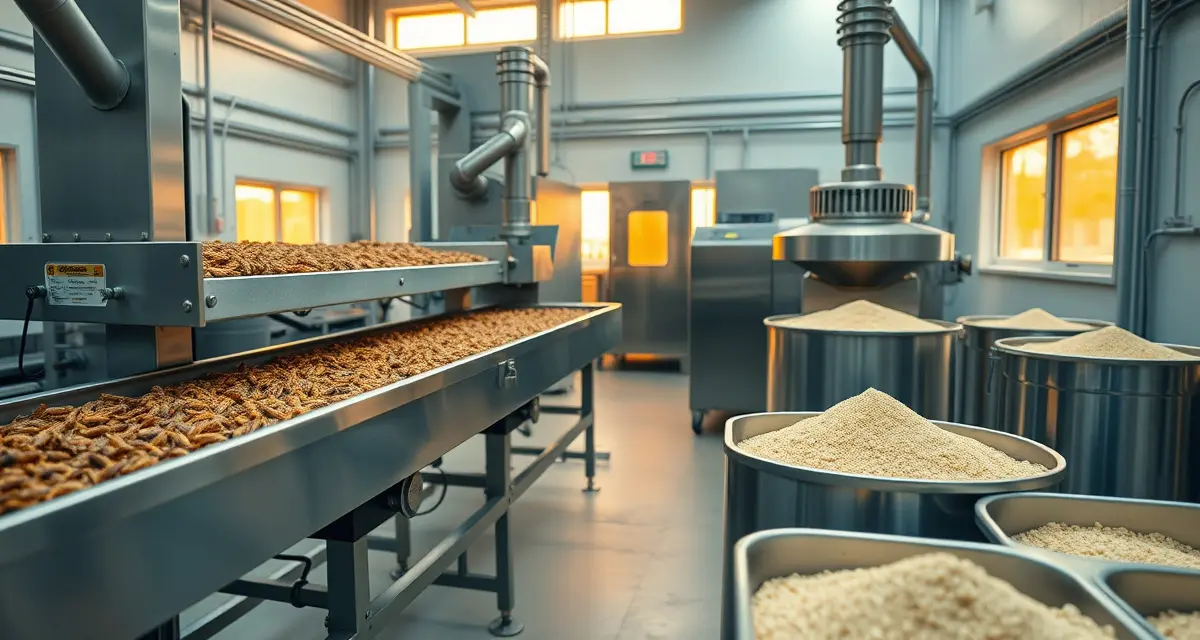
Cricket Flour Production Basics: From Live Crickets to Finished Flour
Converting live crickets into shelf-stable cricket flour involves several sequential steps, each of which affects your final yield, protein content, and product quality. Understanding the full process before you build your operation helps you make better equipment decisions and set realistic yield expectations.
Gut Clearing (Pre-Processing Fast)
The first step happens before any processing begins. A 24-hour fast, sometimes called gut clearing or purging, allows crickets to empty their digestive tracts. This reduces the microbial load in the final product, improves flavor (frass in the gut contributes off-flavors), and reduces potential contamination in your processing environment.
During gut clearing, remove all feed from the bins and provide only fresh water or water gel. Maintain normal temperature so crickets remain active and continue to pass gut contents. After 24 hours, the crickets are ready for harvest.
Some operations run a shorter fast (12-16 hours) if scheduling is tight. Longer fasts (48+ hours) are unnecessary and increase mortality and weight loss without meaningful additional benefit.
Harvesting and Killing
The most common commercial kill method is freezing. Move live crickets from the grow-out bins into sealed bags or containers and transfer to a chest freezer or walk-in freezer. Crickets are ectotherms and go dormant as temperature drops, then die without distress at freezing temperatures. This is generally considered a humane method and is widely accepted by retailers and consumers.
Freezing typically takes 2-4 hours to ensure complete kill throughout a large bag of crickets. Don't overpack bags, as crickets in the center of a dense pack take longer to freeze and may not be fully killed at the same time as those on the outside.
Some operations use CO2 stunning before freezing to accelerate the process and reduce post-handling movement. CO2 exposure also has a short-term antimicrobial effect on the surface of the crickets.
After freezing, weigh your harvest. This live-weight-frozen number is your primary yield metric. Track it against your projected yield per batch in CricketOps to measure how accurately you're estimating production output.
Washing
After freezing, most processors wash the crickets to remove surface contaminants. A rinse under clean cold water is standard. Some operations add a brief soak in a mild acidified solution (a dilute citric acid rinse) which helps reduce surface microbial counts. Rinse thoroughly afterward.
Water quality for washing should meet potable water standards. If you're producing for human consumption, this is a critical control point in your HACCP plan. Document your water source, testing frequency, and any treatment you use.
Drying
After washing, crickets need to be dried to reduce water activity to a level that prevents microbial growth and allows milling. There are two main approaches:
Oven drying: Spread washed crickets in a single layer on food-safe trays and dry in a commercial convection oven at 200-250F (93-120C) for 1-3 hours depending on batch size, crickets' initial moisture content, and oven airflow. The goal is a final moisture content of 5-8%. Crickets should be brittle and uniform in color (tan to light brown) when properly dried. Higher temperatures can degrade heat-sensitive nutrients and affect flavor.
Freeze-drying: Freeze-drying produces a higher-quality product with better nutrient retention and longer shelf life. It's significantly more expensive in equipment cost and operating time. Freeze-dried cricket flour typically commands a premium price and is used by brands targeting the sports nutrition or premium food segment.
Weigh the dried crickets. You'll lose roughly 60-70% of the pre-dry weight as moisture is removed. This is a predictable loss you can account for in your yield calculations. A batch that weighs 50 kg post-freeze will yield approximately 15-20 kg of dried product.
Milling
Dried crickets mill readily in commercial food-grade grinders or hammer mills. The goal is a uniform fine powder with particle size appropriate for your application. Most food applications call for a flour that passes through a 200-micron screen, though some applications tolerate coarser texture.
Milling generates heat, which can affect product quality if you're running large batches continuously. Some mills have cooling systems or batch milling approaches to manage heat buildup. Monitor your mill temperature and let it rest between batches if needed.
After milling, sieve the flour to remove any remaining wing fragments, leg segments, or larger particles that didn't fully mill. These can affect texture in finished food products.
Yield and Protein Content
A typical yield from live weight to dry flour is 20-25%. A 100 kg live-weight harvest produces approximately 20-25 kg of finished flour. Yields vary with cricket size at harvest, fat content (which affects drying efficiency), and milling parameters.
Protein content of cricket flour is typically 55-65% on a dry matter basis, depending on species, feed, and age at harvest. Fat content runs 10-20%. Crickets harvested at peak adult stage before significant egg development have different nutritional profiles than those harvested slightly later. If you're selling to buyers with protein specification requirements, test each batch lot and retain the Certificate of Analysis with your batch records.
See cricket harvest planning for how to time harvest to hit your yield and quality targets, and cricket flour FDA compliance for what food safety documentation your processing facility needs.