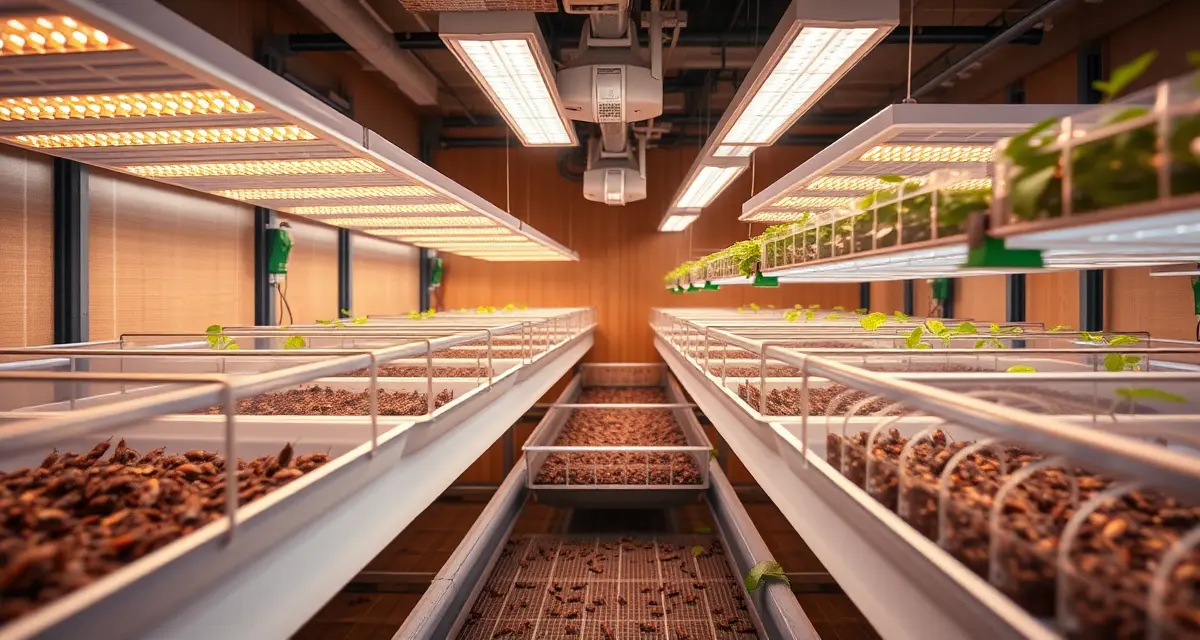
Urban Cricket Farming in Nashville: Music City's Food Scene and Cricket Protein
Nashville's restaurant industry grew by 40% between 2020 and 2025. That growth rate, in one of the most visited cities in the US, has created genuine demand for specialty local food ingredients that didn't exist at meaningful scale five years ago. Cricket protein is emerging in this environment, positioned as the kind of novel, sustainable ingredient that Nashville's growing culinary scene is receptive to.
TL;DR
- Nashville's restaurant industry grew by 40% between 2020 and 2025, creating genuine demand for specialty local food ingredients.
- Tennessee does not have insect-specific farming regulations -- operations are licensed under general food manufacturing and agricultural frameworks.
- Nashville's growing culinary scene and high visitor volume create above-average demand for novel, locally-sourced food ingredients.
- A Davidson County food manufacturing permit and Tennessee Department of Agriculture registration are required for commercial cricket flour operations.
- Nashville's food cost premium for local and sustainable ingredients runs 15-25% above commodity pricing, which supports profitable feeder and flour pricing.
- The Nashville Farmers' Market accepts specialty food vendors and represents a viable direct-to-consumer channel for small cricket flour operations.
Nashville City Permits for Cricket Farming
Cricket farming in Nashville requires working through Metro Nashville government permits plus Tennessee state requirements:
Metro Nashville Department of Codes and Building Safety: Building permits for food manufacturing use in appropriate industrial or commercial zones go through Metro Codes.
Metro Nashville Davidson County Health Department: Food manufacturing permits are issued through Metro Public Health for any cricket flour or edible insect product production.
Tennessee Department of Agriculture (TDA): State-level agricultural producer registration and food manufacturer licensing apply. See cricket-farming-tennessee for Tennessee state-level guidance.
Zoning: Nashville's industrial zones (IND, IND-A) and certain commercial zones permit food manufacturing. The Germantown industrial area, MetroCenter, and portions of East Nashville's industrial corridor have appropriate zoning for food manufacturing operations.
See cricket farm zoning and permits guide for national context.
Nashville Climate: Zone 7 Southern Management
Nashville is Zone 7a, with a genuinely favorable climate for cricket farming:
Winter: Nashville's January average low is 28°F. Cold enough to require heating from November through March, but modest compared to northern states. Budget $100-200/month for heating a well-insulated 500 sq ft facility during the coldest months.
Summer: Nashville summers are warm (July average high 91°F) and moderately humid (65-75% RH). Summer cooling and basic humidity management are needed. Mini-split heat pump systems provide efficient cooling and heating from a single system.
Spring and fall: Nashville's transitional seasons include dramatic temperature swings. Late fall cold fronts can drop temperatures rapidly. Temperature monitoring with overnight alerts is standard operating procedure.
The overall picture: Nashville's climate is manageable at modest infrastructure cost, far lower than Chicago, Minneapolis, or Phoenix. The annual climate control cost for a Nashville cricket farm sits in the middle of the US range, without the extremes that make northern or desert states so challenging.
The Nashville Market Opportunity
Nashville's food scene transformation is genuine and continuing:
Restaurant growth: A 40% restaurant industry growth in five years brings both direct demand from new restaurants and a media environment that amplifies food innovation stories.
Music industry events: Nashville's entertainment and events industry, concerts, conventions, music festivals, creates food service demand for novel and premium ingredients at scale.
Corporate relocation: Nashville has attracted major corporate relocations (Amazon HQ2 operations, multiple tech company headquarters) bringing in populations from coastal cities with established insect protein familiarity.
Tennessee AgriVenture incentive: Tennessee's 2024 AgriVenture program incentivizes insect protein production. A Nashville-based urban farm might qualify for these incentives. See cricket-farming-tennessee for details on the program.
Whole Foods and specialty retail: Nashville has multiple Whole Foods and specialty grocery stores serving the growing health-conscious professional population.
Track Nashville operations in CricketOps.
Frequently Asked Questions
Can I run a cricket farm in Nashville?
Yes. Nashville's Metro government permits food manufacturing in industrial and appropriate commercial zones. Industrial zones in areas like Germantown industrial, MetroCenter, and East Nashville's industrial areas are appropriate. You need Metro Nashville Department of Codes building permits, Metro Public Health food manufacturing permits, and Tennessee state permits.
What permits does Nashville require for an urban cricket farm?
Nashville requires: zoning compliance confirmation through Metro Nashville Department of Codes and Building Safety, Metro Nashville Davidson County Health Department food manufacturing permit, and Tennessee state TDA agricultural producer registration plus food manufacturer licensing. Contact Metro Public Health's Environmental Health Division first, they provide the clearest guidance on the permitting sequence for new food manufacturing operations.
Is Nashville's food scene interested in cricket protein?
Yes, and the interest is growing. Nashville's 40% restaurant industry growth 2020-2025 has brought chefs and food buyers from markets where insect protein is more established (NYC, LA, Chicago). The corporate relocations to Nashville have also brought populations familiar with and receptive to alternative protein. Specialty grocery retailers in Nashville have been expanding their alternative protein offerings. The combination of growing local market demand and Tennessee's state incentives for insect production makes Nashville one of the more favorable emerging urban markets for cricket protein.
How does CricketOps help track the metrics described in this article?
CricketOps provides bin-level logging for the variables that drive production outcomes -- feed inputs, environmental conditions, mortality events, and harvest results. Rather than maintaining these records in separate spreadsheets, you can view performance trends across bins and over time to identify which operational variables correlate with better outcomes in your specific facility.
Where can I find industry benchmarks to compare my operation's performance?
The North American Coalition for Insect Agriculture (NACIA) publishes periodic industry reports with production benchmarks. University extension programs in agricultural states, including the University of Georgia and University of Florida IFAS, occasionally publish insect farming production data. Industry conferences hosted by the Entomological Society of America and the Insects to Feed the World symposium series are additional sources of peer benchmarking data.
What is the biggest operational mistake cricket farmers make in their first year?
Expanding bin count before achieving consistent FCR and mortality targets in existing bins is the most common and costly first-year mistake. At 5-10 bins, problems are manageable. At 30-50 bins, the same proportional problems represent much larger financial losses. Most experienced cricket farmers recommend holding expansion until you have three consecutive production cycles hitting your FCR and mortality targets.
Sources
- Food and Agriculture Organization of the United Nations (FAO) -- Edible Insects: Future Prospects for Food and Feed Security
- North American Coalition for Insect Agriculture (NACIA)
- Entomological Society of America
- University of Georgia Cooperative Extension
- Journal of Insects as Food and Feed (Wageningen Academic Publishers)
Get Started with CricketOps
The practices covered in this article are easier to apply consistently when they are supported by organized production data. CricketOps gives cricket farmers the tools to track what matters -- by bin, by batch, and over time. Start your next production cycle in CricketOps and see how organized data changes the way you manage your operation.