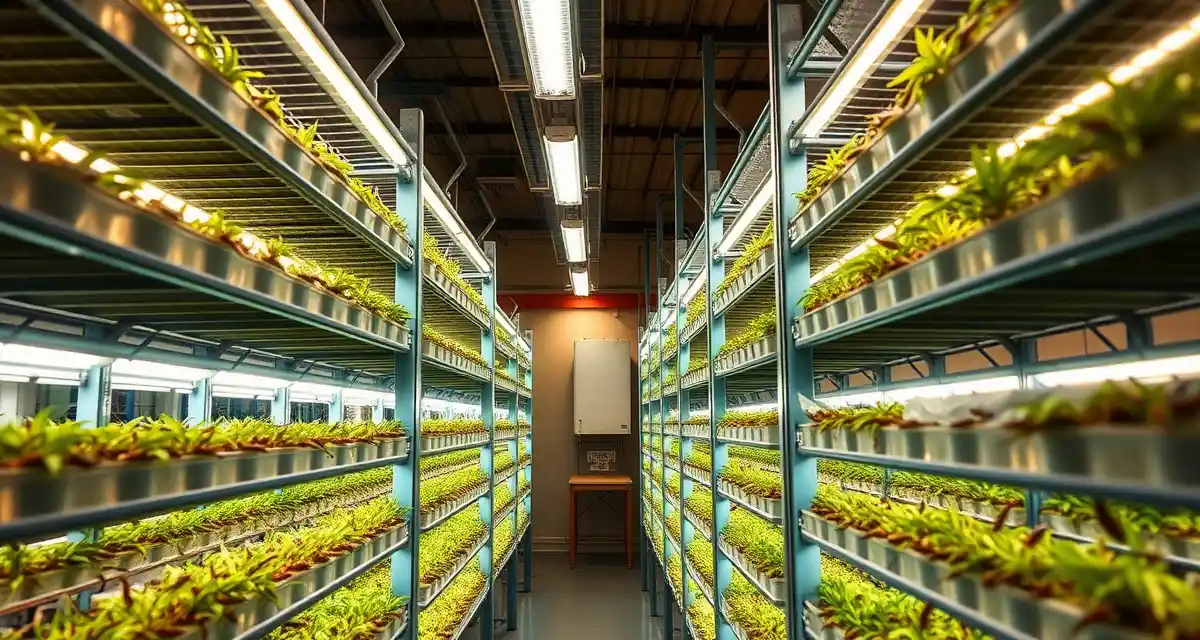
Urban Cricket Farming in Charlotte: Southeast Financial Hub City Guide
Charlotte's food and beverage industry grew by 60% between 2020 and 2025, creating new demand for alternative proteins from a food scene that's maturing rapidly. Charlotte is now the fastest-growing major US city, and that growth is bringing a food culture increasingly open to sustainability-forward food innovation - which is exactly the market environment where cricket flour brands find their first customers.
Charlotte is also located at the heart of the Southeast US, within a 4-hour drive of Raleigh, Atlanta, Greenville, and Columbia. A Charlotte-based cricket farm has geographic access to one of the largest regional markets in the Southeast with manageable logistics distances.
TL;DR
- Charlotte's food and beverage industry grew by 60% between 2020 and 2025, creating new demand for alternative proteins from a food scene that's maturing rapidly
- Charlotte is also located at the heart of the Southeast US, within a 4-hour drive of Raleigh, Atlanta, Greenville, and Columbia
- Contact the Charlotte-Mecklenburg Planning Department at 704-336-2205 for address-specific zoning guidance
- Summer (June-August): Hot and humid, with temperatures regularly reaching 90-95F
- Charlotte's food and beverage industry has grown 60% since 2020, and the food scene is actively seeking locally sourced, sustainability-forward ingredients as the city develops its food identity
- At 5-10 bins, problems are manageable
- At 30-50 bins, the same proportional problems represent much larger financial losses
Fall and spring: Pleasant moderate temperatures that reduce climate management costs significantly.
- Charlotte's Unified Development Ordinance (UDO) covers zoning for the city and much of Mecklenburg County.
- Insect farming is classified as an agricultural production activity eligible in industrial and agricultural zoning districts.
- Mechanical cooling is necessary but Charlotte summers are less extreme than Florida or Texas.
Charlotte Zoning and Permits
Charlotte-Mecklenburg has a unified planning structure. Charlotte's Unified Development Ordinance (UDO) covers zoning for the city and much of Mecklenburg County. Insect farming is classified as an agricultural production activity eligible in industrial and agricultural zoning districts.
Contact the Charlotte-Mecklenburg Planning Department at 704-336-2205 for address-specific zoning guidance. The city has been receptive to urban agriculture activities as part of its sustainability agenda.
Required permits:
- Zoning confirmation for agricultural use in your specific zone
- Charlotte-Mecklenburg Building Standards permits for facility modifications
- Mecklenburg County Health Department permits for food processing
- North Carolina Department of Agriculture and Consumer Services registration
- FDA facility registration for food processing
Climate Management for Charlotte Cricket Farms
Charlotte's Piedmont climate is mild by southeastern standards with distinct seasonality:
Summer (June-August): Hot and humid, with temperatures regularly reaching 90-95F. Mechanical cooling is necessary but Charlotte summers are less extreme than Florida or Texas. Humidity ranges from 65-80%.
Fall and spring: Pleasant moderate temperatures that reduce climate management costs significantly. September through November and March through May are low-cost operating months.
Winter (December-February): Mild by Midwest or Northeast standards. Average lows in the mid-30s. Supplemental heating is required but the heating season is shorter and milder than northern cities. Occasional ice storms can disrupt operations for a day or two.
Charlotte's climate is generally favorable for cricket farming with a shorter and milder heating season than cities further north, and less extreme summer heat than Sun Belt cities further south.
Charlotte's Growing Market
Food and restaurant scene: Charlotte's rapid growth has brought a sophisticated food culture with significant investment in restaurant concepts, food halls (7th Street Market, Camp North End), and chef-driven establishments. This growing food scene represents opportunities for cricket flour as both a restaurant ingredient and a local food brand.
Pet stores: Charlotte's large and growing population has expanded the pet store market. The area's warm climate supports a meaningful reptile-keeping community.
Natural food retail: Charlotte has seen significant growth in natural food retail, including Whole Foods, Sprouts, and a growing network of independent health food stores. This retail landscape provides viable placement opportunities for a local cricket flour brand.
Corporate market: Charlotte is a major US banking and financial services hub. Corporate dining programs at the major banks and financial institutions are worth considering as a foodservice buyer channel for sustainably produced protein products.
For production management, see cricket farm management. For permitting, see cricket farm zoning permits.
Frequently Asked Questions
Can I run a cricket farm in Charlotte, North Carolina?
Yes. Charlotte's Unified Development Ordinance permits agricultural production in industrial and agricultural zoning districts. Mecklenburg County's planning structure provides relatively clear guidance for novel agricultural businesses. North Carolina Department of Agriculture and Consumer Services registration is required for commercial agricultural producers. Contact the Charlotte-Mecklenburg Planning Department at 704-336-2205 for address-specific zoning guidance as your starting point.
What permits does Charlotte require for an urban insect farm?
Required permits include zoning confirmation from Charlotte-Mecklenburg Planning, building permits for facility modifications, and a Charlotte business license. North Carolina Department of Agriculture registration is required for commercial agricultural production. Mecklenburg County Health Department permits apply for food processing operations. Federal FDA facility registration is required for human food products. Start with the Planning Department for zoning, then work through state and county requirements based on your specific operation type.
Is Charlotte's food scene interested in cricket protein?
Charlotte's food and beverage industry has grown 60% since 2020, and the food scene is actively seeking locally sourced, sustainability-forward ingredients as the city develops its food identity. Cricket protein aligns well with Charlotte's food innovation narrative - local production, environmental sustainability, novel ingredient. Several Charlotte restaurants and food entrepreneurs have expressed interest in alternative proteins as menu differentiators. A locally-produced cricket flour from Charlotte carries a "Made in Charlotte" story that resonates with the city's growing food community and its identity as a sophisticated, growth-oriented metro area.
How does CricketOps help track the metrics described in this article?
CricketOps provides bin-level logging for the variables that drive production outcomes -- feed inputs, environmental conditions, mortality events, and harvest results. Rather than maintaining these records in separate spreadsheets, you can view performance trends across bins and over time to identify which operational variables correlate with better outcomes in your specific facility.
Where can I find industry benchmarks to compare my operation's performance?
The North American Coalition for Insect Agriculture (NACIA) publishes periodic industry reports with production benchmarks. University extension programs in agricultural states, including the University of Georgia and University of Florida IFAS, occasionally publish insect farming production data. Industry conferences hosted by the Entomological Society of America and the Insects to Feed the World symposium series are additional sources of peer benchmarking data.
What is the biggest operational mistake cricket farmers make in their first year?
Expanding bin count before achieving consistent FCR and mortality targets in existing bins is the most common and costly first-year mistake. At 5-10 bins, problems are manageable. At 30-50 bins, the same proportional problems represent much larger financial losses. Most experienced cricket farmers recommend holding expansion until you have three consecutive production cycles hitting your FCR and mortality targets.
Sources
- Food and Agriculture Organization of the United Nations (FAO) -- Edible Insects: Future Prospects for Food and Feed Security
- North American Coalition for Insect Agriculture (NACIA)
- Entomological Society of America
- University of Georgia Cooperative Extension
- Journal of Insects as Food and Feed (Wageningen Academic Publishers)
Get Started with CricketOps
The practices covered in this article are easier to apply consistently when they are supported by organized production data. CricketOps gives cricket farmers the tools to track what matters -- by bin, by batch, and over time. Start your next production cycle in CricketOps and see how organized data changes the way you manage your operation.