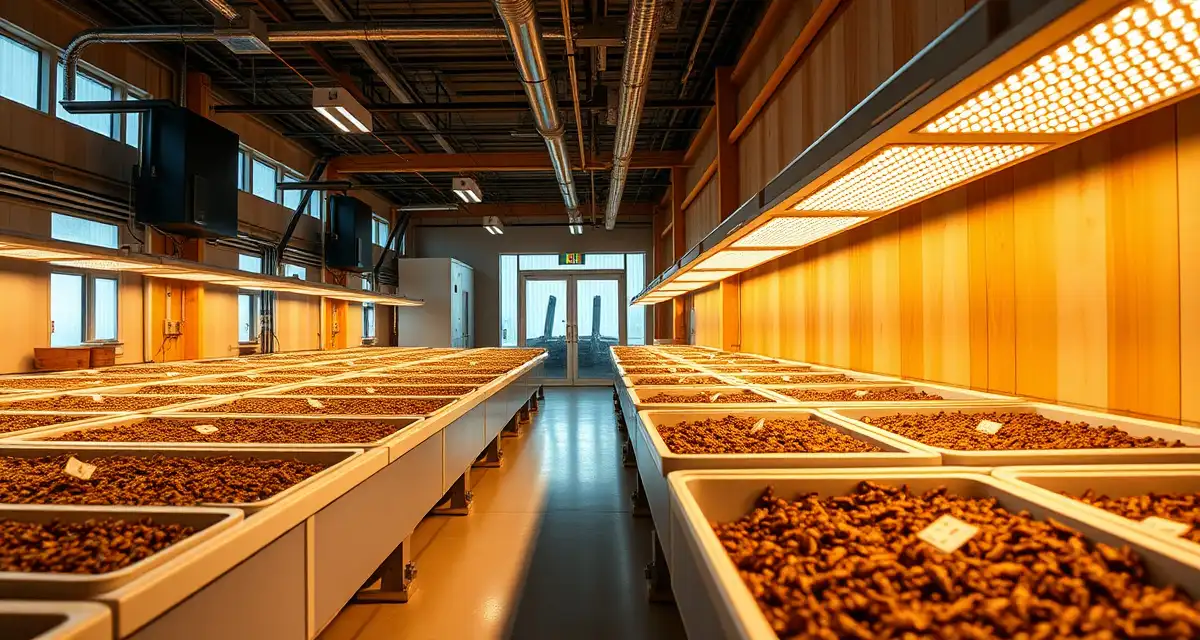
Cricket Farming in Tennessee: Southeast Production Hub and TDA Requirements
Tennessee launched a state agriculture incentive for insect protein producers in 2024 under its AgriVenture program. That makes Tennessee one of only a handful of US states actively incentivizing insect farming, which tells you something meaningful about where the state's agricultural development priorities are heading.
TL;DR
- Tennessee launched a state agriculture incentive for insect protein producers in 2024 under its AgriVenture program
- Middle Tennessee (Nashville, Zone 7a): Nashville's climate is genuinely favorable
- January average lows of 28°F are cold but manageable, and the area has 215+ frost-free days per year
- Summer temperatures reach 90-92°F with moderate humidity (65-70% RH)
- Tennessee's 2024 AgriVenture program includes insect protein producers as an eligible alternative agriculture category
- The city's restaurant industry growth of 40% between 2020-2025 has created genuine new demand for specialty and alternative protein ingredients
- AgriVenture incentive program: Tennessee's 2024 AgriVenture program includes insect protein producers among eligible alternative agriculture ventures
Middle Tennessee (Nashville, Zone 7a): Nashville's climate is genuinely favorable.
- January average lows of 28°F are cold but manageable, and the area has 215+ frost-free days per year.
- Summer temperatures reach 90-92°F with moderate humidity (65-70% RH).
- Tennessee's 2024 AgriVenture program includes insect protein producers as an eligible alternative agriculture category.
- The city's restaurant industry growth of 40% between 2020-2025 has created genuine new demand for specialty and alternative protein ingredients.
- Contact TDA for current incentive eligibility and application details.
- Local permits: Tennessee's counties have varying agricultural permit requirements.
Tennessee Regulations for Cricket Farming
Cricket farming in Tennessee falls under the Tennessee Department of Agriculture (TDA).
Key requirements:
- TDA Division of Animal Industries registration: Tennessee commercial cricket operations register with the Division of Animal Industries under the state's livestock producer framework.
- TDA Regulatory Services Division food manufacturer license: Required for any facility producing cricket flour or other human-consumption products.
- AgriVenture incentive program: Tennessee's 2024 AgriVenture program includes insect protein producers among eligible alternative agriculture ventures. Contact TDA for current incentive eligibility and application details.
- Local permits: Tennessee's counties have varying agricultural permit requirements. Rural counties in Middle and East Tennessee are generally straightforward for agricultural operations.
- Federal FSMA compliance: Required for interstate cricket flour shipments.
See cricket farm zoning and permits guide for national comparative context.
Tennessee Climate: Southeast Advantage
Tennessee spans Zones 6-7, making it one of the more favorable climate zones in the eastern US for cricket farming:
East Tennessee (Knoxville, Zone 6b-7a): The foothills of the Appalachians create moderate winters (January average low 30°F) and warm, humid summers. Lower altitude areas around Knoxville have a relatively mild climate. Some winter heating is needed from November through March, but not the extreme cold of northern states.
Middle Tennessee (Nashville, Zone 7a): Nashville's climate is genuinely favorable. January average lows of 28°F are cold but manageable, and the area has 215+ frost-free days per year. Summer temperatures reach 90-92°F with moderate humidity (65-70% RH). The climate supports year-round indoor production with moderate heating and cooling costs.
West Tennessee (Memphis, Zone 7a-7b): The warmest part of Tennessee, with Memphis approaching a coastal climate in its mildness. Very low winter heating costs. Memphis's Mississippi Delta position gives it access to both Tennessee markets and the broader Mid-South.
The Nashville Food Scene
Nashville's restaurant industry grew by 40% between 2020 and 2025. That's not a small market movement, it's a transformation. Nashville has become one of the most dynamic food cities in the US, with a rapidly growing high-end restaurant scene, notable food media presence, and a population that now includes a large professional and creative class with premium food preferences.
Nashville cricket market opportunities:
- Restaurant supply: Nashville's high-end restaurant scene includes multiple establishments that have expressed interest in locally-sourced alternative protein ingredients.
- Specialty retail: The city's specialty grocery sector has expanded alongside its population growth.
- Food startups: Nashville's business climate has attracted food entrepreneurs, creating early-adopter demand for local insect protein.
Beyond Nashville, Tennessee's position in the Southeast creates distribution reach to Georgia, Alabama, Kentucky, and North Carolina within 1-day ground shipping.
Tennessee's State Incentive for Insect Farming
The AgriVenture incentive program is worth investigating seriously. State agricultural incentives for insect producers are rare in the US, and Tennessee's program represents a meaningful acknowledgment that insect protein is a real agricultural sector deserving of development support.
The specific incentives available may include grants, low-interest loans, technical assistance, or market development support. Contact TDA's Agricultural Development division for current program details, eligibility requirements, and application timelines.
Track Tennessee operations and incentive program compliance documentation in CricketOps.
Frequently Asked Questions
What does Tennessee require to register an insect farm?
Tennessee insect farms register with the TDA Division of Animal Industries under the state's livestock producer framework. Human food production requires a TDA Regulatory Services Division food manufacturer license. Contact TDA directly for current requirements and to inquire about eligibility for the AgriVenture incentive program.
Are there TN state incentives for starting a cricket farm?
Yes. Tennessee's 2024 AgriVenture program includes insect protein producers as an eligible alternative agriculture category. This is one of the few US state programs specifically supporting insect farming development. Contact the TDA Agricultural Development division for current incentive details, eligibility requirements, and application timelines. Available support may include grants, loans, or technical assistance.
Is Nashville a good market for cricket flour?
Nashville is one of the most rapidly growing food markets in the South. The city's restaurant industry growth of 40% between 2020-2025 has created genuine new demand for specialty and alternative protein ingredients. The combination of a growing professional population, an expanding health-food retail sector, and a food culture increasingly open to alternative ingredients makes Nashville a strong emerging market for cricket flour and whole cricket products.
How does CricketOps help track the metrics described in this article?
CricketOps provides bin-level logging for the variables that drive production outcomes -- feed inputs, environmental conditions, mortality events, and harvest results. Rather than maintaining these records in separate spreadsheets, you can view performance trends across bins and over time to identify which operational variables correlate with better outcomes in your specific facility.
Where can I find industry benchmarks to compare my operation's performance?
The North American Coalition for Insect Agriculture (NACIA) publishes periodic industry reports with production benchmarks. University extension programs in agricultural states, including the University of Georgia and University of Florida IFAS, occasionally publish insect farming production data. Industry conferences hosted by the Entomological Society of America and the Insects to Feed the World symposium series are additional sources of peer benchmarking data.
What is the biggest operational mistake cricket farmers make in their first year?
Expanding bin count before achieving consistent FCR and mortality targets in existing bins is the most common and costly first-year mistake. At 5-10 bins, problems are manageable. At 30-50 bins, the same proportional problems represent much larger financial losses. Most experienced cricket farmers recommend holding expansion until you have three consecutive production cycles hitting your FCR and mortality targets.
Sources
- Food and Agriculture Organization of the United Nations (FAO) -- Edible Insects: Future Prospects for Food and Feed Security
- North American Coalition for Insect Agriculture (NACIA)
- Entomological Society of America
- University of Georgia Cooperative Extension
- Journal of Insects as Food and Feed (Wageningen Academic Publishers)
Get Started with CricketOps
The practices covered in this article are easier to apply consistently when they are supported by organized production data. CricketOps gives cricket farmers the tools to track what matters -- by bin, by batch, and over time. Start your next production cycle in CricketOps and see how organized data changes the way you manage your operation.