Vertical Integration for Cricket Farms: From Farm to Consumer Brand
Cricket farms that develop their own branded cricket flour line earn an average of $18/lb vs $6/lb for bulk wholesale. That gap -- nearly 3x the revenue per pound -- is what vertical integration delivers. It's not a marginal improvement; it's a different business.
This guide covers when vertical integration makes sense, what it requires operationally, and how to think about the investment in your own processing and branding.
TL;DR
- Cricket farms that develop their own branded cricket flour earn an average of $18/lb vs $6/lb for bulk wholesale -- nearly 3x the revenue per pound.
- Vertical integration requires: a food-grade processing area, a milling or drying system, FDA facility registration, a food safety plan, and label compliance.
- The minimum viable processing setup for cricket flour (freeze-dryer or convection dryer plus hammer mill) costs $15,000-$40,000 for small commercial scale.
- FDA food facility registration is required before you can sell processed cricket flour -- the registration and food safety plan development typically take 60-90 days.
- Direct-to-consumer flour pricing of $40-$70/kg positions your product at 4-7x the per-kg revenue of bulk live cricket wholesale.
- The investment in vertical integration only makes sense if you have consistent production volume -- the processing equipment has fixed overhead that requires throughput to justify.
What Vertical Integration Means for a Cricket Farm
A vertically integrated cricket farm doesn't just grow insects and sell them wholesale. It processes its own flour, develops its own label, and sells through retail, food service, or direct-to-consumer channels.
The value chain looks like this:
- Wholesale only: You sell live or frozen crickets to a processor at $5-$7/lb. The processor captures the margin of everything downstream.
- Partially integrated: You dry and mill your own flour but sell it in bulk to a food manufacturer. You capture some processing margin but not the branded premium.
- Fully integrated: You produce flour, develop a consumer brand, and sell through retail or DTC. You capture the full $15-$22/lb consumer-facing value of cricket flour.
Vertically integrated operations achieve 2.8x higher revenue per pound of cricket produced because they own each step of the value chain rather than selling their raw material at the bottom of it.
When to Consider Vertical Integration
Vertical integration isn't the right move for every stage. It requires capital, regulatory registration, and operational capacity that a 10-bin startup doesn't have.
The typical integration decision point comes when:
- You've stabilized production at 30+ bins with consistent FCR and die-off rates
- You have reliable harvest volume (2,000+ lbs/year of live weight) that can support a processing operation
- You've been selling wholesale long enough to understand your production cost baseline
- You have access to a commercial kitchen or small processing space, or can build one
Before this point, vertical integration usually means trying to run two businesses at once without being good at either.
The Processing Step: From Live Cricket to Flour
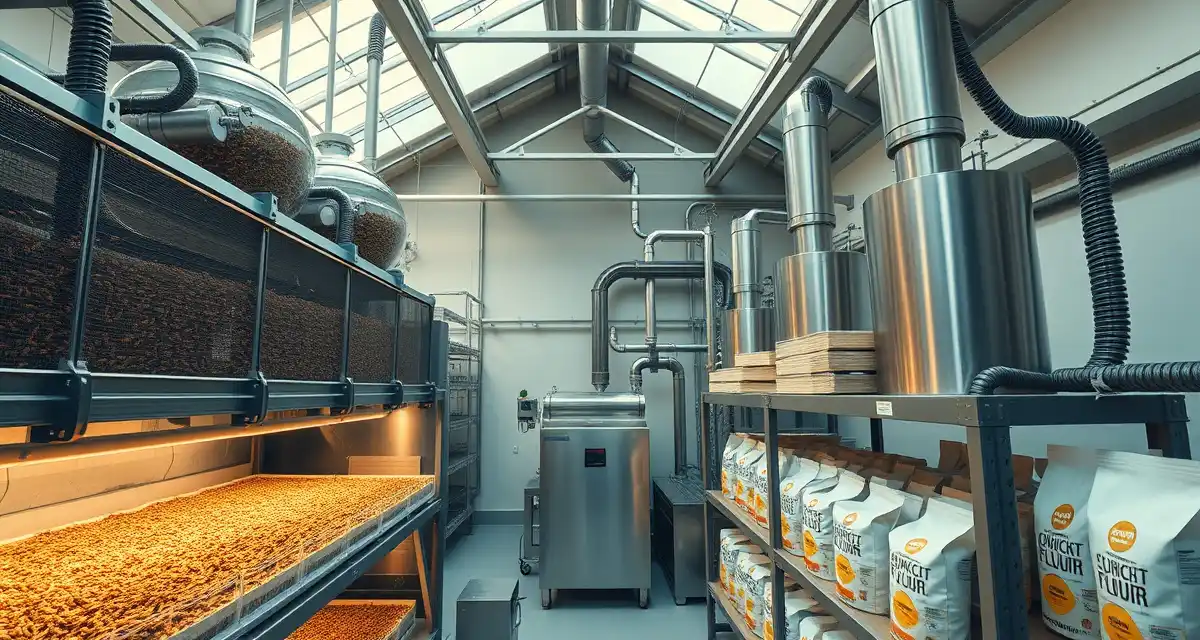
Processing your own flour adds several steps between harvest and product:
- Kill step: Blanching, freezing, or dry heat to achieve food-safe pathogen reduction
- Drying: Reducing moisture to below 8% for shelf stability
- Milling: Grinding to a fine powder suitable for food applications
- Sifting: Optional step to remove coarse chitin particles
- Packaging: Into retail-appropriate units with FDA-compliant labeling
Each step requires equipment, standard operating procedures, and documentation. If you're producing flour for retail or food service sale, you'll need FDA facility registration under FSMA and a written food safety plan. See the cricket flour business guide for the full regulatory picture.
The Branding and Sales Step
Processing flour is the operational part. Branding is the strategic part. A commodity flour sold in bulk to other manufacturers doesn't capture the premium -- a branded product positioned for the natural food consumer does.
Your brand investment involves:
- Label design and compliance: FDA-required nutritional facts panel, ingredient declaration, allergen statement, and net weight. Cricket flour triggers crustacean shellfish allergen labeling requirements.
- Brand positioning: Are you targeting athletes (protein angle), sustainability-focused consumers (environmental angle), or natural food enthusiasts (whole food ingredient angle)?
- Channel strategy: Natural food retail, specialty grocery, Amazon, Shopify DTC, or food service. Each has different margin and volume profiles.
The cricket farm profitability guide covers channel margin comparisons in detail. The short version: DTC delivers the highest margin per unit but requires marketing investment; retail delivers volume with lower margin.
What Vertical Integration Requires From Your Management System
Running a vertically integrated operation means tracking two production stages, not one. Your CricketOps setup needs to capture:
- Farm-side: Colony health, FCR, die-off rates, harvest volumes by batch
- Processing-side: Lot-level traceability (which batches went into which flour lots), kill step monitoring records, drying parameters, yield from live weight to finished flour
The traceability connection between farm batch and finished flour lot is a regulatory requirement, not just a nice-to-have. If there's a quality issue with a flour lot, you need to trace it back to the source batch to understand whether it was a farming problem or a processing problem.
Frequently Asked Questions
When should a cricket farm invest in its own processing and branding?
The right time is when you've stabilized production at 30+ bins with consistent, documented performance over at least 6-12 months. Before that point, adding processing and branding creates two unstable businesses running simultaneously. After that point, the revenue per pound improvement from direct flour sales -- $18/lb vs $6/lb for bulk wholesale -- justifies the processing investment and the additional regulatory complexity of FSMA registration and food safety plan development.
What is the ROI of vertical integration for a cricket farm?
A 30-bin operation producing 4,000 lbs/year of live-weight crickets (roughly 1,000 lbs of finished flour) at $6/lb wholesale generates $6,000/year in flour revenue. At $18/lb for a branded product, the same volume generates $18,000/year -- a $12,000 annual difference. Processing equipment (dryer, mill, packaging) typically runs $15,000-$40,000 for a small-scale setup, suggesting a 1-3 year payback depending on volume and processing efficiency. The higher your volume, the faster the ROI.
Does adding a branded product line require separate FDA registration?
Yes. If you're selling cricket flour as a human food product, your processing facility must register with FDA under the Bioterrorism Act and comply with FSMA Preventive Controls for Human Food, which requires a written food safety plan. This registration applies to your processing operation -- if your grow facility and processing facility are in the same building, a single registration typically covers both. If they're separate locations, each needs its own registration. You should also obtain a new facility registration if you've been operating only as a grow operation without food-grade registration.
How does CricketOps help track the metrics described in this article?
CricketOps provides bin-level logging for the variables that drive production outcomes -- feed inputs, environmental conditions, mortality events, and harvest results. Rather than maintaining these records in separate spreadsheets, you can view performance trends across bins and over time to identify which operational variables correlate with better outcomes in your specific facility.
Where can I find industry benchmarks to compare my operation's performance?
The North American Coalition for Insect Agriculture (NACIA) publishes periodic industry reports with production benchmarks. University extension programs in agricultural states, including the University of Georgia and University of Florida IFAS, occasionally publish insect farming production data. Industry conferences hosted by the Entomological Society of America and the Insects to Feed the World symposium series are additional sources of peer benchmarking data.
What is the biggest operational mistake cricket farmers make in their first year?
Expanding bin count before achieving consistent FCR and mortality targets in existing bins is the most common and costly first-year mistake. At 5-10 bins, problems are manageable. At 30-50 bins, the same proportional problems represent much larger financial losses. Most experienced cricket farmers recommend holding expansion until you have three consecutive production cycles hitting your FCR and mortality targets.
Sources
- Food and Agriculture Organization of the United Nations (FAO) -- Edible Insects: Future Prospects for Food and Feed Security
- North American Coalition for Insect Agriculture (NACIA)
- Entomological Society of America
- University of Georgia Cooperative Extension
- Journal of Insects as Food and Feed (Wageningen Academic Publishers)
Get Started with CricketOps
The practices covered in this article are easier to apply consistently when they are supported by organized production data. CricketOps gives cricket farmers the tools to track what matters -- by bin, by batch, and over time. Start your next production cycle in CricketOps and see how organized data changes the way you manage your operation.