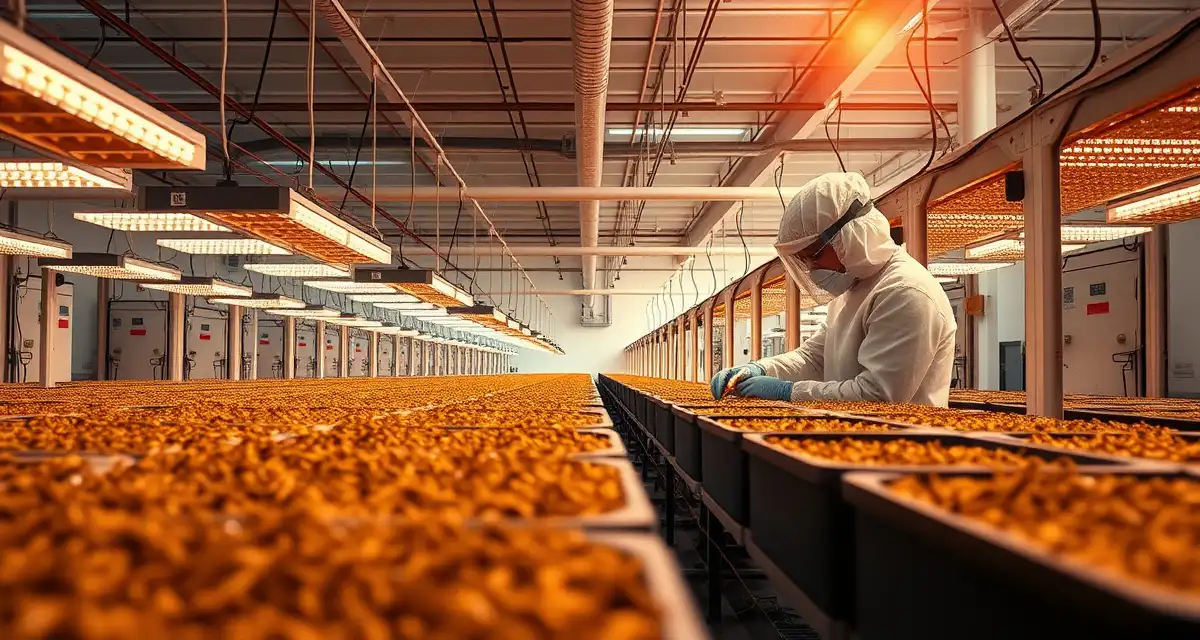
Cricket Farm Loans and Financing: Options for Starting and Growing
USDA Farm Service Agency microloans of up to $50,000 are available to new cricket farm operators as beginning farmers. Most cricket farm operators don't know this. They assume agricultural financing is only for traditional farm operations, or that they'd have to be a large-scale producer to qualify.
This guide covers the specific loan programs and financing options available to cricket farm operators in 2026, what each one requires, and how to pursue them.
TL;DR
- USDA Farm Service Agency microloans of up to $50,000 are available to new cricket farm operators as beginning farmers.
- Loan amounts up to $5 million.
- SBA 504 loans: Primarily for major equipment and real estate purchases.
- The most relevant for new operators is the FSA Microloan Program, which provides loans up to $50,000 specifically for beginning farmers and non-traditional agricultural operations.
- Beginning farmer status (farming for fewer than 10 years) provides access to preferential interest rates and lower down payment requirements across these programs.
- Cricket farms structured as small businesses (LLC, S-corp) can access SBA 7(a) and SBA Microloan programs through SBDC connections.
- They assume agricultural financing is only for traditional farm operations, or that they'd have to be a large-scale producer to qualify.
- FSA offices process applications at the county level, and building a relationship with your local FSA loan officer is the first step.
USDA Farm Service Agency (FSA) Loan Programs
FSA is the primary federal lender for agricultural businesses that can't access conventional financing at reasonable terms. Cricket farms qualify as agricultural operations under FSA's classification framework, which opens several loan programs.
Microloan Program (up to $50,000):
FSA microloans are specifically designed for beginning farmers, small operations, and non-traditional agricultural enterprises. Cricket farms fit this profile precisely. Microloans have a simplified application process compared to standard FSA loans and can be used for:
- Operating expenses (feed, packaging, supplies)
- Small equipment purchases
- Land improvements or facility preparation
- Working capital
Interest rates for FSA microloans are typically well below commercial rates. The application requires a basic business plan, financial statements, and documentation of your farming operation.
Operating Loans (up to $400,000 for direct loans):
FSA direct operating loans cover annual operating costs - feed, energy, labor, and other production expenses. These are particularly useful for established operations that need working capital for seasonal production ramp-ups (like Q4 feeder cricket demand).
Farm Ownership Loans:
If you're purchasing land for your cricket farm, FSA farm ownership loans can finance the acquisition. Beginning farmer programs include lower down payment requirements.
Beginning Farmer and Rancher Programs:
FSA classifies operators who haven't previously operated a farm for more than 10 years as beginning farmers. Beginning farmers get access to preferential interest rates, lower down payments, and priority processing on applications.
How to apply: Contact your local FSA county office directly. FSA offices process applications at the county level, and building a relationship with your local FSA loan officer is the first step. Bring your business plan (see the cricket farm business plan template) and any financial records of your current operation to the initial meeting.
Small Business Development Center (SBDC) Resources
SBDCs are federally funded small business support organizations that provide free consulting, workshops, and access to loan programs for small businesses including agricultural operations.
What SBDCs offer for cricket farms:
- Free business plan development assistance
- Financial projection modeling
- Loan package preparation help
- Connections to local and state-level lenders familiar with agricultural businesses
- Access to SBA loan programs
SBA loans for cricket farms:
The Small Business Administration doesn't specifically target agricultural businesses, but several SBA loan programs are accessible to cricket farms that are structured as businesses (LLC, S-corp, etc.) rather than pure sole proprietorships:
- SBA 7(a) loans: The most flexible SBA loan program, covering working capital, equipment, and real estate. Loan amounts up to $5 million.
- SBA 504 loans: Primarily for major equipment and real estate purchases. If you're investing in commercial processing equipment or a dedicated facility, 504 loans offer long terms and fixed rates.
- SBA Microloan Program: Loans up to $50,000 through SBA's network of microloan intermediaries - similar to FSA microloans but through the SBA system.
Find your SBDC: sbdc.net has a locator for all US SBDCs. The consultation is free, so there's no reason not to start there.
Equipment Financing
Equipment financing is typically easier to obtain than general working capital loans because the equipment serves as collateral. For a cricket farm, equipment financing can cover:
- HVAC and climate control systems
- Commercial processing equipment (dryers, grinders, freezers)
- Monitoring and sensor systems
- Harvest equipment (drum separators, conveyors)
Commercial equipment lenders: AgDirect, Ag Equipment Finance, and local agricultural credit associations all finance farm equipment purchases. Many equipment manufacturers also offer in-house financing. Interest rates and terms vary - compare multiple options before committing.
Equipment lease vs. purchase: Leasing can preserve cash flow for a growing operation, since lease payments are typically lower than loan payments for the same equipment. The tradeoff is that you don't own the equipment at the end of the lease. For equipment you're confident you'll use long-term (HVAC, shelving), purchase is usually better. For equipment you're uncertain about (processing equipment before you've validated your flour market), leasing reduces your commitment.
Crowdfunding and Alternative Financing
Kickstarter and Indiegogo: Several cricket farm and cricket protein startups have successfully funded initial equipment or production launches through crowdfunding. This works best when you have a compelling consumer product story (branded cricket flour, for example) rather than pure agricultural production. Expect to offer product rewards and require notable marketing effort.
Investment from individual investors: Some cricket farm operators have raised small amounts ($25,000-$150,000) from individual investors in their local business community. This is more feasible once you have operating history and production data to show potential investors. See the cricket farm investment guide for what investors look for.
Community Development Financial Institutions (CDFIs): CDFIs are mission-driven lenders that make loans to underserved communities and businesses that traditional lenders won't serve. Some CDFIs have explicit focus on sustainable agriculture and food systems - which cricket farming fits well. Search the CDFI Fund database for CDFIs in your area.
Preparing Your Loan Application
Regardless of which financing option you pursue, your application will require:
- Business plan with financial projections (see the cricket farm business plan template)
- Personal financial statements
- Tax returns for the last 2-3 years (if you have them)
- If already operating: production records and financial statements from your operation
- Equipment list and cost estimates
- Description of how you'll use the loan proceeds and how you'll repay
Your CricketOps production records are particularly valuable in loan applications because they demonstrate operational rigor and give a lender insight into your production system that a business plan narrative alone doesn't provide.
Frequently Asked Questions
What USDA loans are available for starting a cricket farm?
USDA Farm Service Agency offers several loan programs accessible to cricket farm operators. The most relevant for new operators is the FSA Microloan Program, which provides loans up to $50,000 specifically for beginning farmers and non-traditional agricultural operations. FSA direct operating loans cover annual production costs (feed, energy, labor) for established operations. FSA farm ownership loans can finance land purchases. Beginning farmer status (farming for fewer than 10 years) provides access to preferential interest rates and lower down payment requirements across these programs. Contact your local FSA county office to discuss which programs fit your specific situation.
Can I finance cricket farm equipment?
Yes. Equipment financing for agricultural operations is available from agricultural credit associations, equipment manufacturers' in-house financing programs, and commercial lenders like AgDirect. Equipment purchases generally qualify for financing because the equipment itself serves as collateral. For a cricket farm, eligible equipment typically includes HVAC systems, processing equipment (dryers, grinders, freezers), monitoring systems, and harvest equipment. Compare interest rates and terms from multiple lenders before committing. SBA 504 loans are also an option for major equipment purchases if you're structured as a business entity.
Does cricket farming qualify for SBDC business loans?
SBDCs don't make loans directly - they help you access and prepare for SBA loan programs and connect you with local lenders. Cricket farms structured as small businesses (LLC, S-corp) can access SBA 7(a) and SBA Microloan programs through SBDC connections. SBDC counselors also provide free assistance with your business plan and loan application preparation, which can measurably improve your approval odds. The SBDC consultation is free, so it's worth visiting your local SBDC early in your planning process regardless of which financing path you ultimately pursue.
How does CricketOps help track the metrics described in this article?
CricketOps provides bin-level logging for the variables that drive production outcomes -- feed inputs, environmental conditions, mortality events, and harvest results. Rather than maintaining these records in separate spreadsheets, you can view performance trends across bins and over time to identify which operational variables correlate with better outcomes in your specific facility.
Where can I find industry benchmarks to compare my operation's performance?
The North American Coalition for Insect Agriculture (NACIA) publishes periodic industry reports with production benchmarks. University extension programs in agricultural states, including the University of Georgia and University of Florida IFAS, occasionally publish insect farming production data. Industry conferences hosted by the Entomological Society of America and the Insects to Feed the World symposium series are additional sources of peer benchmarking data.
What is the biggest operational mistake cricket farmers make in their first year?
Expanding bin count before achieving consistent FCR and mortality targets in existing bins is the most common and costly first-year mistake. At 5-10 bins, problems are manageable. At 30-50 bins, the same proportional problems represent much larger financial losses. Most experienced cricket farmers recommend holding expansion until you have three consecutive production cycles hitting your FCR and mortality targets.
Sources
- Food and Agriculture Organization of the United Nations (FAO) -- Edible Insects: Future Prospects for Food and Feed Security
- North American Coalition for Insect Agriculture (NACIA)
- USDA Economic Research Service -- Agricultural Finance Statistics
- Internal Revenue Service (IRS) -- Publication 225: Farmer's Tax Guide
- Small Business Administration (SBA) -- Agricultural Business Resources
Get Started with CricketOps
The practices covered in this article are easier to apply consistently when they are supported by organized production data. CricketOps gives cricket farmers the tools to track what matters -- by bin, by batch, and over time. Start your next production cycle in CricketOps and see how organized data changes the way you manage your operation.