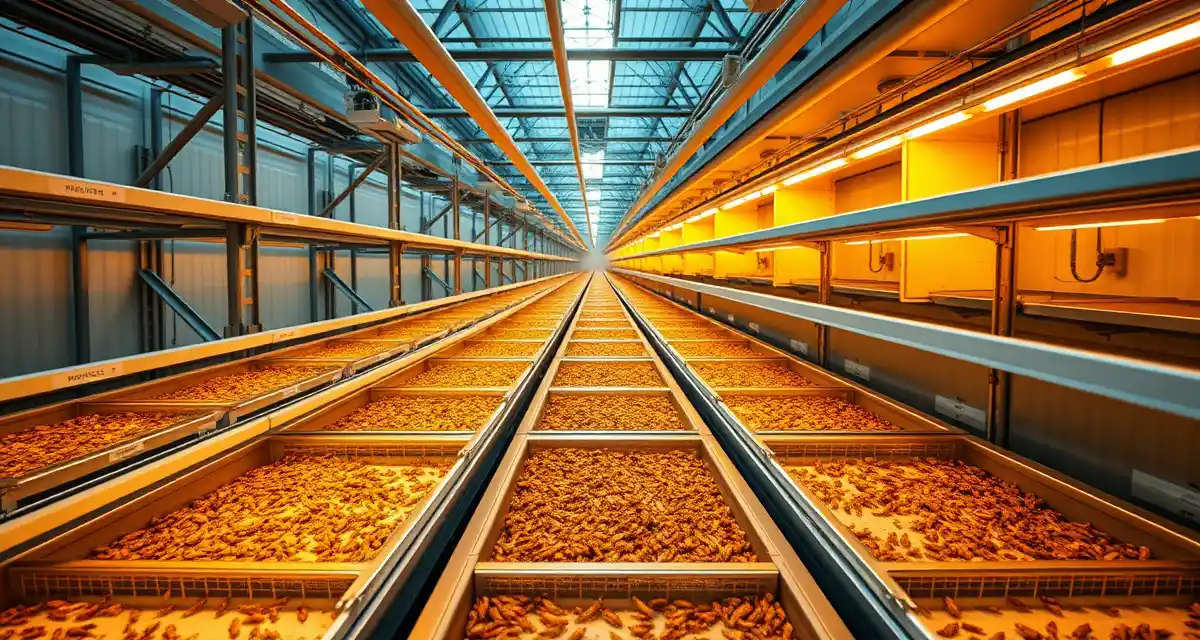
Cricket Farming Industry News 2026: Key Developments and What They Mean for Farmers
Three major US grocery chains added insect protein to their own-brand product portfolios in the first half of 2026. That's the clearest signal yet that insect protein has crossed from specialty to mainstream consideration in US retail. For cricket farmers and flour producers, understanding these market developments - and what they mean for your operation - is part of staying competitive in a rapidly evolving industry.
This roundup covers the key developments in cricket farming and insect protein in 2026, with practical implications for producers at different stages.
TL;DR
- Current wholesale prices for standard-grade whole cricket flour range from $15-22 per pound depending on specification, volume, and documentation.
- Defatted cricket protein powder remains at a premium of $30-45 per pound for 70%+ protein concentrate.
- Several companies launched cricket protein-forward consumer brands in 2026, including new entrants in protein bars, pasta, and flour blends.
- See insect protein industry overview for the full market context.
- At 5-10 bins, problems are manageable.
- At 30-50 bins, the same proportional problems represent much larger financial losses.
- State-level insect farming legislation.
Regulatory Developments
FDA novel food guidance update: FDA issued updated guidance in early 2026 clarifying that insect species with a documented history of safe consumption (including Acheta domesticus) can be marketed as food ingredients under existing GRAS frameworks when supported by a qualified expert panel review. This stops short of formal FDA GRAS affirmation but creates a clearer pathway for ingredient market access than the previous ambiguity.
AAFCO expanded pet food approvals: Following the 2024 approval of cricket as an alternate protein in dog food, AAFCO expanded its insect protein approvals in 2026 to cover additional species and additional animal feed applications including aquaculture feed. This expands the total addressable market for cricket meal and opens new buyer categories for farms currently selling only to the feeder and human food markets.
State-level insect farming legislation: Several states updated their agricultural regulations in 2026 to explicitly classify insect farming under agricultural production rather than manufacturing, with implications for property tax treatment, insurance classification, and permit requirements. Check with your state's department of agriculture for current status in your jurisdiction.
Market Developments
Private label grocery expansion: The three major US grocery chains adding insect protein to their own-brand portfolios in early 2026 represent a significant market signal. When retailers add a product category to their private label program, it indicates sufficient consumer demand to justify the supply chain investment. For cricket flour producers with the quality documentation and scale to supply a retailer's private label program, this is a direct business development opportunity.
Pet food segment growth: Cricket protein in premium pet food has been the fastest-growing insect protein market segment in 2025-2026, outpacing the human food segment in revenue growth rate. Several national pet food brands launched or expanded cricket protein product lines, and the channel for domestic cricket meal suppliers to pet food manufacturers has become significantly more accessible than it was two years ago.
Pricing trends: Wholesale cricket flour pricing has moderated in 2026 compared to the 2023-2024 peaks, as production capacity has increased with new farm entrants. Current wholesale prices for standard-grade whole cricket flour range from $15-22 per pound depending on specification, volume, and documentation. Defatted cricket protein powder remains at a premium of $30-45 per pound for 70%+ protein concentrate.
New Entrants and Industry Structure
The insect protein industry continues to consolidate at the large-scale production level, with a handful of companies (Aspire Food Group, Enterra Feed, and others) capturing the animal feed market with automated large-scale production. For small commercial cricket farms, this consolidation at the top end of the market creates clearer market segmentation: large industrial producers compete on commodity feed ingredients, while smaller craft producers differentiate on food-grade quality, local sourcing, and documentation depth.
Several companies launched cricket protein-forward consumer brands in 2026, including new entrants in protein bars, pasta, and flour blends. This consumer brand activity increases overall insect protein awareness, which benefits all producers through increased market education.
What These Developments Mean for Your Farm
If you're a feeder cricket farm: The pet food market expansion is the most directly relevant development. If you've been considering diversifying from feeder crickets to pet food ingredient sales, 2026 is a better entry year than 2024 was - more buyers, better-established regulatory pathways, and more publicly available information about what buyers require.
If you're a cricket flour producer: The private label grocery expansion and the AAFCO aquaculture feed approvals both expand your potential buyer universe. If you're ready for retail channel entry, the private label pathway is increasingly defined. If you want to add aquaculture to your buyer mix, the regulatory clarity makes this more approachable.
If you're planning to start a cricket farm: The industry is more mature and more competitive than it was three years ago, but the total addressable market is also larger. The bar for quality and compliance has risen, meaning farms that invest in documentation and food safety from the start have a clearer competitive advantage over those that don't.
See insect protein industry overview for the full market context. For farm management in the current environment, see cricket farm management.
Frequently Asked Questions
What are the biggest news stories in cricket farming in 2026?
The three most significant 2026 developments for cricket farmers are: three major US grocery chains adding insect protein to their own-brand product lines (the clearest mainstream retail signal to date), AAFCO's expanded insect protein approvals for aquaculture feed (opening a new buyer category), and FDA's updated novel food guidance providing clearer market access pathways for insect protein ingredients. Secondary developments include continued consolidation in large-scale insect production and expanding consumer brand activity in protein bars and specialty foods using cricket protein.
What regulatory changes affected US cricket farms in 2026?
FDA issued updated guidance clarifying GRAS pathways for insect ingredients with documented safety history. AAFCO expanded its insect protein approvals to cover aquaculture feed applications. Several states updated their agricultural regulations to explicitly classify insect farming as agricultural production rather than manufacturing, with implications for tax treatment, insurance, and permitting. The net regulatory direction is favorable - more clarity, more approved applications, and more accessible pathways for market entry than existed in 2023.
Which new cricket protein brands launched in 2026?
Several new cricket protein consumer brands launched in 2026, primarily in protein bars and specialty foods. The most active launch category was cricket flour blends for home baking - several brands launched premium cricket-wheat flour blend products in the natural food channel. The foodservice channel saw new cricket protein ingredients appearing on restaurant menus, particularly at university dining programs and corporate cafeterias with sustainability commitments. Tracking specific brand launches is best done through Natural Products Expo coverage and food industry trade publications like Food Navigator and Food Business News.
How does CricketOps help track the metrics described in this article?
CricketOps provides bin-level logging for the variables that drive production outcomes -- feed inputs, environmental conditions, mortality events, and harvest results. Rather than maintaining these records in separate spreadsheets, you can view performance trends across bins and over time to identify which operational variables correlate with better outcomes in your specific facility.
Where can I find industry benchmarks to compare my operation's performance?
The North American Coalition for Insect Agriculture (NACIA) publishes periodic industry reports with production benchmarks. University extension programs in agricultural states, including the University of Georgia and University of Florida IFAS, occasionally publish insect farming production data. Industry conferences hosted by the Entomological Society of America and the Insects to Feed the World symposium series are additional sources of peer benchmarking data.
What is the biggest operational mistake cricket farmers make in their first year?
Expanding bin count before achieving consistent FCR and mortality targets in existing bins is the most common and costly first-year mistake. At 5-10 bins, problems are manageable. At 30-50 bins, the same proportional problems represent much larger financial losses. Most experienced cricket farmers recommend holding expansion until you have three consecutive production cycles hitting your FCR and mortality targets.
Sources
- Food and Agriculture Organization of the United Nations (FAO) -- Edible Insects: Future Prospects for Food and Feed Security
- North American Coalition for Insect Agriculture (NACIA)
- Entomological Society of America
- University of Georgia Cooperative Extension
- Journal of Insects as Food and Feed (Wageningen Academic Publishers)
Get Started with CricketOps
The practices covered in this article are easier to apply consistently when they are supported by organized production data. CricketOps gives cricket farmers the tools to track what matters -- by bin, by batch, and over time. Start your next production cycle in CricketOps and see how organized data changes the way you manage your operation.