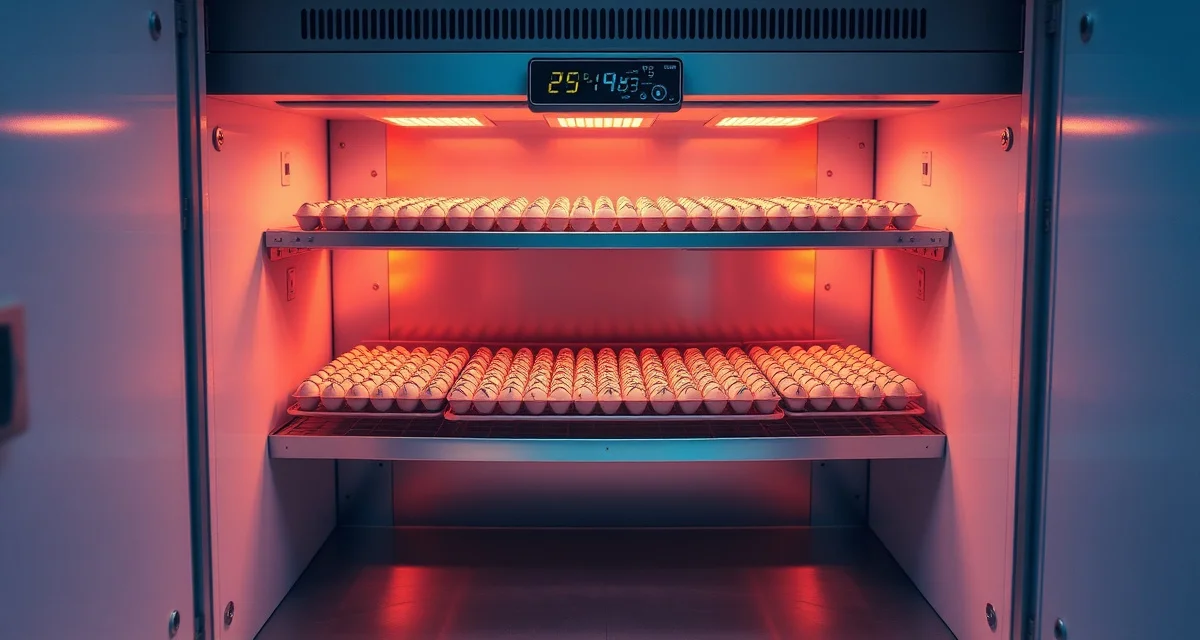
Cricket Farm Incubation Setup: Building a Dedicated Egg Incubation Chamber
A dedicated incubation chamber with plus or minus 1 degree Fahrenheit temperature stability increases Acheta domesticus hatch rate by 17% on average. That improvement comes entirely from better environmental control during the 10-14 day incubation period. If you're incubating eggs in your general production space alongside grow-out bins, you're accepting temperature variability that your hatch rate is paying for.
This guide covers how to build or buy a dedicated incubation setup that delivers consistent hatch rates across every batch.
TL;DR
- A dedicated incubation chamber with plus or minus 1 degree Fahrenheit temperature stability increases Acheta domesticus hatch rate by 17% on average.
- That improvement comes entirely from better environmental control during the 10-14 day incubation period.
- How many incubation containers do you need?
- A 50-bin commercial operation might have 5-8 active incubation containers at any one time, with staggered hatch dates providing a continuous production flow.
- Acheta domesticus eggs hatch in 10-14 days at 88-90F with 80-90% relative humidity.
- A separate incubation chamber solves both problems by isolating the egg environment from the general production conditions.
Temperature control: Stable at 88-90F with minimal fluctuation.
- The ±1F stability target requires active temperature control (a thermostat controller with a heating element), not just space heating.
- A thermostat with a probe placed near the egg containers provides direct temperature feedback at the source.
Humidity control: 80-90% RH for Acheta domesticus eggs.
Humidity control: 80-90% RH for Acheta domesticus eggs.
- Used units are available on secondary markets for $500-$2,000.
- For operations running 50+ breeding bins, the professional stability and larger capacity justify the cost.
Capacity Planning
How many incubation containers do you need?
- A 50-bin commercial operation might have 5-8 active incubation containers at any one time, with staggered hatch dates providing a continuous production flow.
Why Dedicated Incubation Matters
Acheta domesticus eggs hatch in 10-14 days at 88-90F with 80-90% relative humidity. The problem with incubating in your general production space is that your grow-out environment is optimized for juvenile and adult crickets, not eggs.
Temperature in a general production space fluctuates with door openings, HVAC cycles, occupancy changes, and the batch-specific heat output of your grow-out bins. These fluctuations, even if they average out to your target, create developmental inconsistency in incubating eggs.
Humidity in a general space is a compromise between what eggs need (very high: 80-90% RH), what juveniles need (60-70% RH), and what prevents mold everywhere else. The result is that eggs usually incubate at lower humidity than optimal.
A separate incubation chamber solves both problems by isolating the egg environment from the general production conditions.
What a Dedicated Incubation Chamber Needs
Temperature control: Stable at 88-90F with minimal fluctuation. The ±1F stability target requires active temperature control (a thermostat controller with a heating element), not just space heating. A thermostat with a probe placed near the egg containers provides direct temperature feedback at the source.
Humidity control: 80-90% RH for Acheta domesticus eggs. A small ultrasonic humidifier or a simple passive humidity source (shallow tray of water on the chamber floor) maintains the target range in an enclosed space. Monitor with a calibrated humidity sensor.
Air circulation: Gentle airflow to prevent hotspots and maintain even temperature distribution. A small circulation fan (computer fans work well in small chambers) on the lowest speed setting is adequate. You want air movement, not a draft that dries out the egg medium.
Insulation: The chamber walls need enough insulation to maintain temperature stability without constant heating effort. An insulated cooler, a dorm-size refrigerator converted to heating, or a purpose-built insulated box all work.
Capacity: Size your incubation chamber to hold 7-14 days of egg production from your breeding colony. If your colony produces 5 egg trays per week, your chamber needs to hold 7-10 trays at any given time (accounting for staggered hatch dates).
Build vs Buy Options
DIY Incubation Chamber (Most Common)
A popular approach is to convert a dorm-size refrigerator or wine cooler into a heated incubation chamber. The compressor is bypassed or disabled and replaced with:
- A small heating element (reptile under-tank heater, seedling heat mat, or light bulb in a ceramic socket)
- An Inkbird or similar PID thermostat controller with probe
- A small circulation fan
Total build cost: $50-$150 for the controller and heating element if you're sourcing the enclosure for free or low cost.
Commercial Reptile Incubators
Commercial reptile egg incubators (brands like Zoo Med ReptiBator, Exo Terra, Hovabator) are designed to maintain precise temperature and humidity -- exactly the requirements for cricket eggs.
Advantages: Purpose-built for temperature stability; no DIY required; humidity trays included
Disadvantages: Designed for reptile egg quantities, not hundreds of cricket eggs; smaller capacity than a DIY chamber; cost ($100-$400) for relatively small capacity
Commercial Environmental Chambers
Lab-grade environmental chambers (forced-air ovens with humidity control) provide professional temperature and humidity stability. Used units are available on secondary markets for $500-$2,000. For operations running 50+ breeding bins, the professional stability and larger capacity justify the cost.
Capacity Planning
How many incubation containers do you need? Work backward from your batch schedule:
- How many batches do you start per month?
- How many breeding bins feed each batch?
- What's your approximate egg count per breeding bin per week?
A 50-bin commercial operation might have 5-8 active incubation containers at any one time, with staggered hatch dates providing a continuous production flow. Your CricketOps lifecycle tracking keeps tabs on each container's hatch date so you can plan nursery space allocation in advance.
Frequently Asked Questions
Should I build a separate incubation chamber for my cricket farm?
Yes, once you're past 15-20 bins. The 17% average improvement in hatch rate from a dedicated chamber -- compared to incubating in your general production environment -- translates directly into more crickets per breeding cycle and lower effective cost per hatch. Below 15-20 bins, the complexity isn't justified. Above that scale, especially if you're selling to food manufacturers who require consistent batch sizes, the hatch rate consistency from a dedicated chamber is worth the investment.
How do I build a cricket egg incubation chamber?
The simplest approach is to convert a dorm refrigerator or small insulated cooler into a heated chamber. Add a reptile heat mat or small heating element, a PID thermostat controller (Inkbird ITC-306 is a popular choice, around $30) with a probe placed at egg level, a small circulation fan, and a shallow humidity tray with water. Set the thermostat to 89F and maintain the humidity tray to keep RH above 80%. A calibrated digital hygrometer confirms that humidity is in range. Total build cost: $50-$150. Use a USB data logger to record temperature over a full 24-hour cycle before you trust the chamber with your first batch -- verify that temperature stays within ±2F of target throughout the day.
What temperature stability is needed in a cricket egg incubation chamber?
Target ±1F around your set point of 88-90F for Acheta domesticus. Temperature excursions outside the 86-92F range slow development or kill eggs. The ±1F target requires an active thermostat controller -- passive heating (a heat mat without thermostat control, or just a warm room) produces the larger swings that reduce hatch rate. A quality PID controller ($25-$50) with a probe at egg level holds temperature more stably than a simple on/off thermostat. Verify actual temperature stability with a data logger before trusting the chamber for production batches.
How does CricketOps help track the metrics described in this article?
CricketOps provides bin-level logging for the variables that drive production outcomes -- feed inputs, environmental conditions, mortality events, and harvest results. Rather than maintaining these records in separate spreadsheets, you can view performance trends across bins and over time to identify which operational variables correlate with better outcomes in your specific facility.
Where can I find industry benchmarks to compare my operation's performance?
The North American Coalition for Insect Agriculture (NACIA) publishes periodic industry reports with production benchmarks. University extension programs in agricultural states, including the University of Georgia and University of Florida IFAS, occasionally publish insect farming production data. Industry conferences hosted by the Entomological Society of America and the Insects to Feed the World symposium series are additional sources of peer benchmarking data.
What is the biggest operational mistake cricket farmers make in their first year?
Expanding bin count before achieving consistent FCR and mortality targets in existing bins is the most common and costly first-year mistake. At 5-10 bins, problems are manageable. At 30-50 bins, the same proportional problems represent much larger financial losses. Most experienced cricket farmers recommend holding expansion until you have three consecutive production cycles hitting your FCR and mortality targets.
Sources
- Food and Agriculture Organization of the United Nations (FAO) -- Edible Insects: Future Prospects for Food and Feed Security
- North American Coalition for Insect Agriculture (NACIA)
- Entomological Society of America
- University of Georgia Cooperative Extension
- Journal of Insects as Food and Feed (Wageningen Academic Publishers)
Get Started with CricketOps
The practices covered in this article are easier to apply consistently when they are supported by organized production data. CricketOps gives cricket farmers the tools to track what matters -- by bin, by batch, and over time. Start your next production cycle in CricketOps and see how organized data changes the way you manage your operation.