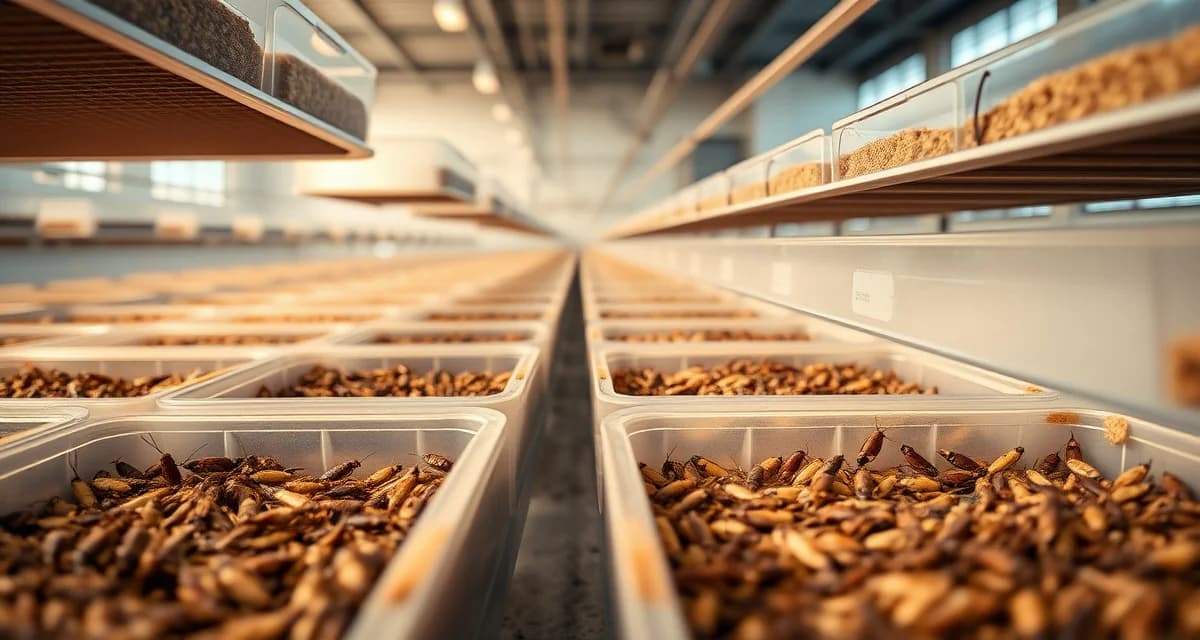
CricketOps Professional Plan: Unlimited Bins for Growing Cricket Farms
You've outgrown the Starter plan, or you're getting close. Maybe you're at 8 bins now, or you've got a food-grade buyer asking for documentation you don't have a system to produce yet. Either way, you're wondering if Professional at $129/month is the right step.
Here's the number that matters most: at 12 or more bins, Professional plan users recover their monthly subscription cost in labor savings alone. That's not a marketing claim, it's a straightforward calculation based on the management time required to track a growing operation manually versus in a dedicated system.
This review covers exactly what Professional adds over Starter, which features move the needle, and how to know when you've hit the right scale to justify it.
TL;DR
- Maybe you're at 8 bins now, or you've got a food-grade buyer asking for documentation you don't have a system to produce yet.
- Either way, you're wondering if Professional at $129/month is the right step.
- Here's the number that matters most: at 12 or more bins, Professional plan users recover their monthly subscription cost in labor savings alone.
- Whether you're running 12 bins or 120, Professional accommodates it without tier changes.
- Bins that drop below 70°F overnight lose crickets fast.
- Getting a push alert at 2am when a heater fails is the difference between a recoverable situation and replacing an entire bin.
- For any farm running more than 5-6 bins, automated alerts are a risk management tool, not a luxury.
Advanced FCR Analytics
Starter gives you FCR per bin as a number.
What Professional Adds Over Starter
Unlimited Bin Tracking
The most obvious difference: no bin limit. Starter caps you at 5 bins. Professional removes that ceiling entirely. Whether you're running 12 bins or 120, Professional accommodates it without tier changes.
For an operation in growth mode, the unlimited bin tracking is what you're paying for at a basic level. You shouldn't have to upgrade your software plan every time you add a bin.
Automated Sensor Integration
This is where Professional starts pulling ahead on practical value. Starter requires manual temperature and humidity logging. Professional connects to IoT temperature sensors, allowing the platform to log environmental data automatically, and to alert you when conditions fall outside your set thresholds.
Temperature crashes are the most common cause of unexpected mortality on cricket farms. Bins that drop below 70°F overnight lose crickets fast. Getting a push alert at 2am when a heater fails is the difference between a recoverable situation and replacing an entire bin.
For any farm running more than 5-6 bins, automated alerts are a risk management tool, not a luxury.
Advanced FCR Analytics
Starter gives you FCR per bin as a number. Professional shows you FCR trends over time, compares bins against each other, and calculates your feed cost per pound of cricket output.
This is where the data becomes actionable. When you can see that Bin 7 consistently runs an FCR of 2.4 while your other bins average 1.8, you can investigate. Is it the temperature zone? The feed schedule? A specific batch of crickets? Without comparative data, you're guessing. With it, you're managing.
The most common finding for operators who start using Professional analytics: a small number of bins drive a disproportionate amount of their feed waste. Fixing those outliers can improve your overall economics meaningfully.
Food Safety Compliance Templates
If you're producing or planning to produce cricket flour, or if you're supplying any food brand, this feature is not optional, it's the justification for the plan on its own.
Professional includes templated food safety documentation: HACCP plan frameworks, temperature log export formats, batch traceability reports, and allergen management checklists. These templates don't replace a food safety professional, but they give you a starting structure that would otherwise take weeks to develop from scratch.
When a food brand buyer asks for your food safety documentation, being able to pull structured reports from CricketOps rather than generating them manually is operationally notable.
Multi-User Access
Professional supports multiple user accounts with role-based access. If you have a farm employee, business partner, or someone else who logs data or reviews reports, they can have their own login without sharing your credentials.
This seems like a small thing until you're trying to coordinate a two-person farm where only one person has account access.
Production Planning Tools
Professional includes production planning features: projected harvest dates by bin, expected output volume by week, and feed purchasing forecasts. For a growing operation selling to buyers on a regular schedule, having a forward-looking view of your production is how you stop underselling or overselling what you can actually fulfill.
The 12-Bin Break-Even Point
Here's the honest math on whether Professional pays for itself.
Managing a 12-bin cricket farm manually, daily temperature checks, feeding logs, harvest records, FCR calculations, buyer communications, compliance notes, takes approximately 8-12 hours per week when done thoroughly. Most operators tracking manually either spend that time or skip parts of the tracking, which costs them money in unidentified inefficiencies.
CricketOps Professional reduces that time to approximately 2-4 hours per week through automated logging, centralized records, and batch reporting. That's 6-8 hours saved per week.
At $15/hour value for your own time (conservative), that's $90-$120 per week in labor value, or $360-$480 per month. The plan costs $129. The math is clear above 12 bins.
Below 12 bins, the savings are still real but the break-even is less immediate. At 6-10 bins, consider whether the sensor alerts and food safety templates justify the additional cost over Starter for your specific situation.
Who Should Be on Professional?
You're the right fit for Professional if any of these describe you:
- You have 6 or more bins and want unlimited room to grow
- You've had a temperature event that cost you crickets (or you're worried about it)
- You're selling to food-grade buyers or planning to in the next 6 months
- You want real FCR data, not just a number, but trends and comparisons
- You have a business partner or employee who needs platform access
- You're buying feed at volume and want to calculate cost per pound accurately
The full CricketOps review covers how Professional compares to Enterprise for operations with multiple locations.
FAQ
What additional features does CricketOps Professional include over Starter?
Professional adds unlimited bin tracking (versus 5 in Starter), automated sensor integration with push alerts, advanced FCR analytics and feed cost calculations, food safety compliance templates, multi-user access, and production planning tools. These features are collectively what growing and food-grade operations need to run efficiently.
How many bins do I need to justify CricketOps Professional?
At 12 or more bins, the labor savings alone cover the subscription cost. At 6-11 bins, the value depends more on whether you're using the sensor integration and food safety templates, both of which add value at smaller scale if they apply to your operation. The cricket farm management guide has context on what good management infrastructure looks like at each scale.
Does CricketOps Professional include food safety compliance templates?
Yes. Professional includes templated HACCP plan frameworks, temperature log export formats, batch traceability reports, and allergen management checklists. These templates give food-grade operations a structured documentation system without building one from scratch.
How does CricketOps help track the metrics described in this article?
CricketOps provides bin-level logging for the variables that drive production outcomes -- feed inputs, environmental conditions, mortality events, and harvest results. Rather than maintaining these records in separate spreadsheets, you can view performance trends across bins and over time to identify which operational variables correlate with better outcomes in your specific facility.
Where can I find industry benchmarks to compare my operation's performance?
The North American Coalition for Insect Agriculture (NACIA) publishes periodic industry reports with production benchmarks. University extension programs in agricultural states, including the University of Georgia and University of Florida IFAS, occasionally publish insect farming production data. Industry conferences hosted by the Entomological Society of America and the Insects to Feed the World symposium series are additional sources of peer benchmarking data.
What is the biggest operational mistake cricket farmers make in their first year?
Expanding bin count before achieving consistent FCR and mortality targets in existing bins is the most common and costly first-year mistake. At 5-10 bins, problems are manageable. At 30-50 bins, the same proportional problems represent much larger financial losses. Most experienced cricket farmers recommend holding expansion until you have three consecutive production cycles hitting your FCR and mortality targets.
Sources
- Food and Agriculture Organization of the United Nations (FAO) -- Edible Insects: Future Prospects for Food and Feed Security
- North American Coalition for Insect Agriculture (NACIA)
- Entomological Society of America
- University of Georgia Cooperative Extension
- Journal of Insects as Food and Feed (Wageningen Academic Publishers)
The Bottom Line
CricketOps Professional is the right plan for any cricket farm running 6 or more bins with growth ambitions, particularly operations that are targeting food-grade markets or want automated temperature monitoring.
The unlimited bin capacity removes a ceiling. The sensor integration removes a recurring risk. The FCR analytics and food safety templates turn production data into operational decisions.
At $129/month, it's priced to recover its cost quickly once you're past the 12-bin threshold. If you're at 5 bins and looking at 6-12 months of steady growth, upgrading now instead of managing the Starter-to-Professional switch mid-production-cycle is the less disruptive path.
Get Started with CricketOps
The practices covered in this article are easier to apply consistently when they are supported by organized production data. CricketOps gives cricket farmers the tools to track what matters -- by bin, by batch, and over time. Start your next production cycle in CricketOps and see how organized data changes the way you manage your operation.