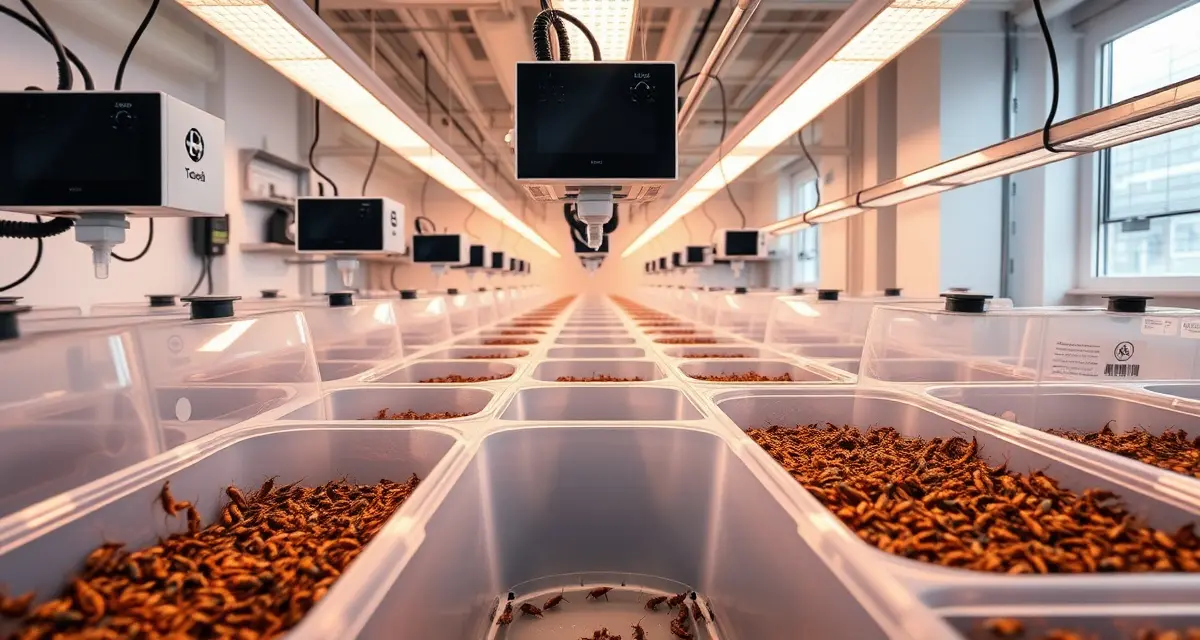
Hydration Management to Reduce Cricket Mortality: A Practical Guide
Dehydration and drowning sound like opposite problems, but on a cricket farm they often coexist in the same production room. A bin running dry in the corner while another bin floods crickets in an open water dish. Both kill crickets. Both are preventable. And dehydration accounts for an estimated 12% of cricket mortality in farms that rely solely on dry feed, making it one of the biggest silent killers in the industry.
This guide separates those two risks and shows you how to address each one directly, by bin stage and life stage.
TL;DR
- And dehydration accounts for an estimated 12% of cricket mortality in farms that rely solely on dry feed, making it one of the biggest silent killers in the industry
- Adult Acheta domesticus in a hot, dry environment can begin showing dehydration stress within 12 hours of losing moisture access
- Supplement with fresh vegetables 2-3 times weekly, or daily during gut-loading
- Target bin humidity of 45-60% RH
- In a hotter, drier environment, cut all intervals by 20-30%
- In warm bin rooms (88-92°F), gel can begin to degrade and accumulate bacteria faster than in cooler environments
- Target 50-60% RH in pinhead bins
- Use water gel exclusively. No open water sources of any kind.
- Adult Acheta domesticus in a hot, dry environment can begin showing dehydration stress within 12 hours of losing moisture access.
- Don't wait for the bowl to run dry.
- Supplement with fresh vegetables 2-3 times weekly, or daily during gut-loading.
- Target bin humidity of 45-60% RH.
- In a hotter, drier environment, cut all intervals by 20-30%.
Tracking Hydration Events in CricketOps
If you're managing more than a dozen bins, hydration tracking by memory is unreliable.
- Dehydration and drowning sound like opposite problems, but on a cricket farm they often coexist in the same production room.
- A bin running dry in the corner while another bin floods crickets in an open water dish.
The Two Hydration Failure Modes
Before diving into protocols, it helps to understand that dehydration and drowning require completely different interventions. Grouping them under "hydration management" can cause farmers to under-solve for one while over-compensating for the other.
Dehydration risk is highest when:
- Ambient humidity drops below 40% RH
- Feed is dry with no moisture source in the bin
- Bin population is high and moisture depletes faster than refresh schedule allows
- Temperature is elevated, increasing evaporation and metabolic water loss
Drowning risk is highest when:
- Open water dishes are used with instars 1-4
- Sponges or cotton are compressed or fully saturated
- Water is added to bin surfaces carelessly
- Vegetable matter left in bins releases free water
These are different problems with different solutions. A water bowl with a floating sponge addresses drowning risk but does nothing for dehydration if the sponge dries out between refreshes. A light misting of the bin walls addresses dehydration but creates drowning risk if it pools on the floor.
Pinhead Bins (Instars 1-2): Maximum Caution Required
Pinhead crickets are the most vulnerable to both failure modes. They're small enough to drown in a water droplet and dehydrate quickly because of their high surface-area-to-volume ratio.
For pinhead bins, the protocol is clear:
- Use water gel exclusively. No open water sources of any kind. Gel can be placed flat on a piece of cardboard or in a shallow container. Pinheads will walk across the surface and drink safely.
- Place gel in multiple small amounts rather than one large deposit. This ensures all pinheads have access and reduces the distance they need to travel to find moisture.
- Refresh every 36-48 hours. In warm bin rooms (88-92°F), gel can begin to degrade and accumulate bacteria faster than in cooler environments.
- Monitor bin humidity. Target 50-60% RH in pinhead bins. If ambient room humidity is lower, a very light misting of bin walls (not the floor) can supplement the gel.
Check cricket farm water management for detailed guidance on setting up a whole-room hydration system that supports pinhead bins.
Juvenile Bins (Instars 3-6): Transition Phase
By the third instar, crickets are large enough to navigate around water dishes and pull themselves out of shallow water, though the risk is still real. The priority shifts slightly from "prevent drowning at all costs" to "balance accessibility and safety."
Hydration options for juvenile bins:
- Water gel remains the safest option and should be your default.
- If using water bowls, fill them with clean marbles or glass beads to eliminate any open water surface while still allowing crickets to access moisture.
- Fresh vegetables (romaine, cucumber) can supplement gel or replace it during gut-loading phases. Remove spent vegetables within 24 hours.
At this stage, watch for dehydration signs: crickets clustering near any moisture source, slower movement, or a dry-looking cuticle. Juveniles in the third through sixth instar are in the phase of fastest growth, and even mild dehydration stress affects feed conversion.
Adult Bins: Reliability Over Innovation
Adult bins are where most farms get comfortable and stop paying close attention to hydration. The crickets are big, the drowning risk feels lower, and other management priorities crowd out moisture checks. That's a mistake.
Adult Acheta domesticus in a hot, dry environment can begin showing dehydration stress within 12 hours of losing moisture access. In a 90°F bin room with 35% ambient humidity, an open water bowl can dry out before your next scheduled check.
Adult bin hydration protocol:
- Water bowls work, but only with a reliable safety surface (sponge, cotton, marbles). Check daily.
- Refresh water daily regardless of apparent consumption. Don't wait for the bowl to run dry.
- Supplement with fresh vegetables 2-3 times weekly, or daily during gut-loading.
- Target bin humidity of 45-60% RH.
If you're seeing unexplained adult mortality clustering around corners and walls (where moisture loss would be highest), dehydration is a likely cause even if your water bowls look full. The bowl may be physically present but the sponge may be dry or the local microenvironment may be hotter than your thermometer reads.
Breeding Bins: Moisture and Egg Health
Breeding bins add a third variable: moisture affects egg health. Substrate that is too dry will desiccate eggs before they can develop. Substrate that is too wet becomes a mold environment.
Hydration management in breeding bins needs to account for the egg-lay medium as well as adult hydration.
- Keep adult hydration consistent using water gel or water bowls with safety features.
- Maintain egg substrate at approximately 70-80% moisture by feel: it should hold its shape when squeezed but not release free water.
- Do not mist eggs directly. Maintain egg substrate moisture through careful initial watering and coverage.
- Check cricket farm management for a full breeding bin setup guide.
How Do You Know If Your Crickets Are Dehydrated?
Dehydration in crickets is harder to spot than temperature stress because there's no single dramatic behavioral signal. Look for:
- Clustering near moisture sources. Crickets concentrated around any wet point in the bin are signaling moisture deficit.
- Reduced activity. Dehydrated crickets move less. This can be mistaken for temperature stress or disease.
- Cuticle appearance. A healthy cricket has a slightly glossy exoskeleton. A dehydrated cricket's cuticle looks dull and tight.
- Feed refusal. Severely dehydrated crickets stop eating. By the time you see this, you have a mortality event in progress.
- Early-stage die-off. Crickets dying in corners or against bin walls, particularly if the nearest water source is across the bin, are often dying of dehydration.
A quick test: place fresh water gel or a piece of moist vegetable in a bin where you suspect dehydration. If crickets mob it immediately and aggressively, you have a moisture deficit.
Hydration Frequency at Commercial Scale
The right refresh frequency depends on your bin temperature, population density, ambient humidity, and which hydration method you're using. A general baseline:
| Method | Pinhead | Juvenile | Adult | Breeder |
|--------|---------|----------|-------|---------|
| Water gel | Every 36-48h | Every 48-72h | Every 48-72h | Every 48h |
| Water bowl | Not recommended | Daily | Daily | Daily |
| Vegetables | Not recommended | Every 24h | Every 24h | Every 24h |
These are minimums. In a hotter, drier environment, cut all intervals by 20-30%.
Tracking Hydration Events in CricketOps
If you're managing more than a dozen bins, hydration tracking by memory is unreliable. CricketOps lets you log hydration events per bin as part of your daily rounds, including what method was used, the quantity, and any observations about moisture level or cricket behavior.
That data becomes useful faster than most farmers expect. When you see a cluster of high-mortality bins over a two-week period, the hydration log tells you whether those bins were refreshed on schedule. Often, they weren't, and the connection is immediate.
Frequently Asked Questions
How do I know if my crickets are dehydrated?
The clearest early sign is clustering behavior, where crickets crowd around any moisture source in the bin. Reduced movement and dull-looking cuticles are secondary indicators. If you suspect dehydration, place fresh water gel or moist vegetables in the bin and watch the response. Immediate mobbing of the moisture source confirms a deficit.
What is the right hydration frequency for a commercial cricket farm?
The baseline is daily refreshing for water bowls, every 48-72 hours for water gel, and every 24 hours for fresh vegetables (due to spoilage). In hot, dry environments or heavily populated bins, increase frequency. Track refresh intervals in your farm software so you can identify bins falling behind schedule.
Does CricketOps track hydration events per bin?
Yes. CricketOps allows you to log hydration events at the individual bin level, including method, quantity, and notes. This creates a hydration history for each bin that you can review when investigating mortality spikes or adjusting protocols.
What data should a cricket farm management system track at minimum?
At minimum: bin identification, population counts by life stage, feed inputs and quantities, mortality events, temperature and humidity readings, and harvest dates and weights. These categories give you enough data to calculate FCR, identify underperforming bins, and audit any production batch. More advanced tracking adds environmental sensor integration, financial cost allocation, and buyer order fulfillment records.
How long does it take to see a return on investment from farm management software?
Operations that move from spreadsheets to purpose-built software typically see measurable FCR improvement within two to three production cycles, as patterns invisible in manual records become visible in aggregated data. The timeline depends on operation size -- larger farms benefit faster because there are more data points and more decisions that can be improved. The ROI accelerates when the software also reduces the time spent on manual data entry and reporting.
Can cricket farm management software integrate with environmental sensors?
Yes, platforms designed specifically for commercial insect production such as CricketOps support direct integration with temperature and humidity sensors via IoT protocols. This eliminates the need for manual environmental logging and enables automated alerts when readings fall outside set thresholds. When evaluating software, confirm which sensor brands and communication protocols (WiFi, Zigbee, 4G) are supported before purchasing equipment.
Sources
- Food and Agriculture Organization of the United Nations (FAO) -- Edible Insects: Future Prospects for Food and Feed Security
- North American Coalition for Insect Agriculture (NACIA)
- Entomological Society of America
- USDA Agricultural Research Service
- AgriNovus Indiana -- AgTech Industry Resources
Get Started with CricketOps
The practices covered in this article are easier to apply consistently when they are supported by organized production data. CricketOps gives cricket farmers the tools to track what matters -- by bin, by batch, and over time. Start your next production cycle in CricketOps and see how organized data changes the way you manage your operation.