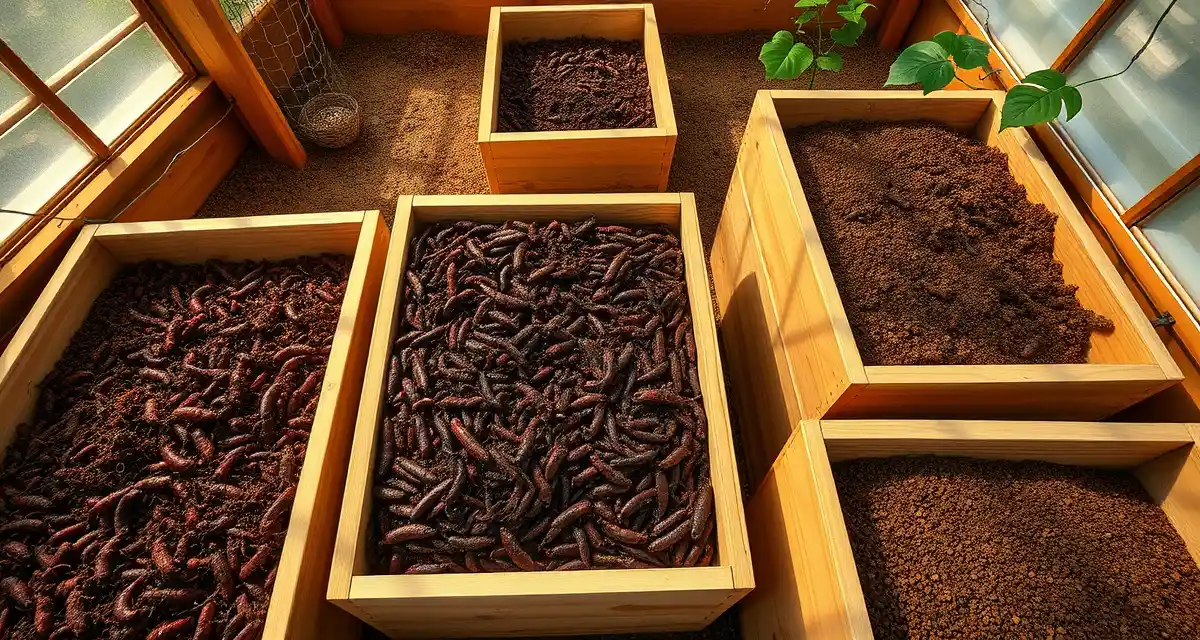
Cricket Farm and Worm Farming: Combining Insect Protein Operations
Red worms process cricket frass into vermicast in 45-60 days. Finished vermicast sells for $0.50-$1.00 per pound in organic markets. This means the frass that a cricket farm would otherwise dispose of can become a premium soil amendment product through a simple, low-maintenance secondary operation.
Combined insect farming operations are emerging as a logical model. Cricket farms generate high volumes of nitrogen-rich frass that red worms convert into vermicast more effectively than almost any other feedstock. Worm farming generates protein-rich worm castings and, eventually, harvestable worms that can be sold as bait or feeder animals. The two operations support each other's waste management and create two distinct revenue streams from shared inputs.
TL;DR
- Red worms process cricket frass into vermicast in 45-60 days.
- Finished vermicast sells for $0.50-$1.00 per pound in organic markets.
- Add a thin layer of cricket frass (1/2 to 1 inch) on top of the bedding and worms.
- Scaling to 20+ lbs/week with more frass input generates meaningful income.
- Beyond vermicast, a worm farming operation generates additional revenue:
Worm castings tea: Brewed similarly to compost tea, vermicast tea is a potent liquid fertilizer that sells for $8-$15 per liter at retail.
- Breeding stock commands $20-$40/lb retail.
- Your population grows naturally with good feedstock, so selling breeding stock is a self-replenishing revenue source.
Fishing bait. Red worms sold as fishing bait command $3-$5 per 1/4 pound.
Fishing bait. Red worms sold as fishing bait command $3-$5 per 1/4 pound.
- Stack 3-5 trays, with worms migrating up through the trays as lower trays are fully processed.
- Source your worms. Start with 1-2 lbs of red worms for a small-scale operation.
- Worm population doubles approximately every 3-6 months under good conditions.
- Start your bedding. Moisten shredded cardboard or newspaper to about 80% moisture (feels like a wrung-out sponge).
- This is your initial worm habitat.
- Feed with cricket frass. Add a thin layer of cricket frass (1/2 to 1 inch) on top of the bedding and worms.
Why Red Worms and Cricket Frass Are a Natural Match
Red worms (Eisenia fetida and Eisenia andrei), the species used in vermicomposting, thrive on nitrogen-rich organic material. Their most productive feedstocks are materials with a carbon-to-nitrogen ratio below 25:1. Cricket frass, with its high nitrogen content from cricket waste and uneaten high-protein feed, falls in this ideal range.
Compared to other common vermicompost feedstocks:
- Kitchen food waste: Appropriate but variable in quality and composition
- Cardboard and paper: High carbon, needs nitrogen-rich additions for efficient conversion
- Animal manure (cow, horse): Good but requires large volumes and logistical management
- Cricket frass: Pre-mixed optimal carbon-to-nitrogen ratio, minimal additional inputs needed, small volume footprint
Red worms process cricket frass faster than most feedstocks because of its pre-composted nature (cricket frass is already partially broken down by the cricket digestion process) and its favorable C:N ratio.
The Vermicast Revenue Opportunity
Finished vermicast is one of the most premium organic soil amendments available. It outperforms conventional compost on plant growth metrics in research trials, commands high retail prices, and has a dedicated buyer community in organic agriculture, craft cannabis cultivation, and premium home gardening.
Market prices:
- Retail bags (1-5 lbs): $0.80-$1.50/lb
- Wholesale to garden centers: $0.40-$0.80/lb
- Bulk to organic farms: $0.25-$0.50/lb
A worm bin producing 5 lbs of vermicast per week (appropriate for a small cricket farm with 20 bins) generates $2.50-$7.50/week in vermicast revenue at wholesale prices. Scaling to 20+ lbs/week with more frass input generates meaningful income.
The Worm Farming Income Streams
Beyond vermicast, a worm farming operation generates additional revenue:
Worm castings tea: Brewed similarly to compost tea, vermicast tea is a potent liquid fertilizer that sells for $8-$15 per liter at retail. This complements the cricket farm hydroponics frass tea product if you're developing a liquid fertilizer line.
Worm breeding stock: Red worms for vermicomposting are sold by the pound. Breeding stock commands $20-$40/lb retail. Your population grows naturally with good feedstock, so selling breeding stock is a self-replenishing revenue source.
Fishing bait. Red worms sold as fishing bait command $3-$5 per 1/4 pound. This is a volume-sensitive market (you need consistent supply near fishing locations) but is worth evaluating for farms in fishing-friendly regions.
Setting Up Your Worm Operation
Getting started:
- Choose your worm bin type. Stacking tray systems (VermiHut, Worm Factory 360, similar) are the most practical for cricket farm integration. Stack 3-5 trays, with worms migrating up through the trays as lower trays are fully processed.
- Source your worms. Start with 1-2 lbs of red worms for a small-scale operation. Worm population doubles approximately every 3-6 months under good conditions.
- Start your bedding. Moisten shredded cardboard or newspaper to about 80% moisture (feels like a wrung-out sponge). This is your initial worm habitat.
- Feed with cricket frass. Add a thin layer of cricket frass (1/2 to 1 inch) on top of the bedding and worms. Let the worms process it before adding more. Overfeeding causes anaerobic conditions and odor.
- Harvest vermicast. After 45-60 days, the lowest tray should be fully processed into finished vermicast. Harvest by removing the tray, setting it in sunlight (worms will migrate away from light), and collecting the remaining castings.
Environmental Requirements
Red worms thrive at:
- Temperature: 55-77°F (optimal 65-75°F). This is cooler than your cricket bins. Worm bins can be placed in a facility anteroom, basement, or separate cooler space.
- Humidity: 70-90% in the worm material itself
- pH: 6.0-8.0
The temperature requirement means your worm operation needs a cooler space than your cricket farm's main production area. This is often a natural fit: the worm bins go in areas that are too cool for cricket production.
Tracking Combined Operations
For a combined cricket and worm operation, your cricket farm waste management records should track frass diverted to the worm operation, vermicast produced per batch, and worm population estimates. This data feeds your byproduct revenue analysis in cricket farm byproduct revenue and shows the full value chain from cricket production waste to premium soil amendment.
Frequently Asked Questions
Can I run a worm farm alongside my cricket farm?
Yes, and it's one of the most naturally compatible combinations in insect farming. Red worms thrive on nitrogen-rich organic material; cricket frass is nearly ideal feedstock. The cricket farm generates consistent frass volumes that would otherwise require disposal cost or effort, while the worm farm converts this frass into premium vermicast in 45-60 days. The two operations don't directly compete for resources: the worm bins operate at lower temperatures than cricket bins (55-75°F vs 80-90°F), so they're typically housed in different parts of your facility. Labor requirements for a small worm operation are minimal alongside an existing cricket farm: 30-60 minutes per week for feeding, moisture management, and monitoring.
How do red worms interact with cricket frass as a feedstock?
Red worms process cricket frass more efficiently than many other organic feedstocks because frass has a favorable carbon-to-nitrogen ratio (below 25:1) that promotes rapid microbial breakdown and worm digestion. The pre-composted nature of frass (already partially digested by crickets) reduces the time required for initial microbial breakdown before worms can actively feed. Worm populations fed exclusively on cricket frass grow and reproduce at healthy rates, with population doubling times of 3-5 months under good conditions. The finished vermicast from cricket frass feedstock has been noted to have slightly higher nitrogen content than typical kitchen-waste-based vermicast, which may further support its premium positioning in organic growing markets.
Is combined cricket and worm farming a more profitable operation?
Adding a worm farming component to a cricket farm increases total revenue through vermicast sales, worm casting tea, and breeding stock without requiring additional cricket production. The primary inputs for the worm operation (frass) are already a byproduct of your cricket operation. Capital investment for a small worm farming setup is low: $100-$400 for stacking worm bins and starter worm population. For a 30-bin cricket farm generating 400 lbs of frass per week, diverting 100 lbs into worm bins produces approximately 20-30 lbs of vermicast per 45-60 day cycle, generating $10-$30 per cycle at wholesale prices. Scaling the worm operation and adding vermicast tea production increases the revenue significantly. It's not a transformational income change but it's a real, low-cost addition.
How does CricketOps help track the metrics described in this article?
CricketOps provides bin-level logging for the variables that drive production outcomes -- feed inputs, environmental conditions, mortality events, and harvest results. Rather than maintaining these records in separate spreadsheets, you can view performance trends across bins and over time to identify which operational variables correlate with better outcomes in your specific facility.
Where can I find industry benchmarks to compare my operation's performance?
The North American Coalition for Insect Agriculture (NACIA) publishes periodic industry reports with production benchmarks. University extension programs in agricultural states, including the University of Georgia and University of Florida IFAS, occasionally publish insect farming production data. Industry conferences hosted by the Entomological Society of America and the Insects to Feed the World symposium series are additional sources of peer benchmarking data.
What is the biggest operational mistake cricket farmers make in their first year?
Expanding bin count before achieving consistent FCR and mortality targets in existing bins is the most common and costly first-year mistake. At 5-10 bins, problems are manageable. At 30-50 bins, the same proportional problems represent much larger financial losses. Most experienced cricket farmers recommend holding expansion until you have three consecutive production cycles hitting your FCR and mortality targets.
Sources
- Food and Agriculture Organization of the United Nations (FAO) -- Edible Insects: Future Prospects for Food and Feed Security
- North American Coalition for Insect Agriculture (NACIA)
- Entomological Society of America
- University of Georgia Cooperative Extension
- Journal of Insects as Food and Feed (Wageningen Academic Publishers)
Get Started with CricketOps
The practices covered in this article are easier to apply consistently when they are supported by organized production data. CricketOps gives cricket farmers the tools to track what matters -- by bin, by batch, and over time. Start your next production cycle in CricketOps and see how organized data changes the way you manage your operation.