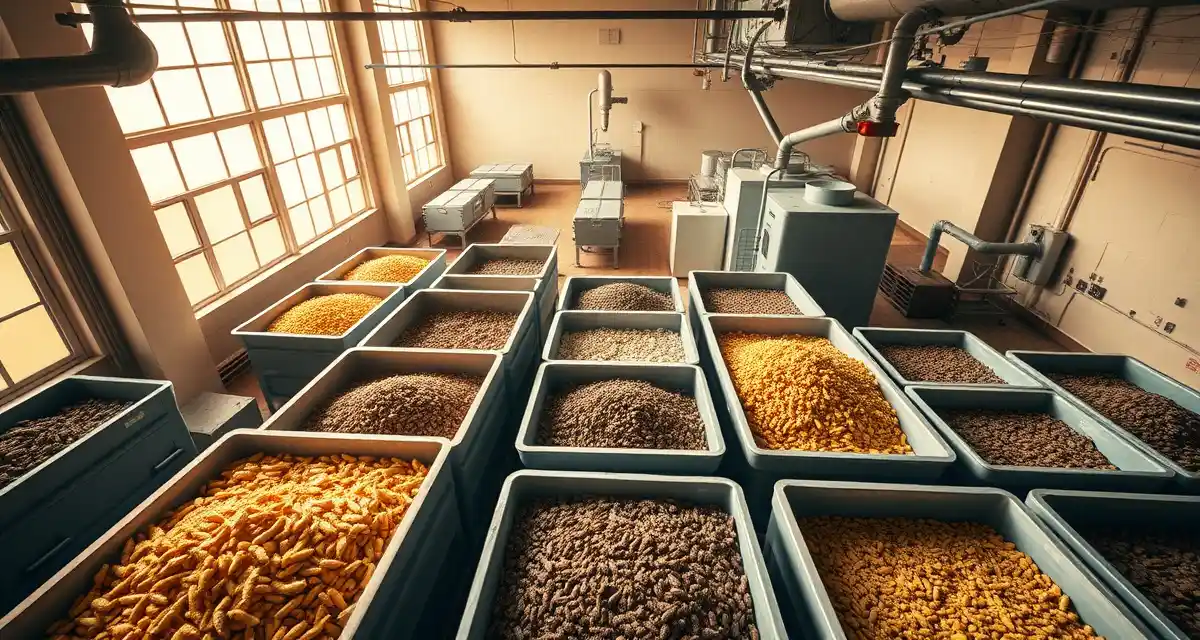
Cricket Farm Byproduct Revenue: Turning Waste into Profit
Cricket farms that harvest and sell all major byproducts (frass, oil, chitin) increase total revenue by 18% on average. That number comes from operations that have made the shift from treating processing waste as a disposal problem to treating it as a revenue opportunity.
Most cricket farms are running a one-revenue-stream business when they could be running three or four. The primary product, whether that's feeder crickets, cricket flour, or whole dried crickets, is only part of the value your operation produces. Every bin cycle generates frass. Every flour batch generates chitin-rich processing waste. Every batch of dried crickets contains fat that can be extracted as oil. None of these byproducts require you to raise more crickets. They come from the crickets you're already raising.
TL;DR
- Cricket farms that harvest and sell all major byproducts (frass, oil, chitin) increase total revenue by 18% on average.
- Cricket frass has an NPK ratio of approximately 3-1-2, making it a premium organic fertilizer that commands $3-$8 per pound in specialty garden markets.
- Cricket oil (extracted fat) contains high levels of lauric acid and linoleic acid -- it sells at $20-$40 per kilogram to specialty cosmetics and functional food buyers.
- Chitin derived from cricket processing waste is used in biomedical and agricultural applications and commands $15-$30 per kilogram from specialty buyers.
- None of these byproducts require raising more crickets -- they come from the insects and processing waste your operation already generates.
- Frass revenue alone on a 50-bin operation running continuously can add $300-$600 per month at minimal additional labor cost.
The Four Main Byproduct Revenue Streams
1.
- It sells for $3-$6/lb in the premium organic fertilizer market.
Effort to start: Low.
- Dried Acheta domesticus is 20-30% fat by weight.
Effort to start: Medium-high.
- Requires CO2 extraction equipment or toll processing through an extraction facility.
- Not a day-one project, but worth evaluating once your primary production is stable.
Revenue potential: Depends heavily on scale and whether you're toll processing or owning the equipment.
3.
- Worth pursuing once you have a flour production line running.
4.
The Four Main Byproduct Revenue Streams
1. Cricket Frass Fertilizer
Frass is the most accessible byproduct because it requires the least processing. It accumulates naturally in your bins and just needs to be dried, sieved, and bagged.
What it is: The combination of cricket excrement, shed exoskeleton material, uneaten feed, and organic debris from the bottom of cricket bins.
Why it's valuable: Frass has an NPK of approximately 3.5-2-2 and contains chitin that supports beneficial soil microbiota. It sells for $3-$6/lb in the premium organic fertilizer market.
Effort to start: Low. Collect during bin cleaning, dry with existing equipment, sieve, bag, test, and sell.
Revenue potential for a 30-bin farm: 300-450 lbs/week frass output, potential $900-$1,350/week at retail prices.
2. Cricket Oil
What it is: The lipid fraction extracted from dried crickets, rich in lauric acid, oleic acid, and omega fatty acids.
Why it's valuable: Cricket oil has premium applications in cosmetics and nutraceuticals and commands $80-$120/liter. Dried Acheta domesticus is 20-30% fat by weight.
Effort to start: Medium-high. Requires CO2 extraction equipment or toll processing through an extraction facility. Not a day-one project, but worth evaluating once your primary production is stable.
Revenue potential: Depends heavily on scale and whether you're toll processing or owning the equipment.
3. Chitin
What it is: The structural polysaccharide from insect exoskeletons, concentrated in shed skins, legs, wings, and heads from your processing waste.
Why it's valuable: Food-grade cricket chitin sells for $25-$40/lb for nutraceutical, cosmetic, and specialty agricultural applications. Cricket chitin has advantages over shellfish-derived chitin due to the absence of calcium carbonate.
Effort to start: Medium. Requires either physical separation before milling, chemical extraction (alkaline-acid method), or enzymatic extraction. Lab analysis for purity is required before commercial sale.
Revenue potential: Higher per-pound than frass but lower volume. Worth pursuing once you have a flour production line running.
4. Exoskeleton Meal
What it is: The coarser fraction separated during flour sieving that's rich in chitin and lower in protein than fine cricket flour.
Why it's valuable: This fraction has applications in specialty animal feed and agricultural amendment without requiring full chitin extraction. It sells for less than pure chitin but requires less processing.
Effort to start: Low if you're already sieving your flour. The sieving process separates this fraction automatically.
Revenue potential: $2-$8/lb depending on application and market, lower than purified chitin but with near-zero incremental production cost.
Calculating Your Byproduct Revenue Opportunity
To estimate your byproduct revenue potential, start with your current production data:
Frass output: Approximately 15-25% of your total cricket feed input becomes frass. If you feed 100 lbs of feed per week, expect 15-25 lbs of dried frass output per week.
Fat fraction: 20-30% of dried cricket weight is fat. If you process 100 lbs of dried crickets per batch, 20-30 lbs is potentially extractable as oil.
Chitin fraction: 8-12% of dried cricket weight is chitin. From 100 lbs of dried crickets, 8-12 lbs of chitin is potentially recoverable.
The 18% revenue increase from byproduct sales cited above assumes a flour-producing operation that adds frass sales and at least one of the higher-value byproducts (chitin or oil). Not every operation will achieve this number, but the direction is consistent: byproduct revenue adds meaningfully without requiring additional cricket production.
Integrating Byproduct Tracking into Your Farm Management
The foundation for byproduct revenue is tracking. You can't sell byproducts consistently if you're not measuring them consistently. Your cricket farm waste management process needs to capture:
- Frass collected per bin-cleaning event (weight, moisture content)
- Processing waste volume from each flour production batch
- Oil extracted per batch (if applicable)
- Chitin separated per batch (if applicable)
CricketOps allows you to track these waste streams alongside primary production in your cricket farm profitability guide analysis, which is how you calculate true margin per product line once byproduct revenue is included.
Prioritizing Which Byproducts to Start With
If you're starting from zero byproduct sales, prioritize in this order:
First: Frass. Lowest barrier to entry, requires existing equipment, immediate market available through online sales and local garden centers. Start here.
Second: Exoskeleton meal or chitin. If you're already milling flour, you're generating this fraction already. Sieve it out, analyze it, and find a buyer before investing in extraction equipment.
Third: Cricket oil. Highest per-unit value but highest processing complexity. Evaluate toll processing options before committing to equipment purchase.
Frequently Asked Questions
What byproducts can I sell from my cricket farm?
The main revenue-generating byproducts from a cricket farm are: frass (cricket excrement and organic bin debris sold as a premium organic fertilizer at $3-$6/lb), cricket oil (the fat fraction extracted from dried crickets, sold for $80-$120/liter in cosmetics and nutraceuticals), chitin (the structural polysaccharide from exoskeletons, sold at $25-$40/lb for nutraceutical and cosmetic applications), and exoskeleton meal (the coarse sieving fraction from flour production, sold for $2-$8/lb for specialty feed and agricultural applications). All four byproducts come from crickets you're already raising. The difference is whether you collect and process them or discard them.
How much additional revenue can byproducts add to my cricket farm?
Cricket farms that actively harvest and sell frass, oil, and chitin increase total revenue by an average of 18% compared to operations selling only primary products. The exact number varies by operation size and which byproducts you pursue. A 30-bin farm generating 400 lbs of frass per week at an average of $3.50/lb retail would add $1,400/week in frass revenue alone. Adding chitin and oil at commercial scale adds more. Not every farm is positioned to pursue all byproducts simultaneously, but frass sales alone are achievable for any operation with existing drying equipment and are profitable within the first month of implementation.
How does CricketOps track byproduct production alongside primary flour output?
CricketOps tracks production by batch, which means you can record the output of each processing run including primary product weight, frass collected, and any extracted fractions. Setting up separate product types for frass, chitin meal, and oil within your CricketOps account lets you track byproduct revenue against production cost on a per-batch basis. This gives you accurate contribution margin data for each revenue stream, which is essential for deciding which byproducts to scale and which to deprioritize. If you're not sure how to configure this in your account, the onboarding team can help you set up the product lines correctly from the start.
What financial records should a cricket farm maintain for tax purposes?
At minimum: purchase receipts for feed, equipment, and supplies; sales records with buyer identification; payroll records if you have employees; and documentation of any capital equipment purchases. Cricket farm income is treated as agricultural income in most US jurisdictions, which may qualify for specific Schedule F provisions. Work with a CPA who has agricultural industry experience to ensure you are capturing all applicable deductions.
How do I calculate my true cost per pound of cricket produced?
True cost per pound requires adding all variable and fixed costs for a production cycle and dividing by total harvested weight. Variable costs include feed, water, electricity, and packaging materials. Fixed costs include facility overhead, equipment depreciation, insurance, and software subscriptions. Many operations only track feed cost, which understates actual production cost and leads to underpricing when setting buyer contracts.
What accounting method should a small cricket farm use?
Most small cricket farms use cash-basis accounting, where income is recorded when received and expenses when paid. This is simpler than accrual accounting and is permitted for most farm operations under IRS rules. As your operation grows, an accountant may recommend accrual accounting to better match revenues with the production cycles that generated them, particularly if you carry significant inventory or receivables.
Sources
- Food and Agriculture Organization of the United Nations (FAO) -- Edible Insects: Future Prospects for Food and Feed Security
- North American Coalition for Insect Agriculture (NACIA)
- USDA Economic Research Service -- Agricultural Finance Statistics
- Internal Revenue Service (IRS) -- Publication 225: Farmer's Tax Guide
- Small Business Administration (SBA) -- Agricultural Business Resources
Get Started with CricketOps
Understanding your true production economics starts with organized records across every input and output. CricketOps captures the production data that connects to your financial picture -- cost per batch, yield per bin, and the operational history you need to make better decisions about pricing, scaling, and efficiency. Connect your production tracking and financial planning in CricketOps.