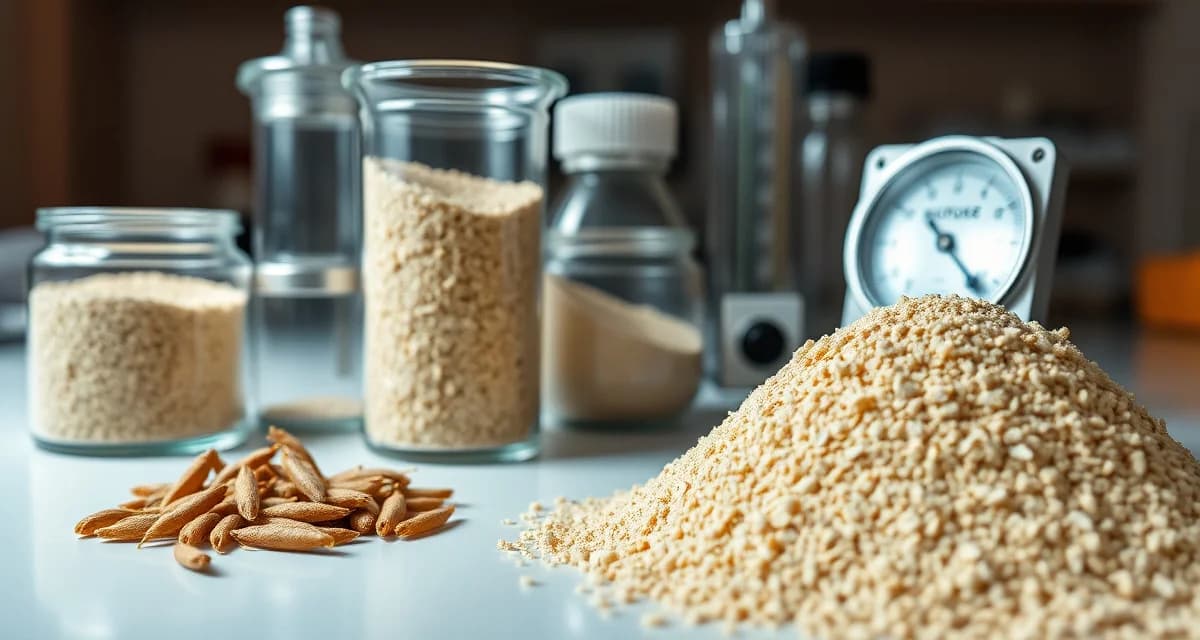
Moisture Control in Cricket Flour: Preventing Mold and Extending Shelf Life
Cricket flour with a water activity above 0.70 will develop visible mold within 14 days at room temperature. That's a shelf life failure, and it typically shows up in the field rather than in your facility, which means a customer complaint or a recall, not a caught problem. Moisture control is the difference between a 12-month shelf life and a 14-day one.
This guide covers how to measure and control moisture in cricket flour, why water activity matters more than moisture percentage, and how to build a moisture management protocol into your production process.
TL;DR
- Cricket flour with a water activity above 0.70 will develop visible mold within 14 days at room temperature.
- Moisture control is the difference between a 12-month shelf life and a 14-day one.
- Cooling procedure: Cool dried product in a space with controlled humidity (below 50% RH).
- Cricket flour is typically dried to 5-8% moisture content.
- Cost range $1,500-$5,000.
- Handheld Aw meters: Less accurate but useful for in-process spot checks.
- Cost range $300-$800.
- Lab testing: Send samples to a food testing laboratory for water activity measurement if you don't have in-house instruments.
- Set an internal release standard (for example, Aw below 0.60 for release to ambient-temperature storage).
Water Activity vs. Moisture Percentage: Why the Distinction Matters
Most food producers measure moisture content by percentage, the percentage of the product's weight that is water. Cricket flour is typically dried to 5-8% moisture content. That seems reassuringly dry.
The problem is that moisture percentage doesn't tell you enough about mold risk. What matters is water activity (Aw), a measure of the energy status of water in your product, specifically how much water is available for microbial growth and chemical reactions.
Two samples of cricket flour can have similar moisture percentages but different water activities, depending on how tightly that water is bound to proteins and fats in the product. Mold grows based on water activity, not moisture percentage.
Critical water activity thresholds for cricket flour:
- Aw above 0.70: Mold growth possible; shelf life measured in days to weeks at ambient temperature
- Aw 0.65-0.70: Risk zone; some xerophilic (moisture-tolerant) molds can grow
- Aw below 0.65: Generally stable against mold growth; most bacterial growth also inhibited
- Aw 0.60 or below: Target for long-term ambient storage; minimal microbial risk
Well-dried cricket flour reaching the kill step target typically has a water activity in the 0.45-0.60 range immediately after drying. The risk is in what happens next.
How Moisture Gets Back Into Dried Cricket Flour
Cricket flour is hygroscopic, it absorbs moisture from the environment. Once you've achieved low water activity through drying, you can lose it quickly if you're not careful:
Cooling in a humid environment. If you open the dryer and the product cools in a room with 60%+ relative humidity, the flour begins absorbing moisture from the air before it's packaged. Cool in a conditioned space with controlled humidity.
Inadequate packaging. If your packaging material is moisture-permeable (or improperly sealed), flour in storage will slowly equilibrate with the ambient humidity. Over 12 months, even small moisture gains can push water activity above the safe threshold.
Temperature cycling in storage. When stored product goes through temperature cycles (cooler nights, warmer days), condensation can form inside packaging. Condensation is localized high-moisture zones where mold can grow even if the average water activity of the bulk product is acceptable.
Rehydration during grinding. If the grinding environment is humid and the flour is not immediately packaged, fine powder with its high surface area will absorb moisture faster than whole dried insects.
How to Measure Water Activity
Water activity is measured with a water activity meter (sometimes called an Aw meter). These instruments equilibrate a small sample of product in a sealed chamber and measure the equilibrium relative humidity above the sample, expressed as a decimal fraction (0 to 1.0).
Instrument options:
- Benchtop Aw meters (Novasina, Decagon/METER Group, Rotronic): Accurate to ±0.003-0.005 Aw; suitable for QC measurement at final product stage. Cost range $1,500-$5,000.
- Handheld Aw meters: Less accurate but useful for in-process spot checks. Cost range $300-$800.
- Lab testing: Send samples to a food testing laboratory for water activity measurement if you don't have in-house instruments. Standard turnaround is 1-3 days.
For a commercial operation, at-minimum water activity testing of finished product before release is required to have meaningful quality control over your shelf life claims. Testing in-process (after drying, before packaging) lets you catch batches that need additional drying before they reach packaging.
Building a Moisture Control Protocol
A practical moisture control protocol for a cricket flour operation:
After drying: Measure water activity of each batch before packaging. Set an internal release standard (for example, Aw below 0.60 for release to ambient-temperature storage). Batches above the release standard should be returned for additional drying or assessed for lower-temperature storage.
Cooling procedure: Cool dried product in a space with controlled humidity (below 50% RH). Don't stack dried product on pallets in an unconditioned warehouse space overnight before packaging.
Packaging step: Package immediately after cooling and Aw verification. Every hour that dried flour sits unpackaged in an ambient environment is an opportunity for moisture uptake.
In-storage monitoring: Spot-check Aw of packaged product at defined intervals (for example, 3 months, 6 months, 12 months) against the lot's original Aw measurement. Trending upward Aw in storage indicates packaging or storage condition problems.
Documentation: Record Aw measurements at the batch level alongside your other production records. If a shelf life complaint comes in, you need to trace back to the production batch and verify what the Aw was at packaging.
See the cricket flour production guide for the full production context, and cricket flour FDA compliance overview for the regulatory framework.
Frequently Asked Questions
What moisture level should cricket flour be dried to?
The meaningful target isn't moisture percentage, it's water activity. Cricket flour should reach a water activity of 0.60 or below before packaging for ambient temperature storage. At Aw below 0.60, mold growth is effectively inhibited and the product is stable for 12+ months in properly sealed packaging. As a rough correlation, this corresponds to approximately 5-7% moisture content depending on the fat and protein composition of your specific flour, but Aw measurement is more reliable than moisture percentage as a release criterion.
How do I measure water activity in cricket flour?
Water activity is measured with a water activity meter (Aw meter). Benchtop instruments from manufacturers like Novasina, METER Group (Decagon), or Rotronic provide accurate measurements (±0.003-0.005 Aw) suitable for production QC. For operations without in-house Aw meters, send samples to a food testing laboratory that offers water activity measurement, standard service is available from most food quality labs at modest cost. Aw measurement of each finished product batch before release is the minimum control needed to make shelf life claims with confidence.
Does CricketOps track moisture and water activity data for cricket flour batches?
CricketOps tracks production batch records that can be extended to capture quality data including water activity measurements at the batch level. For operations building a moisture control program, logging Aw measurements alongside batch production records creates the traceability needed to investigate shelf life complaints and verify production consistency over time. The batch ID system in CricketOps connects farm-level production records to processing-stage quality data.
What documentation do food-grade cricket buyers typically require from suppliers?
Food manufacturers and distributors typically require a Certificate of Analysis (COA) for each batch, documentation of your food safety management system (HACCP plan), proof of facility registration with FDA if required, allergen management documentation, and supplier qualification questionnaires. Start building these records from your first commercial production batch -- retroactively reconstructing production documentation is difficult and sometimes impossible.
How should I price feeder crickets for wholesale accounts?
Wholesale pricing should cover your fully-loaded cost per unit plus a margin that accounts for the variable quality of large accounts (payment terms, return policies, volume discounts). A common approach is to start from your cost per 1,000 crickets (feed plus variable overhead plus allocated fixed costs), multiply by your target margin, and compare the result against known wholesale market rates. Feeder cricket wholesale prices vary significantly by species, size, and region.
What certifications improve the marketability of cricket products?
For food-grade products, certifications that resonate with buyers include USDA Organic (requires organic feed and approved inputs), non-GMO verification, and food safety system certifications such as SQF Level 2 or FSSC 22000. For feeder crickets going to pet industry accounts, health documentation and quarantine protocols are often more important than formal certifications. Check with your specific buyers to understand which certifications they value or require.
Sources
- Food and Agriculture Organization of the United Nations (FAO) -- Edible Insects: Future Prospects for Food and Feed Security
- North American Coalition for Insect Agriculture (NACIA)
- Specialty Food Association
- Good Food Institute -- Alternative Protein Market Data
- New Hope Network -- Natural Products Industry Research
Get Started with CricketOps
Selling cricket products consistently to food-grade buyers requires demonstrating consistent quality and reliable fulfillment. CricketOps gives you the production records and batch traceability documentation that buyers increasingly require as part of their supplier qualification process. Start building your production documentation in CricketOps before your first major account asks for it.