Foreign Material Control in Cricket Flour: Preventing Contamination
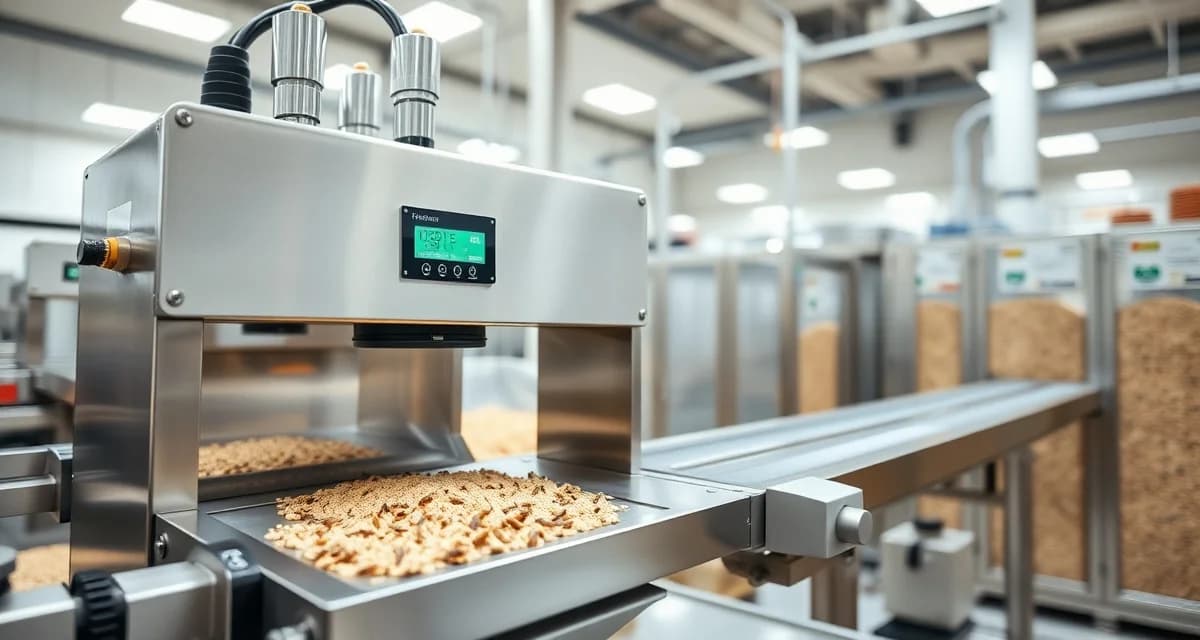
Metal detectors at the packaging line are the industry standard for physical hazard control in cricket flour production. A piece of metal contamination in a finished food product is a recall-level event - expensive, damaging to your brand, and potentially dangerous to consumers. For cricket flour specifically, physical hazard control deserves attention because the production environment involves equipment with metal components, bins that can deteriorate, and a grinding process that can introduce metal fragments if blades wear or break.
Foreign material control is a specific physical hazard requirement under FSMA's Preventive Controls Rule. This guide covers what a foreign material control program looks like for a cricket flour facility, from incoming materials through finished product.
TL;DR
- Sensitivity should be calibrated to food industry standards: 2mm ferrous, 2.5mm non-ferrous, 3mm stainless steel.
- Keep records for at least 2 years (the FSMA standard) or longer if your buyers require it.
- Metal detectors at the packaging line are the industry standard for physical hazard control in cricket flour production.
- A piece of metal contamination in a finished food product is a recall-level event - expensive, damaging to your brand, and potentially dangerous to consumers.
- Foreign material control is a specific physical hazard requirement under FSMA's Preventive Controls Rule.
- A metal detector at the packaging line or post-grind checks every unit of product for metal contamination.
- This should include holding product produced since the last successful test.
Calibration records: Metal detectors require calibration on a defined schedule.
What Foreign Material Control Covers
Foreign material (FM) control addresses physical hazards - pieces of material that don't belong in the product and could injure a consumer or indicate a contamination event. Regulated physical hazards in food processing include:
- Metal: Fragments from equipment wear, broken blades, hardware that falls into product
- Glass: From lighting, containers, instrument covers
- Hard plastic: From bins, equipment housings, utensils
- Wood: From pallets, crates, structural elements in older facilities
- Bone fragments: Less relevant for cricket flour but worth noting for context
- Personal items: Jewelry, pens, staples, plastic bag ties
For cricket flour, metal is the primary concern given the grinding and processing equipment involved. Hard plastic from cricket bins is a secondary concern. Glass is typically managed through a separate glass and brittle plastic program (see the dedicated guide for that topic).
Implementing Foreign Material Control: The Three Levels
Level 1: Prevention
The first line of FM control is preventing foreign material from entering the product stream in the first place.
- Equipment maintenance program: inspect blades, screens, and metal components on a scheduled frequency; replace before failure
- Bin inspection: inspect plastic bins for cracks or breaking edges before use; discard damaged bins
- Facility design: minimize wood in contact with product; use metal-detectable plastic utensils in production areas
- Hardware control: use metal-detectable band-aids, hair and beard nets, no loose jewelry in production
Level 2: Detection
After prevention, detection catches what prevention misses before product reaches consumers.
- Metal detection: Industry standard CCP for cricket flour. A metal detector at the packaging line or post-grind checks every unit of product for metal contamination. Set sensitivity to detect 2mm ferrous, 2.5mm non-ferrous, and 3mm stainless steel - the standard food industry sensitivity thresholds.
- Screening: A properly sized screen or sieve at the flour stage can catch large physical contaminants while maintaining particle size consistency.
- Visual inspection: Manual inspection during harvest and processing catches gross physical contamination (substrate chunks, hardware, dead animals other than crickets) before grinding.
Level 3: Segregation and Rejection
When the metal detector rejects a package, the rejected product must go to a designated hold area, not back into the production line. Your FM program needs documented procedures for:
- Segregating rejected product
- Investigating the source of the rejection
- Documenting the investigation and outcome
- Releasing or destroying the held product
Critical Control Point Documentation
Under HACCP and FSMA, if you've identified physical contamination as a significant hazard and metal detection as your CCP, you need:
CCP monitoring record: Document each production run's metal detector checks - the time, the product lot, the test result (pass/fail), and who performed the check.
Test procedure: Document how you test the metal detector - test wands with known-size metal pieces, at what frequency, and the corrective action if the detector fails the test.
Corrective action procedure: What happens when a rejection occurs or when the detector fails a test. This should include holding product produced since the last successful test.
Calibration records: Metal detectors require calibration on a defined schedule. Document the calibration dates and results.
Setting Up Metal Detection at Your Scale
For a small cricket flour producer, a basic conveyor metal detector for $5,000-15,000 handles production volumes up to several hundred pounds per hour. Gravity-fall metal detectors (where product falls through the detector) are a more affordable option for flour products at lower throughput.
If your production volume doesn't justify dedicated metal detection equipment, a contract processor with metal detection capability is an option - though you then need to document the supplier verification that confirms the contract processor is running your product through their detector.
For HACCP plan development, see HACCP for cricket flour production. For your overall FDA compliance program, see cricket flour FDA compliance.
Frequently Asked Questions
What is foreign material control and does it apply to cricket flour?
Foreign material (FM) control is a physical hazard prevention and detection program designed to prevent pieces of metal, glass, hard plastic, wood, and other foreign objects from reaching consumers in finished food products. It applies to cricket flour production because the processing equipment (grinders, screens, conveyors) creates risks of metal fragment contamination, and because plastic bins can deteriorate and introduce hard plastic pieces. Under FSMA Preventive Controls, if you've identified physical hazard as a significant risk in your cricket flour production, you need preventive controls - typically metal detection - to address it. A well-documented FM program is also essential for any co-manufacturing relationship where buyers require food safety documentation.
What detection equipment is required for foreign material control in cricket flour?
Metal detection is the industry standard. For cricket flour, the most common configuration is either a conveyor metal detector (product on a belt passes through the detector) or a gravity-fall detector (flour falls through the detector opening). Both approaches check finished product for metal contamination before packaging. Sensitivity should be calibrated to food industry standards: 2mm ferrous, 2.5mm non-ferrous, 3mm stainless steel. Screening (sieving) complements metal detection by catching larger physical contaminants. X-ray inspection is used in higher-volume operations and can detect more material types than metal detection alone, but the cost is generally not justified for small cricket flour producers.
How do I document foreign material control as part of my HACCP plan?
In your HACCP plan, FM control typically appears as a Critical Control Point (CCP) at the metal detection step, or as a prerequisite program if you use screening without a formal CCP designation. Documentation includes: the hazard analysis identifying physical contamination as a significant hazard (if applicable), the CCP record form used during each production run to document metal detector tests and results, the corrective action procedure for when the detector rejects a package or fails a test, and equipment calibration records. All monitoring records should be reviewed periodically as part of your verification activities. Keep records for at least 2 years (the FSMA standard) or longer if your buyers require it.
How does CricketOps help track the metrics described in this article?
CricketOps provides bin-level logging for the variables that drive production outcomes -- feed inputs, environmental conditions, mortality events, and harvest results. Rather than maintaining these records in separate spreadsheets, you can view performance trends across bins and over time to identify which operational variables correlate with better outcomes in your specific facility.
Where can I find industry benchmarks to compare my operation's performance?
The North American Coalition for Insect Agriculture (NACIA) publishes periodic industry reports with production benchmarks. University extension programs in agricultural states, including the University of Georgia and University of Florida IFAS, occasionally publish insect farming production data. Industry conferences hosted by the Entomological Society of America and the Insects to Feed the World symposium series are additional sources of peer benchmarking data.
What is the biggest operational mistake cricket farmers make in their first year?
Expanding bin count before achieving consistent FCR and mortality targets in existing bins is the most common and costly first-year mistake. At 5-10 bins, problems are manageable. At 30-50 bins, the same proportional problems represent much larger financial losses. Most experienced cricket farmers recommend holding expansion until you have three consecutive production cycles hitting your FCR and mortality targets.
Sources
- Food and Agriculture Organization of the United Nations (FAO) -- Edible Insects: Future Prospects for Food and Feed Security
- North American Coalition for Insect Agriculture (NACIA)
- Entomological Society of America
- University of Georgia Cooperative Extension
- Journal of Insects as Food and Feed (Wageningen Academic Publishers)
Get Started with CricketOps
The practices covered in this article are easier to apply consistently when they are supported by organized production data. CricketOps gives cricket farmers the tools to track what matters -- by bin, by batch, and over time. Start your next production cycle in CricketOps and see how organized data changes the way you manage your operation.