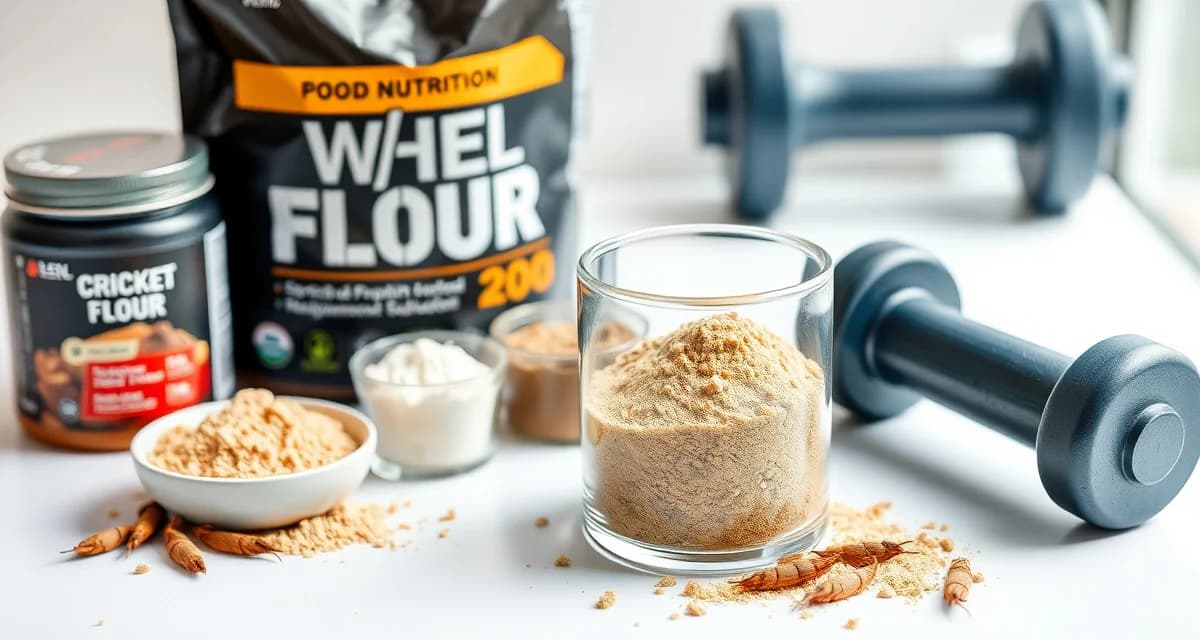
Cricket Flour in Sports Nutrition: Protein Supplement Market Entry Guide
Cricket flour's leucine content of 5.5g per 100g protein is comparable to whey, positioning it as a legitimate sports recovery protein. Leucine is the essential amino acid most directly associated with muscle protein synthesis - the mechanism by which protein consumption supports muscle repair and growth after exercise. For sports nutrition positioning, leucine content is a more meaningful metric than total protein alone, and cricket flour's leucine profile gives it genuine credibility alongside whey rather than just in the alternative protein category.
The sports nutrition market is the highest-growth segment for novel proteins. Understanding its structure, its buyer landscape, and the specific positioning that works is the foundation for entering this channel successfully.
TL;DR
- Cricket flour's leucine content of 5.5g per 100g protein is comparable to whey, positioning it as a legitimate sports recovery protein.
- Established large supplement companies (Optimum Nutrition, MusclePharm, etc.) have not broadly adopted cricket protein as of 2026 but are monitoring the market.
- The sports nutrition market is the highest-growth segment for novel proteins.
- Protein supplements (protein powders, bars, ready-to-drink shakes) represent the largest segment.
- Your positioning needs to be specific - you're not competing against all of these equally.
- Cricket protein's strongest competitive position is versus plant proteins in the complete amino acid profile argument.
- Whey has better consumer familiarity and is currently price-competitive.
The Sports Nutrition Market for Cricket Protein
The US sports nutrition market exceeds $25 billion annually. Protein supplements (protein powders, bars, ready-to-drink shakes) represent the largest segment. The market for "clean" and "natural" protein sources has grown at 15-20% annually since 2020 as mainstream sports nutrition consumers shift toward shorter ingredient lists and more recognizable protein sources.
Cricket protein enters this market competing against whey (the dominant protein supplement ingredient), plant proteins (pea, hemp, rice protein), and other emerging novel proteins (collagen peptides, egg white protein). Your positioning needs to be specific - you're not competing against all of these equally.
Cricket protein's strongest competitive position is versus plant proteins in the complete amino acid profile argument. Whey has better consumer familiarity and is currently price-competitive. Cricket's differentiation from whey is the sustainability narrative and the novelty factor, not a performance advantage. Cricket's differentiation from plant proteins is leucine content and complete amino acid profile, which are genuine performance differentiators.
Regulatory Considerations for Sports Nutrition
This is where cricket protein in sports nutrition gets complicated. The regulatory classification of your product determines your regulatory pathway:
Food (not a supplement): If you're selling a cricket protein bar or cookie, FDA food regulations apply. Protein content must be calculated using PDCAAS or DIAAS methodology (not just total nitrogen) for protein label claims. No structure-function claims about muscle recovery are allowed without being a supplement.
Dietary supplement: If you're selling a cricket protein powder positioned as a dietary supplement (with a Supplement Facts panel instead of Nutrition Facts), DSHEA (the Dietary Supplement Health and Education Act) applies. The challenge: cricket flour's novel food status means it may not qualify as a dietary ingredient under DSHEA without specific review.
The practical recommendation for most cricket protein sports nutrition products: position as a food product (protein bar, high-protein snack, food-grade protein powder with a Nutrition Facts panel) rather than as a dietary supplement. This avoids the DSHEA dietary ingredient questions while allowing protein content claims under food labeling regulations.
Third-party certifications: Sports nutrition buyers care about informed sport certifications (NSF Certified for Sport, Informed Sport). These certifications test for substances banned in athletic competition - relevant for competitive athletes who have drug testing obligations. Pursuing one of these certifications for your cricket protein product significantly expands your marketing reach in the competitive athlete segment.
The Sports Nutrition Brand Buyer Landscape
Sports nutrition brands buying cricket protein as an ingredient in 2026 fall into two categories:
Established supplement brands experimenting with novel proteins for line extensions. These companies have existing distribution and marketing infrastructure. A single formulation deal with an established brand can place your ingredient into significant volume. The challenge: they have sophisticated supply chain requirements and will need full documentation.
Emerging "clean" protein brands built specifically around novel or sustainable protein sources. These brands are more likely to lead with cricket protein as their primary story rather than a line extension. They tend to be smaller but more aligned with your ingredient's narrative.
For the business context, see cricket flour business guide. For the broader market context, see insect protein industry overview.
Frequently Asked Questions
How do I market cricket flour to the sports nutrition market?
Lead with leucine content and complete amino acid profile - these are the performance-relevant differentiators that sports nutrition buyers understand and care about. Frame the comparison against plant proteins (where cricket protein's leucine content is genuinely superior) rather than against whey (where the amino acid profile is comparable but familiarity favors whey). Sustainability positioning is a supporting differentiator for the sports nutrition consumer who also cares about environmental impact, but protein performance is the primary purchase driver. Build your product around a food format (bar or powder with Nutrition Facts panel) rather than a supplement format to avoid DSHEA dietary ingredient questions.
What regulatory considerations apply to cricket protein in sports supplements?
The key decision is whether your product is a food or a dietary supplement under FDA definitions. For cricket protein bars and food products, standard food labeling regulations apply and protein content must be calculated using PDCAAS or DIAAS methodology for accurate labeling. For dietary supplement positioning (Supplement Facts panel), DSHEA applies and cricket flour's novel ingredient status creates questions about dietary ingredient qualification that require regulatory review before launch. The most straightforward path: position as a food product. Third-party certifications like NSF Certified for Sport are worth pursuing if you're targeting competitive athletes, as these certifications are meaningful purchase criteria in that segment.
Which sports nutrition brands are using cricket protein in 2026?
Several sports nutrition brands have incorporated cricket protein into their product lines, primarily in bars and protein powders positioned at the intersection of performance and sustainability. The most visible are smaller "clean protein" brands that have built their entire identity around alternative proteins - companies like Graze Anatomy, Jiminy's (pet nutrition), and several emerging DTC brands. Established large supplement companies (Optimum Nutrition, MusclePharm, etc.) have not broadly adopted cricket protein as of 2026 but are monitoring the market. Connecting with sports nutrition brands is best done through Natural Products Expo (supplement brands attend) and direct outreach to R&D and procurement teams at brands whose positioning aligns with alternative protein innovation.
How do moisture levels in cricket feed affect colony health?
Feed that is too dry reduces palatability and may cause crickets to rely entirely on water gel sources for hydration. Feed with excess moisture molds rapidly in the warm, humid environment of a cricket bin, and moldy feed is a significant exposure route for pathogens. The practical approach is to serve fresh wet foods (fruits, vegetables) separately from dry feed, replace wet items within 24 hours, and store dry feed in a low-humidity area.
Should gut-loading feed differ from the standard production diet?
Yes. Gut-loading targets the 24-48 hours before harvest to maximize the nutritional value transferred to the end consumer of the cricket. Gut-loading diets typically emphasize specific nutrients the buyer requires -- omega-3 fatty acids, calcium, and certain vitamins are common targets. Standard production feed is optimized for growth rate and FCR, not for enriching the nutritional profile of the finished product.
What feed management practices have the biggest impact on FCR?
Two changes consistently improve FCR more than any other: matching feed protein content to the optimal range for the target species (22-25% for Acheta domesticus), and increasing feeding frequency for pinhead-stage crickets (3 times per day versus once). After these two variables, reducing feed waste by feeding to observed consumption rather than fixed quantities is the next highest-impact adjustment.
Sources
- Food and Agriculture Organization of the United Nations (FAO) -- Edible Insects: Future Prospects for Food and Feed Security
- North American Coalition for Insect Agriculture (NACIA)
- Journal of Insects as Food and Feed (Wageningen Academic Publishers)
- American Association of Feed Control Officials (AAFCO)
- University of Georgia Cooperative Extension
Get Started with CricketOps
Feed management is where your production economics are won or lost. CricketOps lets you log every feed batch, track consumption and FCR by bin, and identify exactly where your feed program is performing and where it is not. Start tracking your feed inputs in CricketOps and get the data you need to improve your cost per pound of cricket produced.