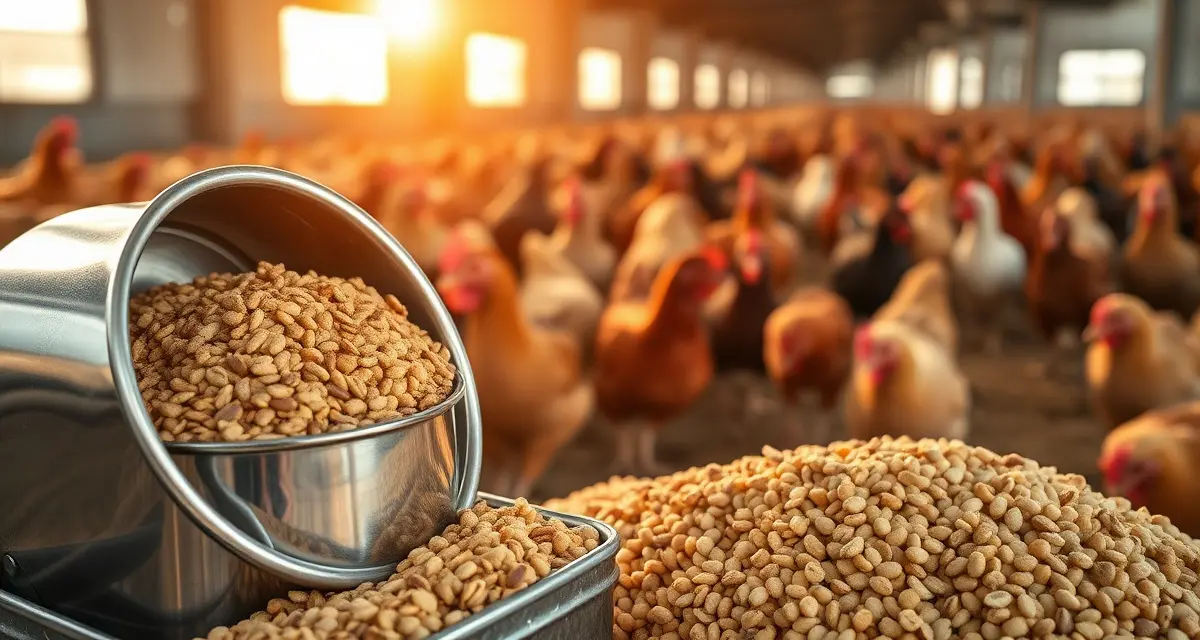
Cricket Meal for Poultry Feed: Adding a New Revenue Stream
Poultry feed is one of the most accessible non-human markets for cricket meal. The regulatory pathway is cleaner than human food, volumes are large, and the nutritional case for cricket meal in broiler and layer diets is supported by published research. If your cricket farm generates processing byproduct or off-spec material that doesn't meet food-grade standards, poultry feed is a logical secondary market that prevents waste and generates additional revenue.
Cricket meal in poultry feed improves broiler feed conversion ratio by an average of 8% in published studies. For poultry producers, an 8% FCR improvement is not a marginal benefit - it's a meaningful operational gain that translates directly to reduced feed cost per pound of gain. That performance data is what makes poultry feed a credible market rather than a speculative one.
TL;DR
- Cricket meal in poultry feed improves broiler feed conversion ratio by an average of 8% in published studies.
- For poultry producers, an 8% FCR improvement is not a marginal benefit - it's a meaningful operational gain that translates directly to reduced feed cost per pound of gain.
- Feed-grade pricing reflects the lower documentation burden but also the competitive pressure from soybean meal (the dominant poultry protein source at $0.50-0.80 per pound).
- The registration process typically takes 4-8 weeks and requires a label draft, guaranteed analysis, and ingredient safety documentation.
- Poultry feed is one of the most accessible non-human markets for cricket meal.
- The regulatory pathway is cleaner than human food, volumes are large, and the nutritional case for cricket meal in broiler and layer diets is supported by published research.
- Under AAFCO's current framework, dried insect products including cricket meal fall under ingredient definitions that allow use in non-ruminant animal feeds including poultry.
Regulatory Status for Cricket Meal in Poultry Feed
The Association of American Feed Control Officials (AAFCO) governs ingredient definitions for animal feeds sold in the US. Under AAFCO's current framework, dried insect products including cricket meal fall under ingredient definitions that allow use in non-ruminant animal feeds including poultry.
The specific pathway for marketing cricket meal for poultry feed operates through your state's department of agriculture feed control. Most states require that commercial feed ingredients be registered with the state feed control official before sale. Registration requires an ingredient definition consistent with AAFCO standards, a label compliant with state feed labeling requirements, and a guaranteed analysis listing the nutrient values.
This is less complex than the FDA food safety plan requirements for human food, which makes the regulatory barrier for poultry feed lower. Work with your state's department of agriculture to confirm the registration requirements before you start marketing to poultry operations.
Nutritional Value of Cricket Meal in Poultry Diets
Broiler chickens are non-ruminant monogastrics with similar amino acid requirements to fish - high-quality protein with sufficient essential amino acid content is the primary driver of feed performance. Cricket meal delivers:
- 55-65% crude protein (whole cricket meal)
- A well-balanced amino acid profile including lysine, methionine, and threonine at levels competitive with soybean meal
- Fat content that provides energy value (metabolizable energy 2,800-3,200 kcal/kg estimated)
- Calcium from the chitin exoskeleton, which can partially reduce the need for calcium supplementation in layer diets
Published studies on cricket meal in broiler diets at 5-15% inclusion rates show consistent FCR improvement of 6-10%, with some studies showing improved breast meat yield. The mechanism is likely a combination of amino acid quality and palatability - broilers find insect-based ingredients highly palatable, which increases voluntary feed intake.
For layer hens, calcium from chitin may be useful in formulations, though the primary value is still the protein quality.
What Poultry Feed Buyers Require
Commercial poultry operations and feed mills purchasing cricket meal will typically require:
- Guaranteed analysis (crude protein %, crude fat %, moisture %, crude fiber %, ash %)
- Certificate of Analysis per batch
- State feed registration or equivalent documentation
- Pathogen testing (Salmonella negative, standard microbiological counts)
- Consistent particle size for compatibility with pelleting or mash formulation equipment
Large integrated poultry producers (Tyson, Perdue, Foster Farms) have formal ingredient approval processes that will require FDA facility registration, audit documentation, and potentially HACCP verification. These are not accessible to most small cricket farms initially.
Regional feed mills and independent poultry producers are better first targets. Many are already looking for alternatives to conventional soy and synthetic amino acid supplementation, particularly those with sustainability programs or organic certification goals.
Pricing for Poultry Feed Cricket Meal
Cricket meal for poultry feed typically prices at a discount to food-grade cricket flour - roughly $8-15 per pound depending on protein content, specification, and volume. Feed-grade pricing reflects the lower documentation burden but also the competitive pressure from soybean meal (the dominant poultry protein source at $0.50-0.80 per pound).
At current prices, cricket meal as a significant inclusion in commodity broiler feed is not economically competitive with soy. The opportunity is in premium markets: certified organic poultry operations, free-range broiler producers with sustainability marketing, and specialty egg producers. These operations can absorb higher ingredient costs and pass them on to consumers who pay premium prices for their products.
The circular economy angle is also worth considering. If your cricket farm generates processing waste - legs, wings, exoskeleton fragments from milling operations - this material can potentially be diverted to poultry feed at lower value but with minimal additional processing cost. The broiler-cricket circular economy (crickets fed on agricultural byproducts, cricket byproducts fed back to poultry) is an emerging narrative in sustainable agriculture that some integrated operations are actively developing.
CricketOps tracks your production yields, which helps you quantify what's available for secondary markets versus primary sales. Understanding your byproduct volumes is the first step to pricing them appropriately. See cricket farm management for how production data connects to market planning, and the insect protein industry overview for where poultry feed fits in the broader insect protein market landscape.
Frequently Asked Questions
Can I sell cricket meal to poultry feed manufacturers?
Yes. Cricket meal can be sold for poultry feed under AAFCO's ingredient framework for dried insect products in non-ruminant animal feeds. You'll need to register your ingredient with your state's department of agriculture feed control office, comply with state feed labeling requirements, and provide a guaranteed analysis and Certificate of Analysis for each batch. Most regional feed mills and independent poultry producers are accessible without a full FSMA food safety plan, though you'll still need basic pathogen testing documentation. Large integrated poultry producers require more extensive supplier qualification, including facility audits, that are typically better pursued once you're established in the regional market.
What is the price per ton of cricket meal for poultry feed?
Cricket meal for poultry feed typically trades at $8-15 per pound ($17,600-33,000 per ton) depending on protein content, grade, and buyer volume. This is significantly higher than conventional soybean meal ($0.50-0.80/lb) but the comparison that justifies it is the FCR improvement data - an 8% FCR gain in a 2.5 lb broiler means roughly 0.2 lbs of feed saved per bird. At scale, that savings offsets a meaningful premium per ton of cricket meal. Specialty poultry operations with organic or free-range positioning can absorb higher ingredient costs more readily than commodity broiler producers. Price negotiation with first customers will likely involve sharing FCR study data to justify the premium.
Does AAFCO allow cricket meal in poultry feed?
AAFCO's framework includes dried insect products under ingredient definitions that permit use in non-ruminant animal feeds, which includes poultry. The practical pathway involves registering your ingredient with your state's department of agriculture feed control under an appropriate AAFCO ingredient definition (dried whole crickets or cricket meal). Each state implements AAFCO standards differently, so confirm the specific registration requirements with your state's feed control office before marketing your product. The registration process typically takes 4-8 weeks and requires a label draft, guaranteed analysis, and ingredient safety documentation.
How do moisture levels in cricket feed affect colony health?
Feed that is too dry reduces palatability and may cause crickets to rely entirely on water gel sources for hydration. Feed with excess moisture molds rapidly in the warm, humid environment of a cricket bin, and moldy feed is a significant exposure route for pathogens. The practical approach is to serve fresh wet foods (fruits, vegetables) separately from dry feed, replace wet items within 24 hours, and store dry feed in a low-humidity area.
Should gut-loading feed differ from the standard production diet?
Yes. Gut-loading targets the 24-48 hours before harvest to maximize the nutritional value transferred to the end consumer of the cricket. Gut-loading diets typically emphasize specific nutrients the buyer requires -- omega-3 fatty acids, calcium, and certain vitamins are common targets. Standard production feed is optimized for growth rate and FCR, not for enriching the nutritional profile of the finished product.
What feed management practices have the biggest impact on FCR?
Two changes consistently improve FCR more than any other: matching feed protein content to the optimal range for the target species (22-25% for Acheta domesticus), and increasing feeding frequency for pinhead-stage crickets (3 times per day versus once). After these two variables, reducing feed waste by feeding to observed consumption rather than fixed quantities is the next highest-impact adjustment.
Sources
- Food and Agriculture Organization of the United Nations (FAO) -- Edible Insects: Future Prospects for Food and Feed Security
- North American Coalition for Insect Agriculture (NACIA)
- Journal of Insects as Food and Feed (Wageningen Academic Publishers)
- American Association of Feed Control Officials (AAFCO)
- University of Georgia Cooperative Extension
Get Started with CricketOps
Feed management is where your production economics are won or lost. CricketOps lets you log every feed batch, track consumption and FCR by bin, and identify exactly where your feed program is performing and where it is not. Start tracking your feed inputs in CricketOps and get the data you need to improve your cost per pound of cricket produced.