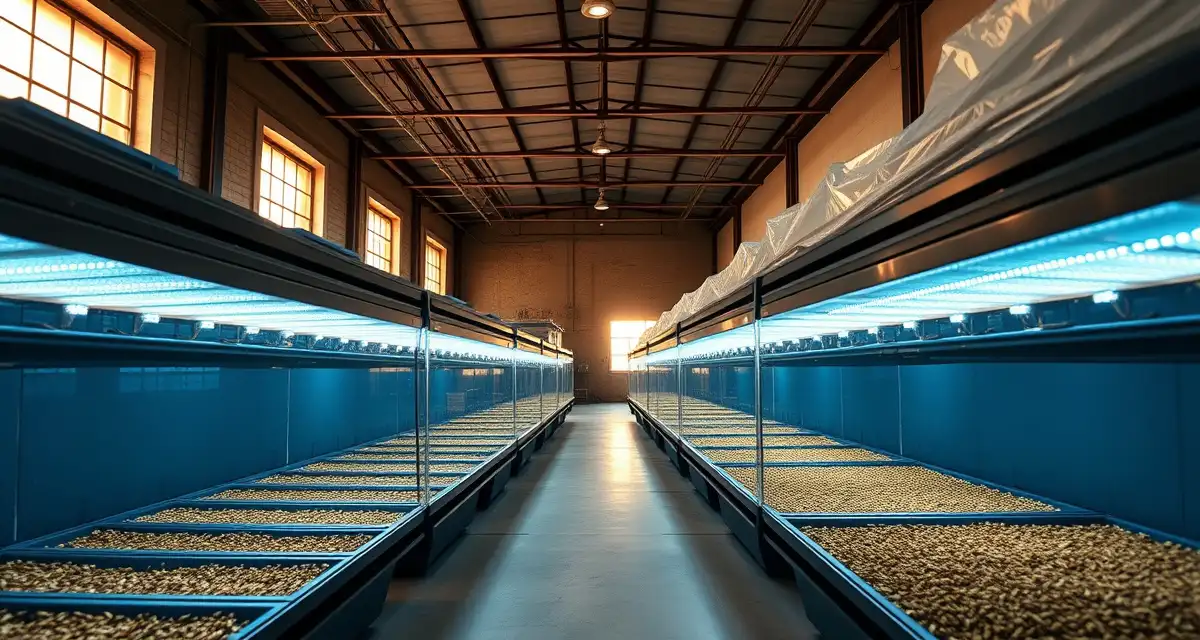
Urban Cricket Farming in Houston: Gulf Coast City Guide
Houston's hot and humid climate mirrors the natural cricket habitat, reducing heating costs to near zero for most of the year. If you're considering starting a commercial cricket farm in Houston, the climate is genuinely one of your biggest operational advantages over farms in cooler northern cities. What you'll spend on cooling in summer, you'll save on heating for the rest of the year - and the net energy cost for temperature management is among the lowest of any major US city.
Houston is also the 4th largest city in the US with a large and diverse food culture, a significant reptile-keeping community, and growing interest in alternative proteins from the food and restaurant industry that has expanded Houston's culinary profile in recent years.
TL;DR
- Winter (December-February): Houston averages only 17 days per year below 40F, and these rarely persist
- Houston's zoning code classifies insect production as an agricultural activity eligible in M-1 light industrial and agricultural zoning districts
- The primary climate management cost is summer cooling to maintain the 85-92F optimal range when outside temperatures regularly exceed 95F
- Houston's zoning code designates insect production as an agricultural activity eligible in M-1 (Light Industrial) and AG (Agricultural) zoning classifications
- Contact the City of Houston's Department of Planning and Development at 832-394-9500 to confirm current zoning classification for any specific address before signing a lease
- Contact TDA's Agricultural Division at 512-463-7476 to confirm current requirements
- Summer heat (June-October): Houston regularly sees temperatures above 95F, with high humidity that makes cooling harder
Winter (December-February): Houston averages only 17 days per year below 40F, and these rarely persist.
- Houston's zoning code classifies insect production as an agricultural activity eligible in M-1 light industrial and agricultural zoning districts.
- The primary climate management cost is summer cooling to maintain the 85-92F optimal range when outside temperatures regularly exceed 95F.
- Houston's hot and humid climate mirrors the natural cricket habitat, reducing heating costs to near zero for most of the year.
- If you're considering starting a commercial cricket farm in Houston, the climate is genuinely one of your biggest operational advantages over farms in cooler northern cities.
Can You Run a Cricket Farm in Houston?
Yes. Houston's zoning code designates insect production as an agricultural activity eligible in M-1 (Light Industrial) and AG (Agricultural) zoning classifications. The city has been increasingly supportive of urban agriculture initiatives, and insect farming falls within the agricultural production category that city planners recognize.
For most small commercial cricket farms operating inside a leased industrial or warehouse space, the primary zoning consideration is whether the facility is in a compatible zoning district. Light industrial zoning in Houston is widely distributed throughout the city and its suburbs, giving you significant flexibility in site selection.
Contact the City of Houston's Department of Planning and Development at 832-394-9500 to confirm current zoning classification for any specific address before signing a lease.
Houston Permits for an Insect Farm
The permit requirements for a cricket farming operation in Houston depend on the scope of your operation:
Building permits: If you're modifying an existing space (installing HVAC, adding ventilation, building walls), standard building permits from the City of Houston are required. The permit office is accessible through the city's online portal.
State agricultural registration: Texas Department of Agriculture (TDA) may require registration for commercial insect producers depending on your sales channels. Contact TDA's Agricultural Division at 512-463-7476 to confirm current requirements.
FDA registration: If you're processing crickets into flour for human consumption, your processing facility must be registered with FDA under FSMA. This is a federal requirement regardless of Houston-specific permitting.
Food establishment permit: If you're processing cricket flour and selling directly to consumers in Houston, the Houston Health Department may require a food establishment permit for your processing area.
Climate Management for Houston Cricket Farms
Houston's Gulf Coast climate brings two distinct seasonal challenges:
Summer heat (June-October): Houston regularly sees temperatures above 95F, with high humidity that makes cooling harder. Your cricket production space needs mechanical cooling capable of maintaining 85-92F even when outside temperatures hit 100F+. Plan for a significant cooling load and install adequate HVAC capacity with at least 20% headroom above your calculated heat gain.
Humidity management: Houston's naturally high humidity (70-90% in summer) can actually benefit your cricket farm - you'll spend less on humidification. The challenge is preventing excessive humidity from promoting mold growth in your production space. Ensure adequate air exchange ventilation to manage moisture without cooling excessively.
Winter (December-February): Houston averages only 17 days per year below 40F, and these rarely persist. A supplemental heating system is still necessary - temperatures can drop into the 30s - but the annual heating cost is minimal.
Houston's Market for Cricket Products
Houston's diverse food culture, its large reptile-keeping community (the Texas Gulf Coast has significant herpetoculture interest), and its growing natural food retail market create multiple buyer channels for a Houston-based cricket farm.
Pet stores throughout the Houston metro area represent your nearest feeder cricket market. The Houston area has a significant number of independent reptile specialty shops alongside national chains. For cricket flour, Houston's natural food retailers and the growing restaurant scene offer viable buyer development opportunities.
Use CricketOps to track your production performance in Houston's climate conditions. See cricket farm zoning permits for broader permitting guidance and cricket farm management for production planning.
Frequently Asked Questions
Can I run a cricket farm in Houston, Texas?
Yes. Houston's zoning code classifies insect production as an agricultural activity eligible in M-1 light industrial and agricultural zoning districts. Small commercial operations in leased industrial space are appropriate in many Houston locations. The city's warm climate makes Houston one of the most energy-efficient locations for year-round cricket production in the US. Contact the Houston Department of Planning and Development to confirm zoning compatibility for a specific address before signing a lease.
What permits does Houston require for an insect farm?
Houston-specific permits include standard building permits for any facility modifications. At the state level, Texas Department of Agriculture may require commercial agricultural producer registration depending on your sales channels. Federal requirements (FDA facility registration, FSMA compliance) apply regardless of city - these are triggered by your product type and sales volume, not your Houston location. Contact the Houston Health Department if you plan to process and sell cricket flour from your facility in Houston.
Is Houston's climate good for indoor cricket farming?
Houston's climate is excellent for indoor cricket farming. The naturally warm temperatures reduce heating costs to near zero for most of the year. The high humidity reduces humidification requirements. The primary climate management cost is summer cooling to maintain the 85-92F optimal range when outside temperatures regularly exceed 95F. Mechanically, this is manageable with appropriate HVAC capacity. The net annual energy cost for climate management in Houston is significantly lower than farms in northern cities that require intensive heating from October through April.
How does CricketOps help track the metrics described in this article?
CricketOps provides bin-level logging for the variables that drive production outcomes -- feed inputs, environmental conditions, mortality events, and harvest results. Rather than maintaining these records in separate spreadsheets, you can view performance trends across bins and over time to identify which operational variables correlate with better outcomes in your specific facility.
Where can I find industry benchmarks to compare my operation's performance?
The North American Coalition for Insect Agriculture (NACIA) publishes periodic industry reports with production benchmarks. University extension programs in agricultural states, including the University of Georgia and University of Florida IFAS, occasionally publish insect farming production data. Industry conferences hosted by the Entomological Society of America and the Insects to Feed the World symposium series are additional sources of peer benchmarking data.
What is the biggest operational mistake cricket farmers make in their first year?
Expanding bin count before achieving consistent FCR and mortality targets in existing bins is the most common and costly first-year mistake. At 5-10 bins, problems are manageable. At 30-50 bins, the same proportional problems represent much larger financial losses. Most experienced cricket farmers recommend holding expansion until you have three consecutive production cycles hitting your FCR and mortality targets.
Sources
- Food and Agriculture Organization of the United Nations (FAO) -- Edible Insects: Future Prospects for Food and Feed Security
- North American Coalition for Insect Agriculture (NACIA)
- Entomological Society of America
- University of Georgia Cooperative Extension
- Journal of Insects as Food and Feed (Wageningen Academic Publishers)
Get Started with CricketOps
The practices covered in this article are easier to apply consistently when they are supported by organized production data. CricketOps gives cricket farmers the tools to track what matters -- by bin, by batch, and over time. Start your next production cycle in CricketOps and see how organized data changes the way you manage your operation.