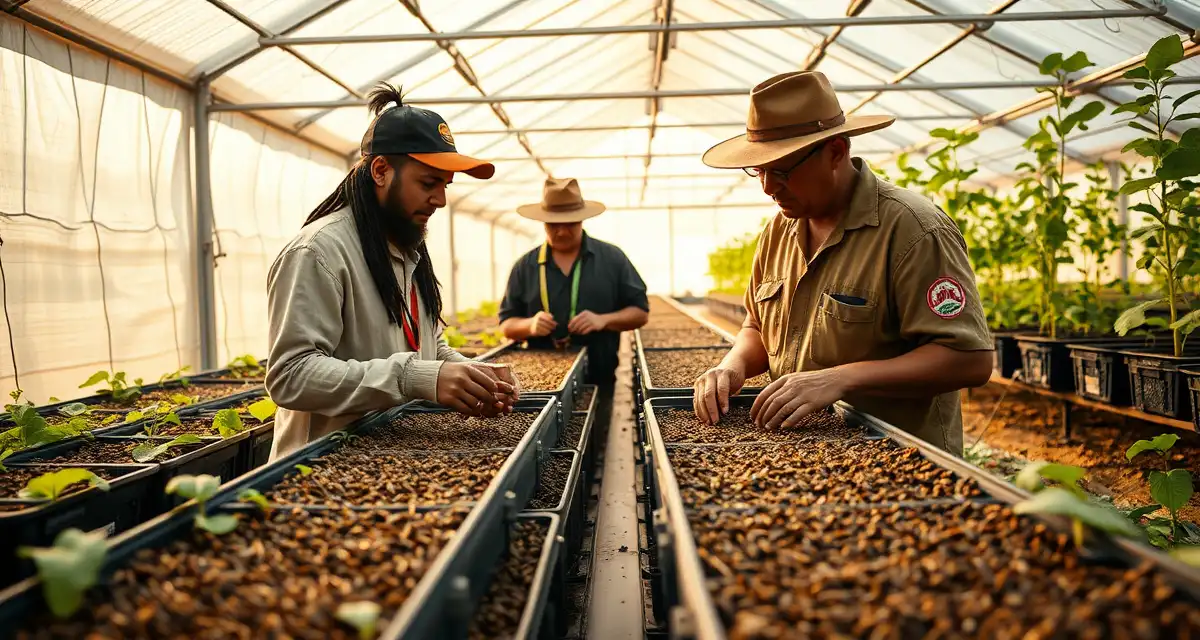
Cricket Farming in Indigenous Communities: Protein Security and Economic Opportunity
USDA has allocated $12M specifically for insect farming projects in tribal communities through its Beginning Farmer program. That funding reflects a genuine policy alignment between cricket farming's characteristics - low land requirements, minimal water use, high protein output per square foot - and the food sovereignty goals that many Indigenous communities have been working toward for decades.
Cricket farming in Indigenous communities is an emerging and underreported sector that sits at the intersection of traditional food knowledge, modern agricultural innovation, and community economic development. This guide covers the landscape, the funding pathways, and the practical considerations for tribal communities exploring cricket farming as a food sovereignty and economic development initiative.
TL;DR
- USDA has allocated $12M specifically for insect farming projects in tribal communities through its Beginning Farmer program.
- The short production cycle (6 weeks from egg to harvest) provides rapid feedback and flexibility that longer-cycle livestock cannot offer.
- For farm management support, see cricket farm management.
- For funding beyond USDA programs, see cricket farm grant funding.
- For the broader industry context, see insect protein industry overview.
Frequently Asked Questions
Are there cricket farming programs in Indigenous communities?
Yes.
- These programs range from small demonstration projects in tribal colleges to developing community-scale commercial operations.
- The North American Coalition for Insect Agriculture (NACIA) has engaged with tribal community programs and can provide connections.
How does CricketOps help track the metrics described in this article?
CricketOps provides bin-level logging for the variables that drive production outcomes -- feed inputs, environmental conditions, mortality events, and harvest results. Rather than maintaining these records in separate spreadsheets, you can view performance trends across bins and over time to identify which operational variables correlate with better outcomes in your specific facility.
Where can I find industry benchmarks to compare my operation's performance?
The North American Coalition for Insect Agriculture (NACIA) publishes periodic industry reports with production benchmarks. University extension programs in agricultural states, including the University of Georgia and University of Florida IFAS, occasionally publish insect farming production data. Industry conferences hosted by the Entomological Society of America and the Insects to Feed the World symposium series are additional sources of peer benchmarking data.
What is the biggest operational mistake cricket farmers make in their first year?
Expanding bin count before achieving consistent FCR and mortality targets in existing bins is the most common and costly first-year mistake. At 5-10 bins, problems are manageable. At 30-50 bins, the same proportional problems represent much larger financial losses. Most experienced cricket farmers recommend holding expansion until you have three consecutive production cycles hitting your FCR and mortality targets.
Sources
- Food and Agriculture Organization of the United Nations (FAO) -- Edible Insects: Future Prospects for Food and Feed Security
- North American Coalition for Insect Agriculture (NACIA)
- Entomological Society of America
- University of Georgia Cooperative Extension
- Journal of Insects as Food and Feed (Wageningen Academic Publishers)
Why Cricket Farming Aligns with Indigenous Food Sovereignty Goals
Food sovereignty - the right of communities to define their own food systems and produce culturally appropriate food locally - is a priority in many Indigenous communities across North America. Several characteristics of cricket farming make it particularly well-suited to food sovereignty applications:
Low land and water requirements: Cricket farming requires a fraction of the land and water per unit of protein compared to conventional livestock. For communities with limited agricultural land, this is a practical advantage.
Indoor operation: Cricket farming can be conducted in controlled indoor environments, which is relevant for communities in cold climates (Northern Plains, Canada, Alaska) where outdoor agricultural seasons are short or unreliable.
Insects in traditional diet: Many Indigenous cultures in North America, Latin America, and globally have historical traditions of insect consumption as a food source. Cricket farming represents a modern production system around a protein source with cultural resonance in some communities rather than a completely foreign technology.
Community-scale production: Cricket farming is viable at scales from individual household to community cooperative to commercial operation. This flexibility allows communities to scale production to local needs.
Short production cycle: The 6-week production cycle from egg to harvest allows communities to see results quickly and adjust production to seasonal demand patterns.
Funding Pathways for Indigenous-Led Cricket Farm Operations
USDA Beginning Farmer and Rancher Development Program: USDA has targeted $12M in funding specifically for insect farming projects in tribal communities. This program funds training, education, outreach, and technical assistance for beginning farmers in underserved communities, including tribal communities.
USDA SARE (Sustainable Agriculture Research and Education): SARE grants support sustainable agriculture projects and have funded insect farming research and demonstration projects. Tribal organizations are eligible applicants.
USDA Tribal College Extension: Land-grant tribal colleges are eligible for USDA extension program funding that can support agricultural education and demonstration including insect farming.
First Nations Development Institute: This nonprofit organization provides grants and technical assistance to Indigenous-led economic development projects, including food system initiatives.
Native CDFI (Community Development Financial Institution) loans: Native CDFIs provide business lending to tribal members and tribal enterprises. Business loans for cricket farming equipment can be accessed through this network.
EPA and USDA Environmental Justice funding: Programs focused on environmental justice in underserved communities have increasingly included food system initiatives. Insect farming's sustainability profile makes it a strong candidate for environmental justice framing.
Provincial and federal funding in Canada: Canadian tribal communities (First Nations) have access to specific Indigenous agriculture support programs through Agriculture and Agri-Food Canada and provincial agricultural development funds.
Practical Considerations for Community Cricket Farming Projects
Community buy-in: Food production initiatives in any community succeed when they have genuine community support. For Indigenous communities, this includes consultation with elders and community members about the cultural appropriateness of the project and its connection to community food values.
Knowledge transfer: Successful community cricket farming programs pair technical training with local capacity building. Partnerships with established cricket farmers or university extension programs can provide training; the goal should be developing local expertise that persists after initial technical assistance ends.
Market development: Community-scale production needs a market. Whether the product is consumed directly by community members (addressing food insecurity), sold to local buyers, or developed into a commercial product, the market destination should be identified before significant production investment is made.
For farm management support, see cricket farm management. For funding beyond USDA programs, see cricket farm grant funding. For the broader industry context, see insect protein industry overview.
Frequently Asked Questions
Are there cricket farming programs in Indigenous communities?
Yes. Several tribal communities in the US and Canada have pilot cricket farming programs underway as of 2026, primarily funded through USDA tribal agriculture programs and Indigenous economic development grants. These programs range from small demonstration projects in tribal colleges to developing community-scale commercial operations. The North American Coalition for Insect Agriculture (NACIA) has engaged with tribal community programs and can provide connections. Programs in Canada are more developed in some regions due to earlier federal policy support for insect farming in Indigenous food sovereignty contexts.
What funding is available for Indigenous-led cricket farm operations?
USDA's Beginning Farmer and Rancher Development Program has allocated $12M specifically for insect farming in tribal communities. Additional sources include USDA SARE grants, Tribal College Extension funding, First Nations Development Institute grants (for US and Canada), Native CDFI business loans, and environmental justice funding through EPA and USDA. In Canada, Agriculture and Agri-Food Canada has specific Indigenous agriculture support programs. Grant applications for food sovereignty projects can also frame cricket farming within broader Indigenous food sovereignty, health equity, and economic development goals that attract additional funding sources.
How does cricket farming support food sovereignty in rural communities?
Cricket farming supports food sovereignty by enabling communities to produce high-quality protein locally, with minimal land and water requirements, in controlled environments that are viable in diverse climates including cold northern regions. The short production cycle (6 weeks from egg to harvest) provides rapid feedback and flexibility that longer-cycle livestock cannot offer. Communities can scale production to local needs - from household supplemental protein to commercial scale - without the capital requirements of conventional livestock farming. For communities with food deserts, high food import costs, or a desire to reduce dependence on external food supply chains, cricket farming offers a practical pathway to local protein production.
Get Started with CricketOps
The practices covered in this article are easier to apply consistently when they are supported by organized production data. CricketOps gives cricket farmers the tools to track what matters -- by bin, by batch, and over time. Start your next production cycle in CricketOps and see how organized data changes the way you manage your operation.