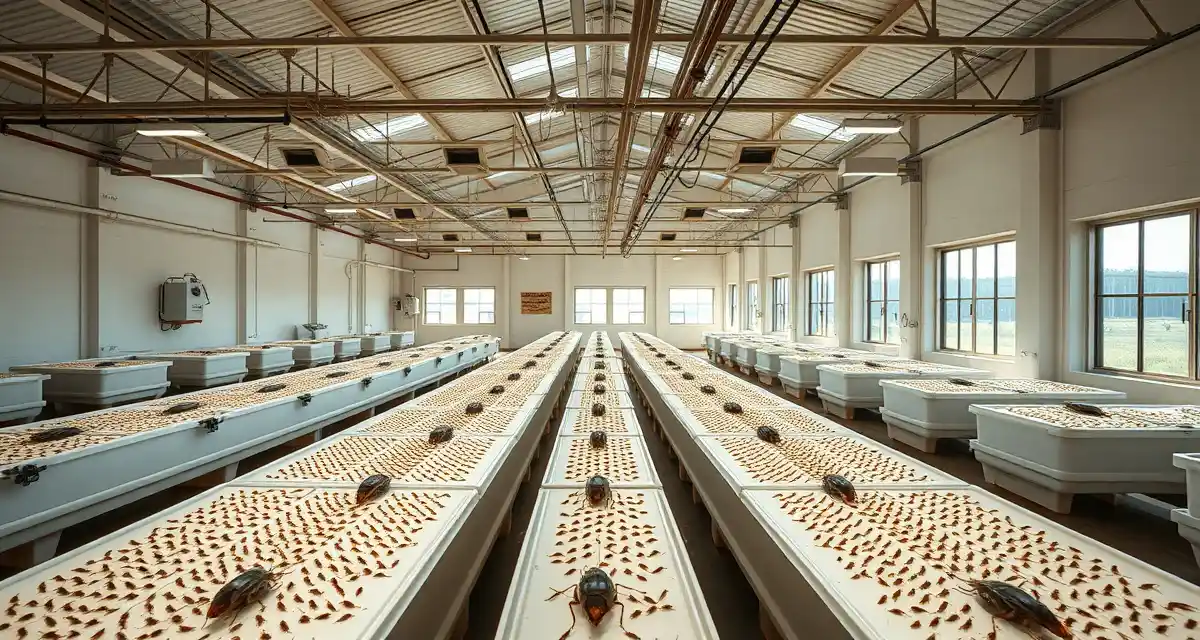
Cricket Farm Zoning Requirements in Florida
Florida's warm climate makes it one of the most productive environments in the US for cricket farming, but getting your operation permitted involves working through both state and county requirements. Florida requires a FDACS commercial livestock license and county agricultural permit for commercial cricket farms, so you'll need to work through two layers before you're legal.
Understanding this two-layer system upfront saves you from the common mistake of securing a state license and then discovering your county has separate zoning rules that don't allow the operation you planned.
TL;DR
- Agricultural zoning (A-1, A-2, etc
- Florida's 67 counties each have their own zoning ordinances, and what's permitted under agricultural zoning in one county may require a special use permit in another
- Light industrial zoning (I-1): If you're operating a cricket flour processing facility, light industrial zoning is usually the right fit
- At 5-10 bins, problems are manageable
- At 30-50 bins, the same proportional problems represent much larger financial losses
- Agricultural zoning (A-1, A-2, etc.)
- What Florida state permit is needed for a cricket farm?
Agricultural zoning (A-1, A-2, etc.): Most counties allow livestock production as a right in agricultural zones.
- FDACS commercial livestock producer registration (for the farming side)
2.
- FDACS food establishment license (for the processing side)
3.
- Contact your county property appraiser's office to confirm the current zoning designation of your intended property.
2.
- Call your county planning and zoning department and ask specifically whether cricket farming qualifies as livestock production under the current agricultural zoning ordinance.
3.
- Apply for your FDACS commercial livestock producer registration through the FDACS website.
4.
- If you're processing product, schedule a pre-application meeting with FDACS Division of Food Safety before you set up your facility.
5.
Florida Department of Agriculture and Consumer Services (FDACS) Classification
FDACS classifies cricket farming under its commercial livestock producer framework. This means your operation falls under the same basic regulatory structure as cattle ranches or hog farms for state purposes, which is actually an advantage: the pathway is well-established, and FDACS staff know how to process the application.
To sell crickets commercially in Florida, you need to register as a commercial livestock producer with FDACS. If you're producing cricket flour or any processed product, you'll also need a separate food establishment license from FDACS's Division of Food Safety. These are distinct registrations handled by different divisions, so apply for both if you're running a combined operation.
The commercial livestock producer registration is relatively low-cost and doesn't require an on-site inspection for most operations below a certain threshold. The food establishment license, by contrast, requires a facility inspection and review of your food handling procedures before approval.
County Zoning Requirements
Florida's 67 counties each have their own zoning ordinances, and what's permitted under agricultural zoning in one county may require a special use permit in another. Here's what you need to check:
Agricultural zoning (A-1, A-2, etc.): Most counties allow livestock production as a right in agricultural zones. If your property is zoned agricultural, you're likely in the clear for a feeder cricket operation, but you should confirm with your county zoning office that insects qualify under the livestock definition. Most Florida counties follow FDACS's classification, but a few have their own definitions.
Residential zoning: Running a commercial cricket farm in a residential zone is generally not permitted in Florida counties. Home-based operations with a very small footprint may qualify under home occupation ordinances, but these typically limit you to no customers visiting the property and restrict signage and vehicle traffic.
Light industrial zoning (I-1): If you're operating a cricket flour processing facility, light industrial zoning is usually the right fit. Processing and packaging food products typically isn't allowed under agricultural zoning alone.
Special use permits: Some counties require a special use permit even in agricultural zones for livestock operations above a certain size or that generate notable truck traffic. Check with your county planning department before you commit to a site.
Combined Feeder and Flour Operations
If you're planning to both raise crickets and process them into flour on the same property, your permitting complexity doubles. You'll need:
- FDACS commercial livestock producer registration (for the farming side)
- FDACS food establishment license (for the processing side)
- County zoning clearance that allows both agricultural production and food processing
Properties zoned agricultural may not allow food manufacturing, and properties zoned light industrial may have minimum acreage requirements that don't work for small-scale farming. In some Florida counties, you may need to split the operation across two differently-zoned parcels, or find a property with a flexible agricultural-industrial overlay.
Practical Steps to Get Permitted in Florida
- Contact your county property appraiser's office to confirm the current zoning designation of your intended property.
- Call your county planning and zoning department and ask specifically whether cricket farming qualifies as livestock production under the current agricultural zoning ordinance.
- Apply for your FDACS commercial livestock producer registration through the FDACS website.
- If you're processing product, schedule a pre-application meeting with FDACS Division of Food Safety before you set up your facility.
- If you're in a county with a homestead exemption for agricultural property, check whether your cricket farm qualifies - this can measurably reduce your property tax burden.
Common Mistakes Florida Cricket Farmers Make
The most common error is assuming that FDACS registration is sufficient to operate without checking county requirements. Operators who do this sometimes receive cease-and-desist notices from county code enforcement months after they've invested in infrastructure.
The second most common mistake is failing to get the food establishment license before selling processed product. Selling dried or ground crickets without this license puts you in violation of Florida food safety law, and FDACS takes this seriously.
Tracking your production data from day one with cricket farm management software creates a paper trail that regulators and county officials appreciate, and it makes the food establishment inspection much smoother.
For broader context on what the permitting process looks like across the US, see our guide to cricket farm zoning and permits.
Frequently Asked Questions
What Florida state permit is needed for a cricket farm?
Florida requires a commercial livestock producer registration from the Florida Department of Agriculture and Consumer Services (FDACS) for any commercial cricket farming operation. If you're also processing crickets into flour or dried product, you need a separate FDACS food establishment license from the Division of Food Safety. These are two different registrations processed by different divisions, so you need to apply for both if you run a combined grow-and-process operation. Neither registration is particularly expensive, but the food establishment license does require an on-site inspection before approval.
Can I run a cricket farm in a Florida residential area?
Generally, no. Most Florida county zoning ordinances don't allow commercial livestock production in residential zones. A very small home-based operation might qualify under a home occupation ordinance, but commercial operations need to be sited on agriculturally or industrially zoned property. If you're in an unincorporated rural area, your property may already be zoned agricultural, which is the most straightforward path for a feeder cricket operation. Check your county's zoning map and call the planning department to confirm before signing a lease or buying property.
Does Florida require a separate permit for cricket flour production?
Yes. Producing cricket flour is classified as food manufacturing under Florida law, and it requires an FDACS food establishment license separate from your livestock producer registration. The food establishment license requires your facility to meet Florida's food safety standards, including having appropriate pest control measures, sanitation protocols, and adequate food-grade surfaces. If you're planning to sell to retailers or food manufacturers, you'll likely also need to build toward HACCP documentation and FSMA compliance, which CricketOps can help you organize from the beginning.
How does CricketOps help track the metrics described in this article?
CricketOps provides bin-level logging for the variables that drive production outcomes -- feed inputs, environmental conditions, mortality events, and harvest results. Rather than maintaining these records in separate spreadsheets, you can view performance trends across bins and over time to identify which operational variables correlate with better outcomes in your specific facility.
Where can I find industry benchmarks to compare my operation's performance?
The North American Coalition for Insect Agriculture (NACIA) publishes periodic industry reports with production benchmarks. University extension programs in agricultural states, including the University of Georgia and University of Florida IFAS, occasionally publish insect farming production data. Industry conferences hosted by the Entomological Society of America and the Insects to Feed the World symposium series are additional sources of peer benchmarking data.
What is the biggest operational mistake cricket farmers make in their first year?
Expanding bin count before achieving consistent FCR and mortality targets in existing bins is the most common and costly first-year mistake. At 5-10 bins, problems are manageable. At 30-50 bins, the same proportional problems represent much larger financial losses. Most experienced cricket farmers recommend holding expansion until you have three consecutive production cycles hitting your FCR and mortality targets.
Sources
- Food and Agriculture Organization of the United Nations (FAO) -- Edible Insects: Future Prospects for Food and Feed Security
- North American Coalition for Insect Agriculture (NACIA)
- Entomological Society of America
- University of Georgia Cooperative Extension
- Journal of Insects as Food and Feed (Wageningen Academic Publishers)
Get Started with CricketOps
The practices covered in this article are easier to apply consistently when they are supported by organized production data. CricketOps gives cricket farmers the tools to track what matters -- by bin, by batch, and over time. Start your next production cycle in CricketOps and see how organized data changes the way you manage your operation.