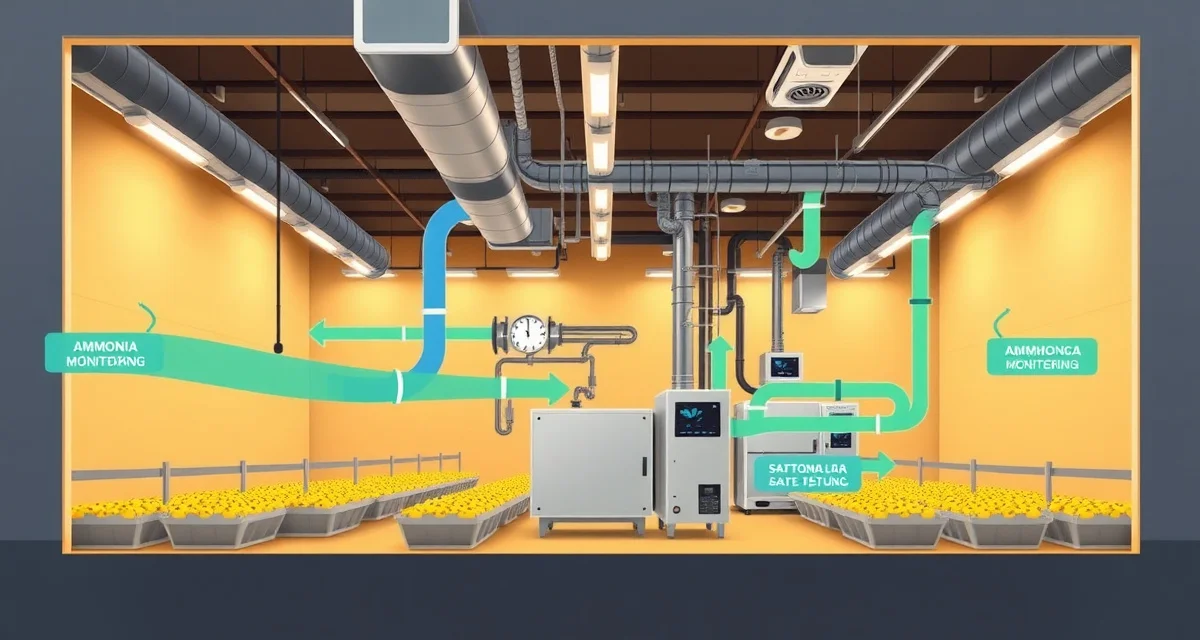
Cricket Farm Ventilation Guide: Preventing Ammonia and Humidity Problems
Ammonia levels above 25 ppm in a cricket farm can cause sub-lethal stress that cuts growth rates by 15%. That's a chronic, invisible tax on your production. Crickets don't die dramatically. They just grow slower, eat less efficiently, and are more vulnerable to secondary infections. Your FCR gets worse and you don't know why.
The answer is almost always ventilation. And yet cricket-specific ventilation guidance barely exists. Poultry guides cover ammonia thresholds for chickens. Aquaculture guides cover water quality parameters for fish. Cricket farmers adapt what they can and hope it's close enough.
This guide covers ammonia thresholds specific to crickets, how to measure them affordably, and what ventilation setups work for operations of different sizes.
TL;DR
- Ammonia levels above 25 ppm in a cricket farm can cause sub-lethal stress that cuts growth rates by 15%.
- Humidity above 80% in adult bins dramatically increases the risk of bacterial disease outbreaks.
- Pinheads and juveniles do best between 50-70% RH.
- Poultry operations often tolerate 25-50 ppm before taking corrective action.
- For crickets, signs of stress start appearing around 20-25 ppm, and growth rate suppression is measurable at sustained levels above 25 ppm.
- At 50 ppm, you're looking at elevated mortality risk over days of exposure.
- At 100 ppm, you can have a catastrophic event within hours.
How to Measure Ammonia in Your Cricket Farm
Ammonia test strips: The most affordable entry point.
Why Ventilation Matters Differently for Cricket Farms
Cricket farms produce ammonia from waste breakdown. The frass and uneaten feed in your bins decompose and release ammonia as a byproduct. In an enclosed space without adequate air exchange, ammonia concentrates quickly, especially in humid conditions.
Cricket farms also produce humidity from cricket respiration, wet feed, and water gel. Humidity above 80% in adult bins dramatically increases the risk of bacterial disease outbreaks. Fungal growth in bins also accelerates at high humidity.
But here's the tension: crickets need some humidity. Pinheads and juveniles do best between 50-70% RH. Adults can tolerate a wider range, but breeding bins still need enough moisture to support egg-laying. Too dry and breeding performance drops. Too wet and you're creating conditions for pathogen growth.
Ventilation is how you manage both sides of this balance: enough air exchange to clear ammonia and prevent humidity spikes, without making the space so dry that you're fighting to maintain the moisture your crickets need.
Understanding Ammonia Thresholds for Cricket Farms
Cricket ammonia tolerance is lower than the poultry literature suggests. Poultry operations often tolerate 25-50 ppm before taking corrective action. For crickets, signs of stress start appearing around 20-25 ppm, and growth rate suppression is measurable at sustained levels above 25 ppm.
At 50 ppm, you're looking at elevated mortality risk over days of exposure. At 100 ppm, you can have a catastrophic event within hours.
How to Measure Ammonia in Your Cricket Farm
Ammonia test strips: The most affordable entry point. Dip the strip in a small amount of water collected from the interior of the bin or hold it in the air at bin level. Accuracy is approximate, but test strips will tell you if you're in a danger zone versus a safe zone.
Electronic ammonia detectors: Battery-powered ammonia detectors designed for livestock or industrial safety give you a continuous reading in ppm. Models suitable for farm use run $50-200. Worth it if you're running 30+ bins in an enclosed space.
Laboratory air sampling: Overkill for most farm operations, but if you're applying for commercial permits or trying to comply with neighbor complaint regulations, a lab measurement gives you documented evidence.
Test ammonia levels at bin level in the middle of your warmest part of the day. That's when ammonia concentrations peak.
Ventilation Setups for Different Farm Sizes
Small Indoor Farm (5-20 Bins)
A small operation in a basement, garage, or spare room can usually manage ammonia and humidity with passive ventilation plus a small fan.
The setup that works:
- One or two box fans or window fans providing gentle air movement across the room
- Bins modified with mesh lid panels rather than solid lids (this is non-negotiable for air exchange at the bin level)
- A window or door that can open for fresh air exchange during the warmest part of the day
- A dehumidifier if your baseline humidity regularly exceeds 75%
You're not trying to create strong airflow through the room. Strong airflow dehydrates your crickets and can cause temperature crashes. You want gentle circulation that prevents stagnant pockets from forming.
Check ammonia with test strips weekly. If you're finding levels above 15 ppm, increase your cleaning frequency or add more air exchange.
Medium Farm (20-60 Bins)
At this scale, passive ventilation usually isn't enough. You need a designed air exchange system.
Exhaust fan setup: Mount an exhaust fan on one wall of your cricket space, drawing air out. This creates negative pressure that pulls fresh air in through passive intake vents on the opposite wall. Size your exhaust fan to exchange the room air volume every 10-15 minutes. A 1,000 cubic foot room needs an exhaust fan rated for 70-100 CFM minimum.
Circulation fans: Inside the space, small oscillating fans or clip fans between shelving rows keep air moving between bins without creating strong drafts. Aim for gentle movement, not strong airflow.
Humidity monitoring: At least one data-logging humidity sensor in each major section. Review the data weekly. Target 55-70% RH for juvenile areas, 60-75% for breeding bins.
Commercial Farm (60+ Bins)
Commercial operations require purpose-designed HVAC systems with supply and return air distribution, temperature and humidity control integrated with ventilation, and ideally CO2 monitoring alongside ammonia.
The basics of the commercial approach:
- Positive or balanced pressure ventilation to provide fresh outside air while exhausting stale air
- Pre-conditioning of incoming air (heating in winter, cooling and dehumidifying in summer)
- Multiple zones so breeding areas, juvenile areas, and finishing areas can be managed independently
This requires a licensed HVAC professional familiar with agricultural applications. The specifics depend heavily on your building, climate, and production layout.
Does Ventilation Affect Cricket FCR?
Yes, and the impact is measurable. Chronic sub-lethal ammonia stress suppresses appetite and reduces feed conversion efficiency. Crickets in high-ammonia environments eat less, grow slower, and convert feed less efficiently. This shows up in your FCR numbers before it shows up as visible die-offs.
Farms that solve their ventilation problems consistently report FCR improvements of 0.2-0.4 points within two to three cycles after making changes. That's on par with the benefit of feed composition optimization.
The indirect path from ventilation to FCR runs through:
- Lower ammonia → less chronic stress → better appetite
- Better humidity control → less pathogen pressure → lower mortality
- Lower mortality → more harvested crickets per unit of feed consumed
All three of those improve your FCR even without changing anything about your feeding program.
Common Ventilation Mistakes
Sealing the space too tightly. Some farmers, worried about temperature loss in winter, seal their cricket space with no air exchange. This quickly creates ammonia and humidity problems that are far more damaging than the temperature variability they were trying to prevent.
Relying on carbon filters for odor without solving air exchange. Activated carbon filters can reduce odor at the exit point of your ventilation system. They don't fix the underlying ammonia problem. Treat the source first.
Using strong fans that create drafts. Strong airflow through bin areas stresses crickets and causes dehydration. You want air circulation, not wind.
For related guidance, see how to manage cricket farm humidity for specific humidity targets by life stage, and cricket farm management for tracking environmental data alongside production metrics.
FAQ
How do I know if my cricket farm has too much ammonia?
The most reliable way is to measure it directly using ammonia test strips or an electronic ammonia meter. Indirect signs include: faster-than-expected mortality without obvious cause, sluggish crickets that aren't feeding actively, and a strong ammonia smell in the room (by the time you can clearly smell it, you're already above 20 ppm at bin level). Test weekly in your highest-density bin areas and after cleaning cycles.
What ventilation setup is best for a small indoor cricket farm?
For a 5-20 bin indoor farm, start with bins that have mesh lid panels for bin-level air exchange, one or two fans providing gentle room circulation (not strong drafts), and the ability to open a window or door for fresh air exchange during the warm part of the day. Add a dehumidifier if your humidity regularly exceeds 75%. Test ammonia with strips weekly and increase ventilation if you're finding elevated levels.
Does ventilation affect cricket FCR?
Yes. Chronic ammonia exposure above 25 ppm suppresses cricket appetite and feed conversion efficiency. Farms that address ammonia buildup through better ventilation consistently see FCR improvement of 0.2-0.4 points within two to three production cycles. Ventilation also reduces humidity-related pathogen pressure, which reduces mortality, which improves FCR indirectly by increasing the number of crickets that make it to harvest.
How does CricketOps help track the metrics described in this article?
CricketOps provides bin-level logging for the variables that drive production outcomes -- feed inputs, environmental conditions, mortality events, and harvest results. Rather than maintaining these records in separate spreadsheets, you can view performance trends across bins and over time to identify which operational variables correlate with better outcomes in your specific facility.
Where can I find industry benchmarks to compare my operation's performance?
The North American Coalition for Insect Agriculture (NACIA) publishes periodic industry reports with production benchmarks. University extension programs in agricultural states, including the University of Georgia and University of Florida IFAS, occasionally publish insect farming production data. Industry conferences hosted by the Entomological Society of America and the Insects to Feed the World symposium series are additional sources of peer benchmarking data.
What is the biggest operational mistake cricket farmers make in their first year?
Expanding bin count before achieving consistent FCR and mortality targets in existing bins is the most common and costly first-year mistake. At 5-10 bins, problems are manageable. At 30-50 bins, the same proportional problems represent much larger financial losses. Most experienced cricket farmers recommend holding expansion until you have three consecutive production cycles hitting your FCR and mortality targets.
Sources
- Food and Agriculture Organization of the United Nations (FAO) -- Edible Insects: Future Prospects for Food and Feed Security
- North American Coalition for Insect Agriculture (NACIA)
- Entomological Society of America
- University of Florida IFAS Extension -- Entomology and Nematology Department
- USDA Agricultural Research Service
Get the Air Right Before You Optimize Anything Else
If your ventilation isn't right, everything else you do to improve production is working against a headwind. Better feed, tighter temperature management, and lower stocking density all produce better results when your ammonia and humidity are in range.
It's not the most exciting optimization. But it's often the most impactful one.
Measure your ammonia. Fix the ventilation. Then start optimizing the variables that sit on top of it.
Get Started with CricketOps
Maintaining the right environmental conditions in a cricket facility depends on having reliable data -- not just what your thermostat is set to, but what temperatures your bins actually experienced overnight and over the past week. CricketOps connects to temperature and humidity sensors, logs readings by bin, and alerts you when conditions drift outside your set thresholds. Try CricketOps and build the environmental record your operation needs.