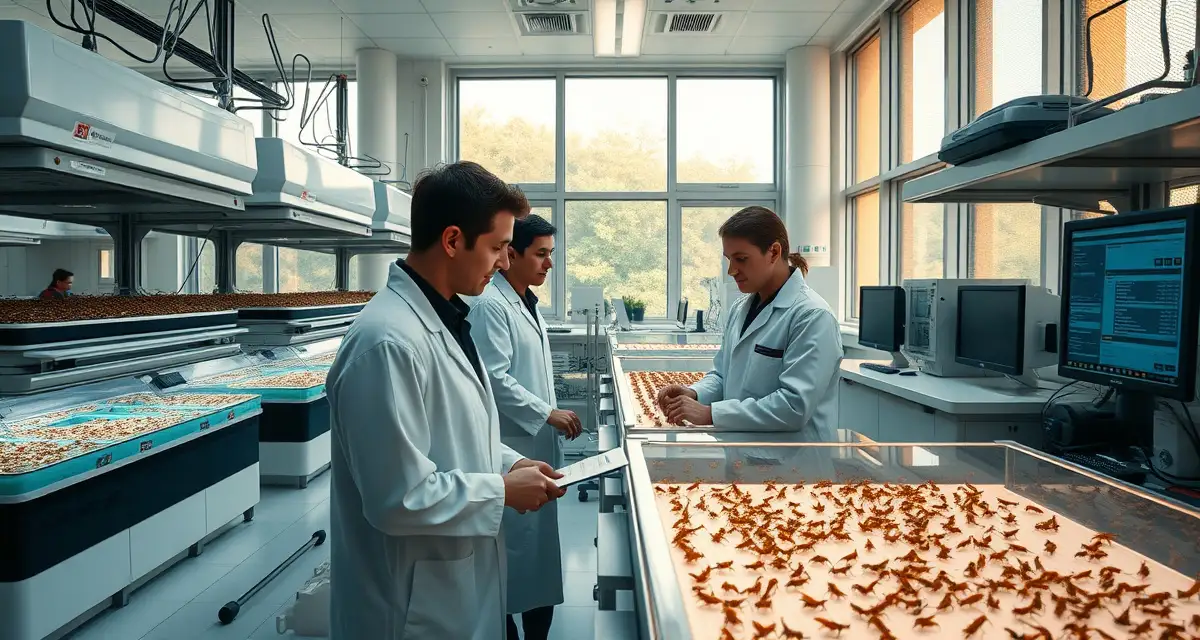
Cricket Farm University Partnerships: Research Collaboration Opportunities
University-partnered cricket farms reduce their annual R&D costs by an average of 55% compared to self-funded research. That number reflects both the direct cost reduction (shared equipment, student labor) and the broader resource advantage of having academic infrastructure behind your production research.
University partnerships for cricket farms are underutilized. Most operators don't know how to initiate a partnership, what universities get out of it, or how to structure an arrangement that serves both parties. This guide covers the practical steps.
TL;DR
- University-partnered cricket farms reduce their annual R&D costs by an average of 55% compared to self-funded research.
- University partnerships for cricket farms are underutilized.
- Most operators don't know how to initiate a partnership, what universities get out of it, or how to structure an arrangement that serves both parties.
- A commercial farm with thousands of bins and real production conditions is a research environment that universities can't replicate internally.
- Find professors whose published research interests overlap with your farm's needs.
- A professor researching insect gut microbiome is a natural partner for microbiome management research on your farm.
- The farm may contribute production access, data, and in-kind resources.
Why Universities Want to Partner with Cricket Farms
Universities, particularly land-grant universities with entomology, food science, and agricultural departments, have genuine research interest in insect farming. Here's what they gain from a commercial farm partnership:
Real-world research environment. Academic insect research is typically conducted in small controlled laboratory settings. A commercial farm with thousands of bins and real production conditions is a research environment that universities can't replicate internally. This lets researchers study questions at scale that matter commercially.
Student training. Internship and thesis placements at a commercial cricket farm give students practical experience that enhances their education and their career prospects. Universities actively look for industry partners for this purpose.
Grant co-application opportunities. Many USDA, NSF, and NIH grants require or strongly favor industry co-applicants to ensure research has commercial relevance. A cricket farm as co-applicant on a university grant application improves the grant's competitiveness.
Published research. Practical farms provide data and conditions for publishable research that pure laboratory environments don't.
Industry connection. Universities need to demonstrate industry engagement for accreditation and departmental reputation. A commercial partnership with a cricket farm serves this requirement.
What Cricket Farms Gain from University Partnerships
Reduced R&D cost. Graduate students and post-docs working on research questions that benefit your operation are doing your R&D at significantly reduced cost (often funded by the university or through grants). The 55% R&D cost reduction cited above reflects this.
Access to specialized equipment. Universities have analytical equipment (mass spectrometers, microscopes, molecular biology tools, controlled environment chambers) that no commercial farm would purchase independently. Partnership grants you access.
Scientific credibility. University-authored research publications citing your farm and your production methods create third-party credibility that supports your investor pitch, your grant applications, and your buyer presentations.
Grant co-applicant status. When you're listed as an industry partner on a university grant application, you benefit from the successful award: the university team conducts the funded research at your facility.
Talent pipeline. Students who complete internships or thesis projects at your farm are often strong hiring candidates.
How to Initiate a University Partnership
Step 1: Identify the right department. Look for departments at nearby universities with research overlap: entomology (insect science), food science, animal science (production efficiency research), nutrition science, or sustainable agriculture.
Step 2: Research faculty interests. Look at faculty pages in your target department. Find professors whose published research interests overlap with your farm's needs. A professor researching insect gut microbiome is a natural partner for microbiome management research on your farm. A food science professor working on insect allergens is a natural partner for your food safety research.
Step 3: Make initial contact. Email the faculty member directly with a clear, brief explanation of your farm and why their research interests align with what you're doing. Offer a farm visit. Keep it to 150-200 words.
Step 4: Propose a specific project. After the initial conversation, propose a specific, scoped research project rather than a vague "we'd like to work together." A specific proposal is much easier for a faculty member to act on.
Step 5: Formalize the arrangement. Most universities require a formal partnership agreement, often called an industry partnership agreement, sponsored research agreement, or material transfer agreement. The university's research office handles this. Expect the agreement to address: intellectual property ownership (who owns what comes out of the research), data sharing, student and faculty expectations, and cost-sharing.
Structuring the Partnership for Mutual Benefit
The most successful partnerships have clear, written agreements on:
Who funds what: The university may fund student time through departmental resources or grants. The farm may contribute production access, data, and in-kind resources. Direct cash from the farm to the university typically runs $10,000-$50,000 per year for formal sponsored research, but informal partnerships can start with just access.
Data ownership: You want access to and rights to use research data from your farm. Agree in writing before research begins.
Publication rights: The university needs to publish research for faculty careers. You want the right to review publications before submission and a defined waiting period before publication of sensitive operational data.
IP ownership: Any novel methods or technologies developed from the research. This is the most contentious negotiation point; get university technology transfer office involved early.
For a connection to the cricket farm academic research landscape, see that guide for an overview of published research that's already relevant to your operation. The insect protein industry overview 2026 provides context for how academic research is driving the commercial sector.
Grant Co-Application: The Most Valuable Partnership Benefit
The highest-value outcome of a university partnership is being listed as an industry co-applicant on a federal grant application. This gives you:
- Industry research conducted at your facility, often funded 100% by the grant
- Co-authorship on resulting publications
- Priority access to research results before publication
- Non-dilutive funding flowing through the university but benefiting your farm
USDA SBIR, USDA National Institute of Food and Agriculture (NIFA), NSF, and several other federal programs actively seek or require industry co-applicants. Talk to your university partner about upcoming grant applications where your farm can serve as the industry collaborator.
Frequently Asked Questions
How do I build a research partnership with a university for my cricket farm?
Start by identifying faculty at nearby universities with research interests that overlap with your farm's needs: entomology, food science, sustainable agriculture, or nutrition. Research their published work, then email them directly with a specific, scoped proposal for how your farm could serve their research while benefiting your operation. A farm visit as the first step is often the most natural way to show what you're working with. Once there's mutual interest, the university's research office handles the formal partnership agreement covering IP, data sharing, and financial arrangements. Informal partnerships with student thesis projects can often start without a formal agreement if the scope is modest.
What benefits does a university partnership provide to a cricket farm?
The primary benefits are: R&D cost reduction through student labor and university-funded research (averaging 55% lower annual R&D cost than self-funded research), access to analytical equipment and laboratory infrastructure that no commercial farm would purchase independently, scientific credibility from published research citing your farm and methods, grant co-applicant status that enables federally funded research at your facility, and a student talent pipeline for future hiring. Secondary benefits include media attention (university press releases about research partnerships get picked up by agricultural and food trade publications), investor credibility, and buyer confidence in your operations when your farm is documented in peer-reviewed research.
Which universities have entomology departments that partner with commercial cricket farms?
Universities with entomology departments that have documented insect farming research interests include: University of Georgia (insect science research program with commercial applications), Cornell University AgriTech (food and agriculture innovation with insect protein research connections), University of Florida (entomology and food science with commercial insect focus), Purdue University (agricultural engineering and food science), Kansas State University (grain science connections to cricket feed research), and UC Riverside (entomology with applied insect research). Land-grant universities in agricultural states are generally the most accessible for commercial farm partnerships because of their land-grant mission to connect research to commercial agriculture. Check recent faculty publications in the target department to identify the most relevant research interests before reaching out.
How does CricketOps help track the metrics described in this article?
CricketOps provides bin-level logging for the variables that drive production outcomes -- feed inputs, environmental conditions, mortality events, and harvest results. Rather than maintaining these records in separate spreadsheets, you can view performance trends across bins and over time to identify which operational variables correlate with better outcomes in your specific facility.
Where can I find industry benchmarks to compare my operation's performance?
The North American Coalition for Insect Agriculture (NACIA) publishes periodic industry reports with production benchmarks. University extension programs in agricultural states, including the University of Georgia and University of Florida IFAS, occasionally publish insect farming production data. Industry conferences hosted by the Entomological Society of America and the Insects to Feed the World symposium series are additional sources of peer benchmarking data.
What is the biggest operational mistake cricket farmers make in their first year?
Expanding bin count before achieving consistent FCR and mortality targets in existing bins is the most common and costly first-year mistake. At 5-10 bins, problems are manageable. At 30-50 bins, the same proportional problems represent much larger financial losses. Most experienced cricket farmers recommend holding expansion until you have three consecutive production cycles hitting your FCR and mortality targets.
Sources
- Food and Agriculture Organization of the United Nations (FAO) -- Edible Insects: Future Prospects for Food and Feed Security
- North American Coalition for Insect Agriculture (NACIA)
- Entomological Society of America
- University of Georgia Cooperative Extension
- Journal of Insects as Food and Feed (Wageningen Academic Publishers)
Get Started with CricketOps
The practices covered in this article are easier to apply consistently when they are supported by organized production data. CricketOps gives cricket farmers the tools to track what matters -- by bin, by batch, and over time. Start your next production cycle in CricketOps and see how organized data changes the way you manage your operation.