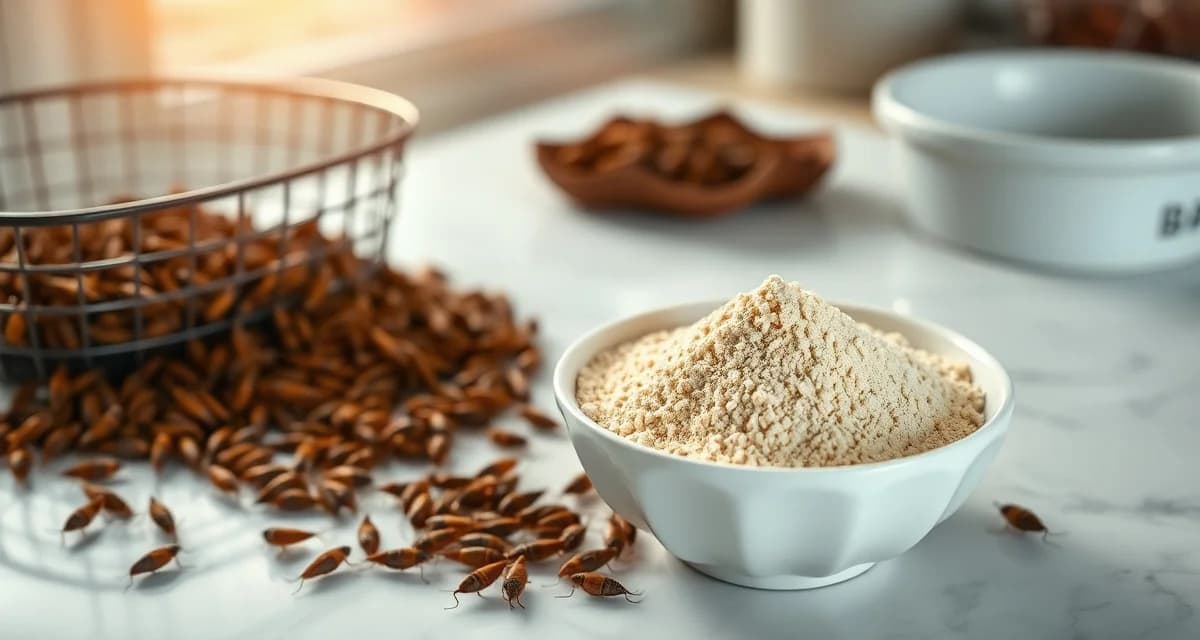
Cricket Flour Private Label: Selling Your Product Under Another Brand
Private label cricket flour contracts deliver 20-30% higher per-pound revenue than open market wholesale. That premium reflects the value of exclusivity and customization - a private label buyer is getting a product that's designed to their specification and carries their brand, not yours. They pay for that differentiation.
Private label is a growing revenue channel for established cricket flour producers who have built the quality infrastructure that makes a larger brand comfortable putting their name on your product. This guide covers how private label relationships work, what buyers require, and how to price them.
TL;DR
- Private label cricket flour contracts deliver 20-30% higher per-pound revenue than open market wholesale.
- A private label arrangement without volume commitment at only a 5-10% premium is less attractive - you're taking on the complexity of custom production without the security of committed sales.
- For the B2B sales process that typically precedes private label conversations, see cricket protein B2B sales guide.
- The path: first become a wholesale supplier to a brand or retailer, deliver consistently for 6-12 months, and then raise the private label conversation when they're reordering reliably.
- Volume commitment is the key variable: a private label buyer providing a 12-month purchase commitment at defined volume gets better pricing than one buying only as needed.
- Exclusivity provisions (if you're agreeing not to sell to competitors of the private label buyer) warrant additional premium of 5-15% above the base private label price.
- The buyer (typically a food brand, retailer, or protein supplement company) provides label design and branding.
What Private Label Cricket Flour Is
In a private label arrangement, you produce cricket flour under a larger brand's label rather than your own. The buyer (typically a food brand, retailer, or protein supplement company) provides label design and branding. You supply the product, packaged according to their specifications, without your own brand on the final product.
From the buyer's perspective, private label gives them a product they can sell without building their own production capability. From your perspective, it gives you committed volume at a price premium, a predictable sales channel, and revenue that doesn't require building your own retail brand.
Private label buyers in the cricket flour space include:
- Established protein supplement brands that want to add cricket protein to their line without investing in insect protein sourcing infrastructure
- Natural food retailers that want a house-brand cricket flour product (Whole Foods 365, Trader Joe's private label equivalents)
- Food service companies that want a branded cricket flour for their chef partnerships
- International brands entering the US market who want to source from a domestic producer
What Private Label Buyers Require
A brand putting their name on your product is taking reputation risk. The documentation requirements for private label are typically higher than for standard wholesale ingredient sales:
Product specification agreement: A detailed spec sheet that both parties sign, locking in protein %, fat %, moisture %, particle size, water activity, and the test ranges for each. Any batch outside spec can be rejected. You need to be confident you can consistently meet these specs before committing.
Batch Certificate of Analysis: Every batch must be tested to the agreed spec and a COA provided before the buyer accepts the product.
Food safety plan documentation: Your food safety plan, HACCP records, and facility registration. Private label buyers often want to see these before signing a first contract.
Facility audit: Many private label buyers require an audit of your facility before the first production run. This may be a desk audit (document review only) or an on-site inspection. For first-time private label relationships with a significant brand, an on-site audit is the norm.
Allergen control documentation: Private label buyers need to know exactly how you're managing the cricket allergen in your facility, what your cross-contact risks are with other allergens, and how this is documented in your allergen control program.
Exclusivity terms: Some private label buyers ask for exclusivity within a market segment or geographic area. Evaluate these requests carefully - exclusivity limits your ability to sell to other buyers in the same category.
How Private Label Cricket Flour Is Priced
Private label pricing starts from your wholesale ingredient price and adds a premium for:
- Custom labeling and packaging setup (one-time or amortized cost)
- Commitment to buyer specification (the cost of maintaining tighter quality tolerance)
- Exclusivity (if granted, this warrants a significant premium)
- Volume commitment (buyers providing committed annual volumes earn better pricing than spot buyers)
A private label contract that provides committed volume (a monthly or quarterly purchase agreement) at a 20-25% premium to your open wholesale price is a good deal. A private label arrangement without volume commitment at only a 5-10% premium is less attractive - you're taking on the complexity of custom production without the security of committed sales.
Negotiation focus areas: minimum order quantity per run, annual volume commitment, price escalation provisions (what happens when your input costs rise), and what happens if the buyer's brand underperforms and they want to exit the contract.
For the B2B sales process that typically precedes private label conversations, see cricket protein B2B sales guide. For business context, see cricket flour business guide.
Frequently Asked Questions
How do I get a private label cricket flour contract?
Private label relationships typically develop from existing wholesale supplier relationships where the buyer has developed confidence in your quality and reliability. The path: first become a wholesale supplier to a brand or retailer, deliver consistently for 6-12 months, and then raise the private label conversation when they're reordering reliably. Cold outreach for private label is less effective than organic relationship development. When approaching a brand proactively, lead with your quality documentation and your production consistency track record rather than just your price. Private label buyers want evidence that you won't embarrass their brand with a quality failure - show them your COA history and your food safety documentation before the price conversation.
What documentation do private label buyers require from cricket flour suppliers?
Private label buyers require more documentation than standard wholesale buyers because they're putting their brand on your product. Expect requests for: a signed product specification agreement with specific quality parameters and tolerances, batch COA for every lot before acceptance, your FDA facility registration documentation, your food safety plan and HACCP records, your allergen control program documentation, your pest control records, and results from your most recent third-party pathogen testing. Larger brands or retailers may also require an on-site facility audit before the first production run. Having all of this documentation organized and ready to provide quickly is what differentiates a supplier who can close private label contracts from one who can't.
How is private label cricket flour priced compared to branded wholesale?
Private label contracts typically price at 20-30% above your standard open wholesale price per pound. This premium reflects the custom labeling setup costs, the tighter specification management required, and the value of committed volume that private label contracts provide. Volume commitment is the key variable: a private label buyer providing a 12-month purchase commitment at defined volume gets better pricing than one buying only as needed. Exclusivity provisions (if you're agreeing not to sell to competitors of the private label buyer) warrant additional premium of 5-15% above the base private label price. Price private label to cover your incremental costs (custom spec management, additional testing, audit compliance) plus a meaningful premium for the commitment and exclusivity value the buyer receives.
How does CricketOps help track the metrics described in this article?
CricketOps provides bin-level logging for the variables that drive production outcomes -- feed inputs, environmental conditions, mortality events, and harvest results. Rather than maintaining these records in separate spreadsheets, you can view performance trends across bins and over time to identify which operational variables correlate with better outcomes in your specific facility.
Where can I find industry benchmarks to compare my operation's performance?
The North American Coalition for Insect Agriculture (NACIA) publishes periodic industry reports with production benchmarks. University extension programs in agricultural states, including the University of Georgia and University of Florida IFAS, occasionally publish insect farming production data. Industry conferences hosted by the Entomological Society of America and the Insects to Feed the World symposium series are additional sources of peer benchmarking data.
What is the biggest operational mistake cricket farmers make in their first year?
Expanding bin count before achieving consistent FCR and mortality targets in existing bins is the most common and costly first-year mistake. At 5-10 bins, problems are manageable. At 30-50 bins, the same proportional problems represent much larger financial losses. Most experienced cricket farmers recommend holding expansion until you have three consecutive production cycles hitting your FCR and mortality targets.
Sources
- Food and Agriculture Organization of the United Nations (FAO) -- Edible Insects: Future Prospects for Food and Feed Security
- North American Coalition for Insect Agriculture (NACIA)
- U.S. Food and Drug Administration (FDA) -- Food Safety Modernization Act (FSMA)
- USDA National Organic Program
- Global Food Safety Initiative (GFSI)
Get Started with CricketOps
The practices covered in this article are easier to apply consistently when they are supported by organized production data. CricketOps gives cricket farmers the tools to track what matters -- by bin, by batch, and over time. Start your next production cycle in CricketOps and see how organized data changes the way you manage your operation.