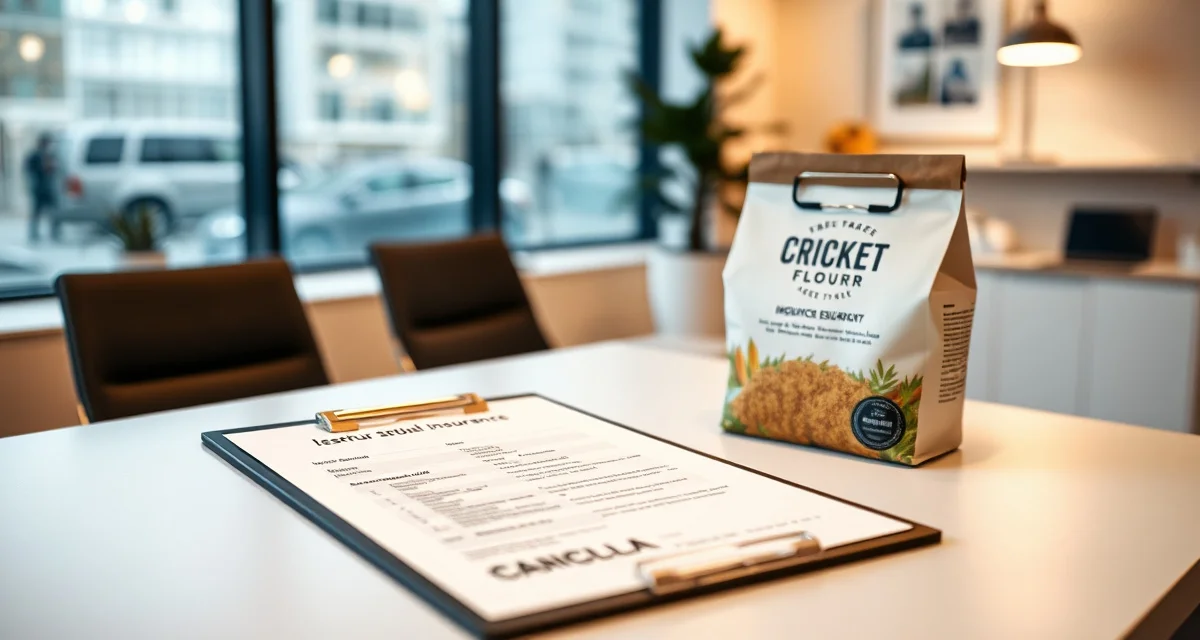
Food Recall Insurance for Cricket Flour: Protecting Against Recall Costs
A product recall involving 500 cases of cricket flour costs an average of $85,000 in direct recall expenses alone. That number doesn't include product liability claims, lost revenue during the recall period, or the cost of relaunching. For a small cricket flour producer, an uninsured recall is a business-ending event.
Food recall insurance is almost unknown among small cricket flour producers, yet it's available, reasonably affordable, and one of the most targeted protections you can buy. If you're selling cricket flour to retail, foodservice, or food manufacturers, this coverage belongs on your radar before your first large shipment.
TL;DR
- A product recall involving 500 cases of cricket flour costs an average of $85,000 in direct recall expenses alone
- The $85,000 average for a 500-case recall includes logistics, product replacement, retail notification, disposal, and staff time
- A product in 50 stores costs far more to recall than one sold through your website
- If you have 30 days of inventory moving through distribution at any given time, your replacement cost exposure is 30 days of production
- A typical entry-level recall policy for a small cricket flour producer (under $500K revenue, regional distribution) runs $800-$2,500 per year
- Policies start at $100,000 in coverage and scale from there
- Premiums start around $800-$1,000 per year for entry-level coverage and are affordable relative to the exposure
Finding a Recall Insurance Policy
Food recall insurance is written by specialty underwriters, not standard commercial carriers.
- The $85,000 average for a 500-case recall includes logistics, product replacement, retail notification, disposal, and staff time.
- That number doesn't include product liability claims, lost revenue during the recall period, or the cost of relaunching.
- For a small cricket flour producer, an uninsured recall is a business-ending event.
- Food recall insurance is almost unknown among small cricket flour producers, yet it's available, reasonably affordable, and one of the most targeted protections you can buy.
What Food Recall Insurance Covers
A food recall policy is distinct from your product liability policy. Product liability covers claims after someone is injured. Recall insurance covers the costs of pulling product from the market before or after a contamination event.
Typical recall policy coverage includes:
Recall expenses. The cost of notifying retailers and distributors, retrieving product from the field, transportation back to your facility, and disposal.
Product replacement costs. The cost of replacing recalled product if the recall was caused by a covered event.
Interrupted business income. Revenue lost during the recall period when you're not shipping product.
Third-party product recall. If your cricket flour ingredient causes a downstream buyer to recall their finished product, this extension covers their recall costs up to your limit.
Crisis management and PR costs. The cost of managing communications during a recall event.
What it doesn't cover: product liability claims for injuries caused by the recalled product (that's your product liability policy), voluntary withdrawals not related to a covered contamination event, and losses from regulatory action if you're found to be operating out of compliance.
The Real Cost of a Cricket Flour Recall
The $85,000 average for a 500-case recall breaks down roughly as follows:
- Retail notification and coordination: $8,000-$15,000
- Product retrieval logistics: $12,000-$18,000
- Product destruction or disposal: $5,000-$10,000
- Replacement product cost: $20,000-$30,000
- Internal staff time: $8,000-$15,000
- Business interruption (2-4 weeks): $10,000-$25,000
This is a direct-cost estimate. It doesn't account for the permanent loss of retail accounts that may not reinstate you after a recall, or the reputational costs in a small category where buyers talk to each other.
For context, the cricket farm insurance guide covers the full range of coverage types you need, and recall insurance is one of the most commonly overlooked.
What Triggers a Food Recall?
Cricket flour recalls can be triggered by several events:
Microbial contamination. Salmonella is the most common concern for cricket flour. A positive test at a retailer's receiving lab or a customer illness report can trigger a voluntary recall or an FDA-mandated market withdrawal.
Undeclared allergens. The most common recall trigger in food manufacturing. If your label doesn't accurately declare shellfish allergens (crickets are classified as related to shellfish for allergen purposes) or if your facility processes other allergens that appear in your product, you're exposed.
Foreign material contamination. Metal, plastic, or other physical hazards found in product can trigger a recall.
Mislabeling. Incorrect net weight, wrong ingredient statement, or a label error that creates a safety concern.
Your cricket flour FDA compliance program reduces the probability of any of these events, but it doesn't eliminate the risk entirely. That's what insurance is for.
How to Evaluate Your Recall Insurance Needs
The key variables in sizing your recall coverage are:
Distribution reach. The more retail doors carrying your product, the more expensive a recall becomes. A product in 50 stores costs far more to recall than one sold through your website.
Product volume in the field. If you have 30 days of inventory moving through distribution at any given time, your replacement cost exposure is 30 days of production.
Downstream ingredient use. If your cricket flour is an ingredient in another brand's product, a recall at that level could pull your name into a much larger event.
A typical entry-level recall policy for a small cricket flour producer (under $500K revenue, regional distribution) runs $800-$2,500 per year. Policies start at $100,000 in coverage and scale from there.
Finding a Recall Insurance Policy
Food recall insurance is written by specialty underwriters, not standard commercial carriers. Look for:
- Food and beverage specialty insurance brokers
- The Stonyfield/specialty protein coverage market
- Farm Bureau specialty food divisions in some states
When you apply, the underwriter will want to see your HACCP plan, your food safety plan, your allergen management program, and your FDA facility registration status. A documented food safety program significantly reduces your premium.
Frequently Asked Questions
What is food recall insurance for cricket flour producers?
Food recall insurance is a specialty policy that covers the direct costs of removing your product from the market following a contamination, allergen, or labeling event. It pays for logistics, retailer notifications, product replacement, and business interruption during the recall period. It's separate from product liability insurance, which covers injury claims after a consumer is harmed. For cricket flour producers, the primary recall triggers are Salmonella contamination, undeclared allergens (particularly shellfish-related allergens from crickets), and mislabeling. Most small producers skip recall insurance, not knowing it's available. Premiums start around $800-$1,000 per year for entry-level coverage and are affordable relative to the exposure.
How much does a food recall cost without insurance?
Without insurance, a small cricket flour producer facing a 500-case recall can expect direct costs of $50,000-$250,000 depending on distribution reach and the nature of the event. The $85,000 average for a 500-case recall includes logistics, product replacement, retail notification, disposal, and staff time. It doesn't include the product liability claims that often follow a contamination recall, which can be multiples of the recall cost. It also doesn't include the long-term revenue loss from retailers and distributors who drop your product after a recall. The financial impact of an uninsured recall is severe enough to permanently close a small operation.
Which insurance companies offer food recall coverage for small cricket flour brands?
Food recall insurance is written by specialty carriers in the food and beverage market, not standard commercial property and casualty insurers. Specialty brokers who work with food manufacturers and ingredient suppliers can place this coverage with underwriters who understand the insect protein category. When seeking coverage, work with a broker experienced in food industry insurance rather than a generalist. They'll have access to the underwriters who write recall coverage for novel protein categories and can structure a policy that covers third-party recall exposure, which is critical if you sell to food manufacturers who could have a downstream recall triggered by your ingredient.
How does CricketOps help track the metrics described in this article?
CricketOps provides bin-level logging for the variables that drive production outcomes -- feed inputs, environmental conditions, mortality events, and harvest results. Rather than maintaining these records in separate spreadsheets, you can view performance trends across bins and over time to identify which operational variables correlate with better outcomes in your specific facility.
Where can I find industry benchmarks to compare my operation's performance?
The North American Coalition for Insect Agriculture (NACIA) publishes periodic industry reports with production benchmarks. University extension programs in agricultural states, including the University of Georgia and University of Florida IFAS, occasionally publish insect farming production data. Industry conferences hosted by the Entomological Society of America and the Insects to Feed the World symposium series are additional sources of peer benchmarking data.
What is the biggest operational mistake cricket farmers make in their first year?
Expanding bin count before achieving consistent FCR and mortality targets in existing bins is the most common and costly first-year mistake. At 5-10 bins, problems are manageable. At 30-50 bins, the same proportional problems represent much larger financial losses. Most experienced cricket farmers recommend holding expansion until you have three consecutive production cycles hitting your FCR and mortality targets.
Sources
- Food and Agriculture Organization of the United Nations (FAO) -- Edible Insects: Future Prospects for Food and Feed Security
- North American Coalition for Insect Agriculture (NACIA)
- Entomological Society of America
- University of Georgia Cooperative Extension
- Journal of Insects as Food and Feed (Wageningen Academic Publishers)
Get Started with CricketOps
The practices covered in this article are easier to apply consistently when they are supported by organized production data. CricketOps gives cricket farmers the tools to track what matters -- by bin, by batch, and over time. Start your next production cycle in CricketOps and see how organized data changes the way you manage your operation.