Cricket Farm Delivery Logistics: Building a Reliable Local Delivery Route
A structured weekly delivery route reduces per-account delivery cost from $15 to $6 for a 15-account cricket farm. That $9 per-account savings might seem small, but across 15 accounts and 52 deliveries per year, it's over $7,000 annually in reduced delivery cost - from the same accounts, the same product, just a more efficient route.
Most feeder cricket farms deliver on an ad-hoc schedule: a store calls, you load up, you drive over. This reactive approach is expensive (you're making individual trips instead of optimized routes), unreliable (delivery timing is unpredictable for the buyer), and difficult to scale. Building a structured weekly delivery route solves all three problems.
TL;DR
- A structured weekly delivery route reduces per-account delivery cost from $15 to $6 for a 15-account cricket farm
- That $9 per-account savings might seem small, but across 15 accounts and 52 deliveries per year, it's over $7,000 annually in reduced delivery cost - from the same accounts, the same product, just a more efficient route
- Size: A standard cargo van handles a 20-30 account delivery route comfortably
- An unoptimized route between 15 accounts in different parts of the city might require 3-4 hours of driving
- An optimized route might cover the same accounts in 2 hours
- Use Google Maps or a free route optimization tool (Route4Me free tier, OptimoRoute free trial, or simply Google Maps multi-stop routing) to sequence your stops efficiently
- This typically reduces driving time by 20-35% compared to a manually sequenced route
Size: A standard cargo van handles a 20-30 account delivery route comfortably.
- An unoptimized route between 15 accounts in different parts of the city might require 3-4 hours of driving.
- An optimized route might cover the same accounts in 2 hours.
- Use Google Maps or a free route optimization tool (Route4Me free tier, OptimoRoute free trial, or simply Google Maps multi-stop routing) to sequence your stops efficiently.
- This typically reduces driving time by 20-35% compared to a manually sequenced route.
- An account that's 15 miles out of your way on a route is much more expensive to serve than an account that's on-route.
Choosing Your Vehicle
A personal vehicle works for early-stage feeder cricket operations with a small account base. As you scale, the vehicle requirements become more important:
Temperature management: Live crickets can't survive in the back of a car in direct summer sun. Even an hour in a hot vehicle can kill a significant portion of your delivery. In summer months, deliveries need to happen either in a climate-controlled vehicle interior, in cooler-shade conditions, or very early in the morning before the day heats up.
Ventilation: Cricket containers need airflow. Don't stack sealed boxes in a way that restricts air exchange.
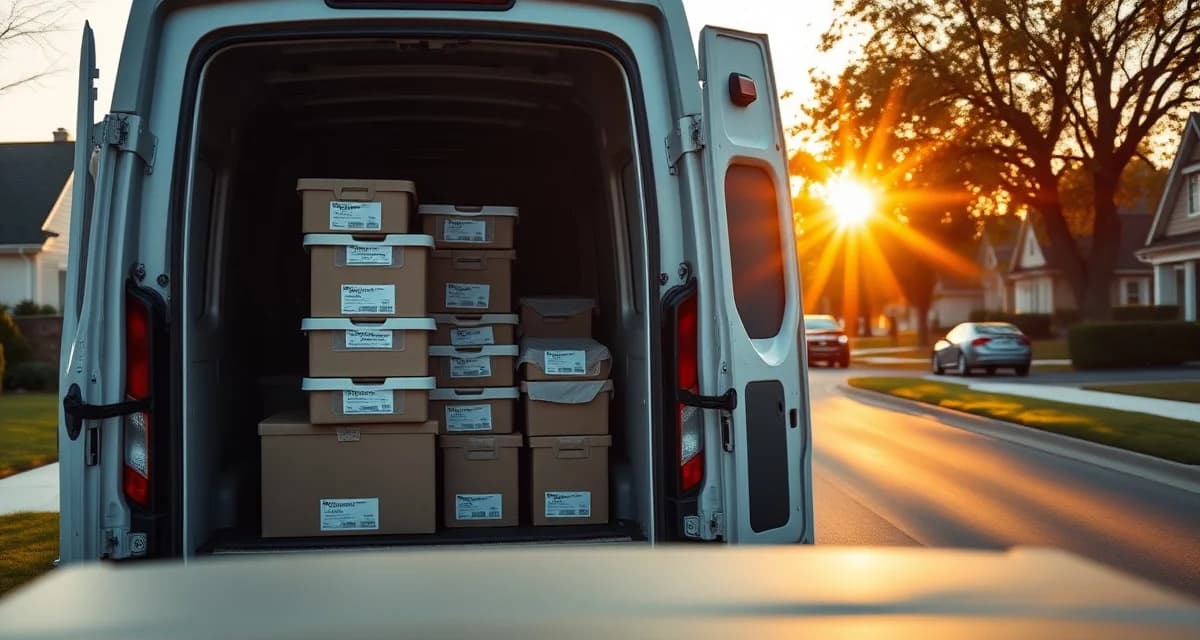
Size: A standard cargo van handles a 20-30 account delivery route comfortably. A small SUV works for 10-15 accounts. Calculate your weekly delivery volume in boxes and make sure your vehicle has the space.
Odor management: Cricket deliveries produce odor. Your delivery vehicle will smell. Factor this into your vehicle choice if you use it for other purposes.
A refrigerated van is overkill for feeder crickets (they don't need refrigeration, they need temperature stability). A standard cargo van with insulated containers is the practical choice for operations serving 20+ accounts.
Building an Efficient Route
Route optimization is the primary lever for delivery cost reduction. An unoptimized route between 15 accounts in different parts of the city might require 3-4 hours of driving. An optimized route might cover the same accounts in 2 hours.
Use Google Maps or a free route optimization tool (Route4Me free tier, OptimoRoute free trial, or simply Google Maps multi-stop routing) to sequence your stops efficiently. Input all your delivery addresses and let the tool optimize the sequence. This typically reduces driving time by 20-35% compared to a manually sequenced route.
Cluster your accounts geographically when building your account base. An account that's 15 miles out of your way on a route is much more expensive to serve than an account that's on-route. This doesn't mean you refuse geographically inconvenient accounts - it means you consider delivery logistics when pricing accounts that require extra travel.
Scheduling Your Route
Set a fixed delivery day for each geographic cluster. Most feeder cricket farms deliver one or two days per week, with accounts grouped by location on each day.
Example structure for a 15-account farm:
- Tuesday: West side of city (7-8 accounts)
- Friday: East side of city (7-8 accounts)
Communicate your delivery schedule to every account so they can plan their ordering around your days. A predictable schedule is a significant selling point - pet stores can staff appropriately to receive and unload your delivery when they know it's coming.
For accounts in between your geographic clusters: either fold them into the nearest route (accepting slightly less efficiency) or schedule a separate day for mid-week deliveries if volume warrants it.
Packaging for Live Cricket Delivery
Cricket packaging for local delivery needs to balance ventilation, containment, and stackability:
Standard packaging: A cardboard box with ventilation holes or a mesh panel, sized to your common delivery quantities (500-count, 1,000-count). Boxes should be stackable without collapsing.
Summer heat protocol: In temperatures above 85F, place a small frozen gel pack against the exterior of the box (not inside with the crickets - direct cold contact can harm insects). This adds 30-60 minutes of temperature protection in transit.
Labeling: Each box should have the account name, size, and quantity visible on the outside. This makes delivery fast - you're not opening boxes to check contents at each stop.
For additional packaging details, see cricket farm packaging and storage. For selling into accounts that need delivery, see the feeder cricket market guide.
Frequently Asked Questions
How do I build a delivery route for my feeder cricket farm?
Start by mapping all your current and target accounts by address. Use Google Maps or a free route optimization tool to sequence the stops efficiently, grouping accounts by geographic cluster. Assign each cluster to a specific delivery day (for example, west-side accounts on Tuesday, east-side accounts on Friday). Communicate the delivery schedule to all accounts so they can plan accordingly. As you add new accounts, add them to the appropriate geographic delivery day rather than creating custom one-off delivery routes. A structured weekly route turns delivery from a reactive, per-trip expense into a predictable, efficient operation.
What vehicle is best for delivering live crickets to pet stores?
A cargo van (standard or compact) is the most practical vehicle for a feeder cricket delivery route serving 15+ accounts. It provides enough space for your delivery volume, good temperature control in the cabin, and can be organized for efficient loading and unloading. In summer, the enclosed cabin prevents direct sun exposure to your live product during transit. A standard SUV works for smaller route counts. Personal vehicles work for early-stage operations but become impractical as your route grows. Temperature stability during transit matters more than vehicle size - whatever vehicle you use, ensure live crickets aren't exposed to extreme heat or cold during delivery.
How do I keep live crickets alive during local delivery?
Maintain temperature stability during transit - this means using a climate-controlled vehicle interior or delivering very early morning or evening in summer to avoid peak heat. Don't stack ventilated boxes in a way that restricts airflow between boxes. For routes longer than 2 hours, provide a small frozen gel pack against the exterior of each box to moderate temperature. Load your boxes gently and don't compress or jostle them excessively during transit. Keep delivery windows under 3 hours when possible, particularly in summer. Check your DOA rate at the first delivery stop after any particularly hot or cold day - if you're seeing higher than normal mortality, adjust your transit protocols before completing the rest of the route.
How does CricketOps help track the metrics described in this article?
CricketOps provides bin-level logging for the variables that drive production outcomes -- feed inputs, environmental conditions, mortality events, and harvest results. Rather than maintaining these records in separate spreadsheets, you can view performance trends across bins and over time to identify which operational variables correlate with better outcomes in your specific facility.
Where can I find industry benchmarks to compare my operation's performance?
The North American Coalition for Insect Agriculture (NACIA) publishes periodic industry reports with production benchmarks. University extension programs in agricultural states, including the University of Georgia and University of Florida IFAS, occasionally publish insect farming production data. Industry conferences hosted by the Entomological Society of America and the Insects to Feed the World symposium series are additional sources of peer benchmarking data.
What is the biggest operational mistake cricket farmers make in their first year?
Expanding bin count before achieving consistent FCR and mortality targets in existing bins is the most common and costly first-year mistake. At 5-10 bins, problems are manageable. At 30-50 bins, the same proportional problems represent much larger financial losses. Most experienced cricket farmers recommend holding expansion until you have three consecutive production cycles hitting your FCR and mortality targets.
Sources
- Food and Agriculture Organization of the United Nations (FAO) -- Edible Insects: Future Prospects for Food and Feed Security
- North American Coalition for Insect Agriculture (NACIA)
- Entomological Society of America
- University of Georgia Cooperative Extension
- Journal of Insects as Food and Feed (Wageningen Academic Publishers)
Get Started with CricketOps
The practices covered in this article are easier to apply consistently when they are supported by organized production data. CricketOps gives cricket farmers the tools to track what matters -- by bin, by batch, and over time. Start your next production cycle in CricketOps and see how organized data changes the way you manage your operation.