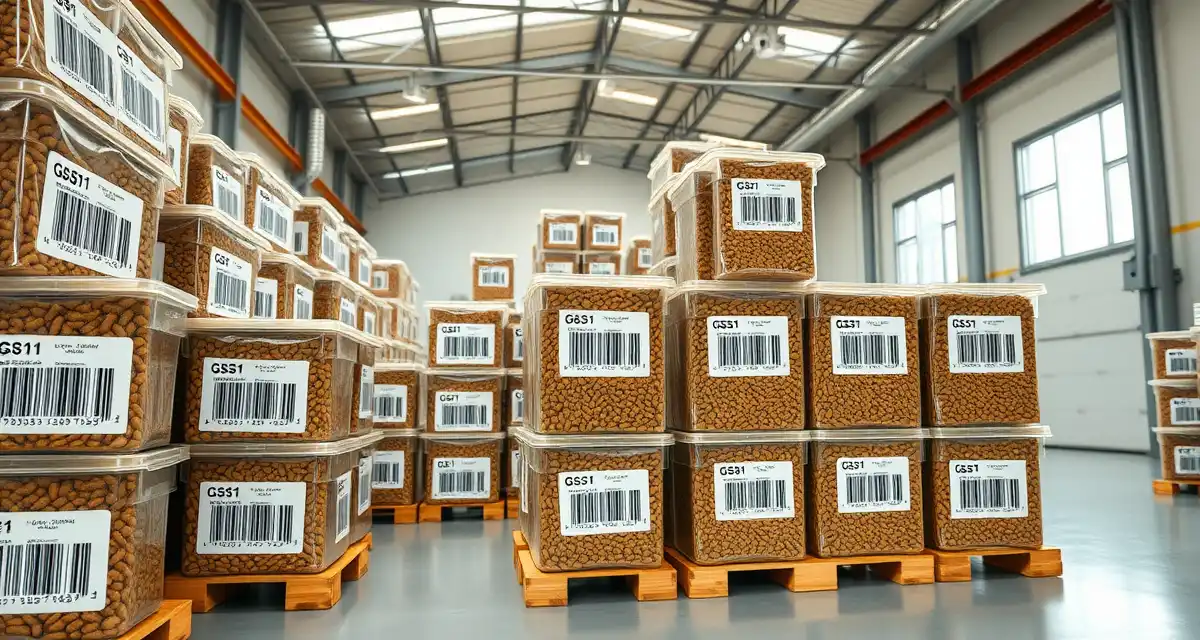
Cricket Farm Batch Numbering System: Creating Traceability from Hatch to Sale
Major retailers require GS1-compatible lot numbers on cricket flour packaging for receiving system entry. If your lot numbers aren't formatted in a way that can be scanned and entered into a retailer's warehouse management system, your product gets held up at receiving, which delays payment and creates friction that costs you accounts. Setting up your batch numbering system correctly from the beginning prevents this problem.
Batch numbering is also the foundation of your recall capability. If a quality issue is identified in a sold lot, your batch number system is how you trace which other packages came from the same production run, which bins fed those crickets, and when and where those batches were sold. FDA expects this level of traceability for registered food facilities. Without a structured batch numbering system, a recall becomes an all-hands emergency instead of an organized process.
TL;DR
- Major retailers require GS1-compatible lot numbers on cricket flour packaging for receiving system entry
- Major retailers (Whole Foods, Sprouts, Target, Walmart) require GS1-compatible product data for items entering their distribution systems
- Most label printing software (Zebra, Brady, BarTender) can generate GS1-128 barcodes from your lot number format
- The alphanumeric content of the lot number itself doesn't follow a mandated format, but it must be encoded correctly in a GS1-compatible barcode
- GS1 is the global standards body for supply chain barcodes and lot number formats
- The lot number format itself doesn't need to be structured a specific way to be "GS1 compatible" -- the GS1 standard defines how the lot number is encoded in the barcode, not the specific alphanumeric format
- Your label designer should know to include the GS1-128 barcode with the lot number encoded
2.
- Which specific production run within that period (sequence number)
3.
- Major retailers (Whole Foods, Sprouts, Target, Walmart) require GS1-compatible product data for items entering their distribution systems.
- Most label printing software (Zebra, Brady, BarTender) can generate GS1-128 barcodes from your lot number format.
- The alphanumeric content of the lot number itself doesn't follow a mandated format, but it must be encoded correctly in a GS1-compatible barcode.
- Setting up your batch numbering system correctly from the beginning prevents this problem.
What a Batch Number Needs to Include
A functional batch number for cricket flour needs to identify:
- Which production period the batch came from (date-based)
- Which specific production run within that period (sequence number)
- The product type (if you produce multiple products)
A simple format that satisfies FDA and most retailer requirements:
[Product Code]-[YYYYMMDD]-[Sequence]
Examples:
CF-20260315-001(Cricket Flour, March 15 2026, first batch of the day)CF-20260315-002(Cricket Flour, March 15 2026, second batch of the day)FE-20260314-001(Feeder Export package, March 14 2026, first batch)
Why date-based? Date-based lot numbers make it immediately obvious how old a batch is. When a retailer's receiving system scans your lot number, they can immediately calculate whether the product is within shelf life. When you're investigating a quality complaint, the date tells you exactly what was happening in production on that day.
Why include product code? If you produce multiple products (fine flour, coarse flour, protein concentrate, whole dried), your lot number should distinguish them so you can trace a specific product complaint to the correct production run without ambiguity.
GS1-Compatible Formatting
GS1 is the global standards body for supply chain barcodes and lot number formats. Major retailers (Whole Foods, Sprouts, Target, Walmart) require GS1-compatible product data for items entering their distribution systems.
For cricket flour packaging, GS1 compatibility requires:
- A GS1 Company Prefix (you get this by joining GS1 US; cost starts around $250/year)
- UPC barcode (derived from your GS1 prefix) on the product label
- Lot number that can be represented in a GS1-128 or GS1 DataMatrix barcode format
The lot number format itself doesn't need to be structured a specific way to be "GS1 compatible" -- the GS1 standard defines how the lot number is encoded in the barcode, not the specific alphanumeric format. Your date-product-sequence format works. What you need to do is encode it correctly in a scannable barcode on the packaging.
Most label printing software (Zebra, Brady, BarTender) can generate GS1-128 barcodes from your lot number format. Your label designer should know to include the GS1-128 barcode with the lot number encoded.
Linking Batch Numbers to Production Records
Your batch number is only useful if it links back to the production records that allow traceability. When you create a batch number, record:
- Batch number
- Production date
- Product type and specification (particle size, protein content)
- Bin numbers that supplied crickets to this batch
- Feed lot numbers used in those bins
- Processing operator(s)
- Equipment used (dryer, mill, sieve)
- Quality parameters measured (moisture, protein, particle size)
- COA testing submitted/received
This record lives in your cricket farm traceability system and in your CricketOps batch records. The linkage between batch number and production record is what makes a recall response structured rather than chaotic.
Batch Numbers for Feeder Crickets
Feeder crickets shipped to pet stores also benefit from lot numbering, even though the traceability requirements are less formal than for food products.
A simple format: FE-[YYYYMMDD]-[Bin#]
For a feeder shipment packed from Bin 12 on March 15: FE-20260315-B12
This lets you trace any DOA complaint back to the specific bin and production date, which helps you identify whether a quality issue is bin-specific or farm-wide.
Tracking Batch Numbers in CricketOps
Your cricket farm record keeping guide describes the record-keeping obligations for registered food facilities. CricketOps supports batch tracking by linking harvest records to processing batches, which provides the underlying data for your batch numbering system.
When you process a harvest, assign a batch number at the point of processing. Record the batch number against the harvest record in CricketOps. When that batch is packaged and shipped, record the sale with the batch number so you can trace which customers received which lots.
Frequently Asked Questions
How should I number my cricket flour batches?
Use a format that includes the product type, production date, and a sequence number: for example, CF-20260315-001 for the first batch of cricket flour produced on March 15, 2026. This format is immediately readable (anyone can determine what the product is and when it was made) and supports FIFO rotation by date. Record each batch number against your production records in CricketOps when the batch is created, and include the batch number on your shipping documents and invoices so you can trace which customers received which lots. For packaging labels, encode the batch number in a GS1-128 barcode so it's scannable by retail and food manufacturer receiving systems.
What batch number format do food retailers require?
Retailers primarily require that lot numbers be scannable in a GS1-128 or GS1 DataMatrix barcode format. The alphanumeric content of the lot number itself doesn't follow a mandated format, but it must be encoded correctly in a GS1-compatible barcode. Most retailers also require that lot numbers appear in human-readable form on the outer case and unit packaging. Your lot number format (product code + date + sequence) is appropriate; what matters is that it's printed clearly, encoded in a scannable barcode, and consistently linked to your production records so you can respond to a retailer's lot trace request with specific production documentation.
Does CricketOps generate lot numbers for cricket flour batches?
CricketOps supports batch tracking through your harvest and processing records. When you record a processing batch in CricketOps, you can assign a lot number that links to the harvest records, bin records, and feed records that provide traceability back through your production chain. CricketOps stores these records in a way that makes them retrievable by lot number, which is the core of what you need for a recall response or retailer audit. The lot number format you use (product code + date + sequence) is entered by you; CricketOps stores and links the associated records.
How do I know if I am harvesting too early or too late?
Harvesting too early means crickets have not reached peak body mass, reducing yield per bin cycle. Harvesting too late means increased mortality from natural die-off and rising ammonia that degrades product quality. Most operations find their optimal harvest window by weighing a sample of 50-100 crickets at multiple points in the grow-out cycle and identifying the window where daily weight gain falls below a meaningful threshold.
Does harvest timing affect the nutritional profile of finished crickets?
Yes. Younger adults harvested earlier tend to show a higher protein-to-fat ratio. Older adults accumulate more fat. If your buyers specify a target protein percentage or fat content, aligning harvest timing to hit those specifications consistently is important. Running periodic proximate analyses on finished product batches helps you verify you are staying within buyer tolerances over time.
What is the best method for humanely killing crickets at harvest?
Freezing is the most widely used commercial method. Placing crickets in a freezer at 0°F or below causes rapid loss of consciousness and death. CO2 stunning prior to freezing is used by some certified-humane operations to reduce the duration before unconsciousness. High-temperature methods (blanching) are also used in some flour production operations. Consult your buyer's specifications and any applicable certification standards for the methods they accept.
Sources
- Food and Agriculture Organization of the United Nations (FAO) -- Edible Insects: Future Prospects for Food and Feed Security
- North American Coalition for Insect Agriculture (NACIA)
- Entomological Society of America
- USDA Agricultural Research Service
- AgriNovus Indiana -- AgTech Industry Resources
Get Started with CricketOps
Consistent harvest timing and FCR improvement both require historical data on how your specific bins perform across the production cycle. CricketOps tracks growth milestones, logs harvest weights by bin, and builds the record that lets you identify which bins consistently hit your targets and which ones need attention. Try CricketOps on your next production cycle.