Gryllus Bimaculatus Lifecycle: Managing Black Crickets on Your Farm
If you're coming from an Acheta domesticus background, you'll find Gryllus bimaculatus (black crickets, or Mediterranean field crickets) familiar in structure but different in the specifics. The lifecycle follows the same arc, egg, pinhead, nymph instars, adult, but the temperature requirements are higher, the grow-out is longer, and the management details differ enough to matter.
Gryllus bimaculatus requires slightly higher temperatures (88-95°F) and has a longer grow-out period than Acheta domesticus. That difference affects your production planning, your heating costs, and your revenue per square foot calculations.
This guide covers the full Gryllus bimaculatus lifecycle with the management-specific detail that farmers actually need, not the academic overview that's easy to find elsewhere.
TL;DR
- Gryllus bimaculatus requires slightly higher temperatures (88-95°F) and has a longer grow-out period than Acheta domesticus.
- Gryllus bimaculatus pinheads are slightly larger than Acheta domesticus pinheads at hatch, about 20-25% bigger, which makes them somewhat more strong in the first 24-48 hours.
- Temperature requirement at this stage: 88-93°F.
- Gryllus bimaculatus goes through 9-11 instars before reaching adulthood, one to two more than Acheta domesticus.
- Wing buds appear by instar 7-8, growing more pronounced with each subsequent molt.
- Harvest window for adults: 7-10 days post-final molt, similar to Acheta domesticus.
- Higher temperature requirement throughout: Gryllus bimaculatus needs 88-95°F at egg and early nymph stages, 3-5 degrees warmer than Acheta domesticus at equivalent stages.
Stage 3: Nymph Instars (Days 18-42)
Gryllus bimaculatus goes through 9-11 instars before reaching adulthood, one to two more than Acheta domesticus.
- Wing buds appear by instar 7-8, growing more pronounced with each subsequent molt.
- Harvest window for adults: 7-10 days post-final molt, similar to Acheta domesticus.
- Higher temperature requirement throughout**: Gryllus bimaculatus needs 88-95°F at egg and early nymph stages, 3-5 degrees warmer than Acheta domesticus at equivalent stages.
- This means higher heating costs in most facilities.
**2.
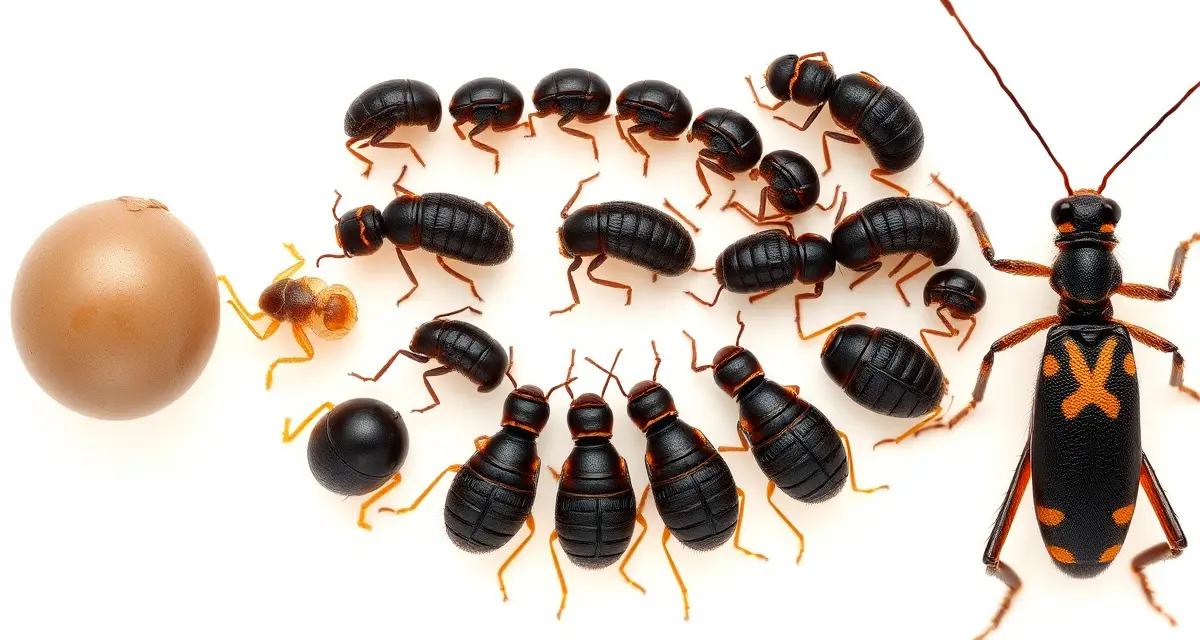
The Gryllus Bimaculatus Life Stages
Stage 1: Egg (Days 0-10)
Gryllus bimaculatus females lay eggs in moist substrate, similar to Acheta domesticus. The ovipositor is longer than Acheta domesticus, meaning the females require deeper substrate, at least 3 inches of moist coco coir or equivalent for full oviposition.
Key differences from Acheta domesticus at this stage:
- Temperature requirement for optimal hatch is higher: 90-95°F vs 88-90°F for Acheta domesticus
- Egg size is larger, individual eggs are 0.3-0.4mm longer
- Incubation period is similar: 8-12 days at 90-95°F
Collect egg substrate every 5-7 days as with Acheta domesticus. The same batch age synchronization principles apply.
Stage 2: Pinhead Nymphs (Days 10-18)
Gryllus bimaculatus pinheads are slightly larger than Acheta domesticus pinheads at hatch, about 20-25% bigger, which makes them somewhat more strong in the first 24-48 hours. This is a minor practical advantage: pinhead mortality in Gryllus bimaculatus tends to be slightly lower than in Acheta domesticus under equivalent management conditions.
Temperature requirement at this stage: 88-93°F. Similar sensitivity to temperature drops as Acheta domesticus, though the higher baseline requirement means your room temperature needs to be higher overall.
Water sources: same as Acheta domesticus. Water crystals, orange slices, or leafy greens. No open water.
Stage 3: Nymph Instars (Days 18-42)
Gryllus bimaculatus goes through 9-11 instars before reaching adulthood, one to two more than Acheta domesticus. This is part of why the total lifecycle is longer.
Each instar is visible as a molt. Gryllus bimaculatus nymphs are distinctive, they're darker in color than Acheta domesticus nymphs throughout development, with a characteristic dark brown-to-black coloration becoming pronounced by instar 5 or 6.
Temperature for mid-to-late nymph stage: 88-93°F. Gryllus bimaculatus is a genuinely warm-weather species and performs poorly at the lower end of temperatures that Acheta domesticus tolerates.
Wing buds appear by instar 7-8, growing more pronounced with each subsequent molt. Full wing development signals approaching adulthood.
Stage 4: Adult (Day 42+)
Adult Gryllus bimaculatus are visually striking, measurably darker than Acheta domesticus, with characteristic two yellow spots on the wings (hence "bimaculatus", two spotted). Adults are larger and heavier than equivalent-age Acheta domesticus.
Harvest window for adults: 7-10 days post-final molt, similar to Acheta domesticus. The timing indicators are the same: full wing development, dark cuticle (not pale), and production record showing appropriate days post-hatch.
Lifespan: Adult Gryllus bimaculatus has a longer adult lifespan than Acheta domesticus, potentially 4-6 weeks as adults under good conditions. This makes the harvest window somewhat more forgiving: you have a longer period before reproductive energy expenditure measurably reduces individual weight.
Lifecycle Comparison: Gryllus Bimaculatus vs Acheta Domesticus
| Parameter | Gryllus bimaculatus | Acheta domesticus |
|---|---|---|
| Egg incubation temp | 90-95°F | 88-90°F |
| Egg hatch time | 8-12 days | 8-10 days |
| Total instars | 9-11 | 8-10 |
| Total cycle (optimal temp) | 8-11 weeks | 6-8 weeks |
| Optimal production temp | 88-93°F | 85-90°F |
| Adult longevity | 4-6 weeks | 2-4 weeks |
The extended cycle time is the primary production difference. Gryllus bimaculatus gives you fewer production cycles per year from the same infrastructure at equivalent temperature management. The tradeoff is a larger, hardier insect with specific market advantages.
How Does the Gryllus Bimaculatus Lifecycle Differ from Acheta Domesticus?
Three primary operational differences:
1. Higher temperature requirement throughout: Gryllus bimaculatus needs 88-95°F at egg and early nymph stages, 3-5 degrees warmer than Acheta domesticus at equivalent stages. This means higher heating costs in most facilities.
2. Longer grow-out: The additional instars add 2-3 weeks to the production cycle compared to Acheta domesticus at equivalent temperatures. Planning your production calendar around this difference is important.
3. More forgiving adult stage: The longer adult lifespan gives you a wider harvest window. Missing the exact 5-7 day window isn't as costly with Gryllus bimaculatus as it is with Acheta domesticus.
FAQ
How does the Gryllus bimaculatus lifecycle differ from Acheta domesticus?
Gryllus bimaculatus has a longer grow-out period (8-11 weeks vs 6-8 weeks for Acheta domesticus), requires higher temperatures throughout (88-95°F vs 85-90°F), and passes through 9-11 instars vs 8-10 for Acheta domesticus. The adult lifespan is longer, giving a wider harvest window. These differences mean fewer annual production cycles from the same infrastructure but a hardier, larger insect with specific market advantages. See the cricket farm management guide for how to manage both species in the same facility.
What temperature does Gryllus bimaculatus need to develop properly?
Gryllus bimaculatus requires 90-95°F for egg incubation and 88-93°F through most nymph and adult stages. This is 3-5 degrees warmer than Acheta domesticus requirements at equivalent stages. Below 82°F, development slows dramatically. Below 75°F, mortality increases and development nearly arrests. For temperature management specifics, see the Gryllus bimaculatus temperature requirements guide.
Is Gryllus bimaculatus faster or slower to mature than house crickets?
Slower. At equivalent temperatures, Gryllus bimaculatus takes 8-11 weeks to reach harvest weight compared to 6-8 weeks for Acheta domesticus. The additional 2-3 instars and the higher temperature requirement mean you get fewer production cycles per year from the same infrastructure. The compensating advantages are a larger adult body size, greater hardiness, lower susceptibility to disease, and premium market positioning in the reptile feeder market.
How do I identify failed egg pods before they waste incubation space?
Failed or infertile egg pods often show visible discoloration (yellowing or darkening) by days 5-7 of incubation rather than the consistent cream color of viable eggs. Some operations do a test hatch by removing a small egg sample and incubating it separately at optimal temperature for 3-4 days. Tracking hatch rates by breeding colony over time identifies which adult colonies produce the most viable eggs and which may need to be replaced.
At what life stage are crickets most vulnerable to die-offs?
The pinhead stage (days 0-7 post-hatch) carries the highest baseline mortality rate in well-managed Acheta domesticus production. Pinheads are highly susceptible to desiccation, temperature extremes, overcrowding, and starvation if feed particles are too large to consume. The second highest-risk period is the final molt from nymph to adult. Tracking mortality separately by life stage is the most direct way to identify where your losses are concentrated.
How many breeding adults are needed per production bin?
A common guideline for Acheta domesticus is maintaining one breeding bin for every 3-5 production grow-out bins, though the right ratio depends on your egg collection schedule, incubation timeline, and target stocking density. Fewer breeding bins with very productive colonies can support more grow-out bins than a larger number of low-output colonies. Tracking eggs collected per breeding colony is the data that lets you optimize this ratio.
Sources
- Food and Agriculture Organization of the United Nations (FAO) -- Edible Insects: Future Prospects for Food and Feed Security
- North American Coalition for Insect Agriculture (NACIA)
- Entomological Society of America
- Journal of Insects as Food and Feed (Wageningen Academic Publishers)
- University of Florida IFAS Extension -- Entomology and Nematology Department
The Bottom Line
Gryllus bimaculatus follows a familiar cricket lifecycle structure but demands warmer conditions and more patience. The extended grow-out and higher temperature requirements are real operational costs. The payoff is a hardier insect with a longer adult window, demonstrated disease resistance advantages, and a growing premium in reptile feeder markets where buyers are actively seeking an alternative to Acheta domesticus.
If you're considering adding Gryllus bimaculatus to your operation, plan your temperature management first. You'll need to maintain 3-5 degrees warmer than your Acheta domesticus setup, which has meaningful implications for heating costs and room configuration.
Get Started with CricketOps
Optimizing your breeding program requires knowing which colonies are performing and which are not. CricketOps lets you log egg collection by colony, track hatch rates by batch, and connect breeding performance to downstream grow-out outcomes. Start tracking your breeding program in CricketOps and identify your highest-performing colonies.