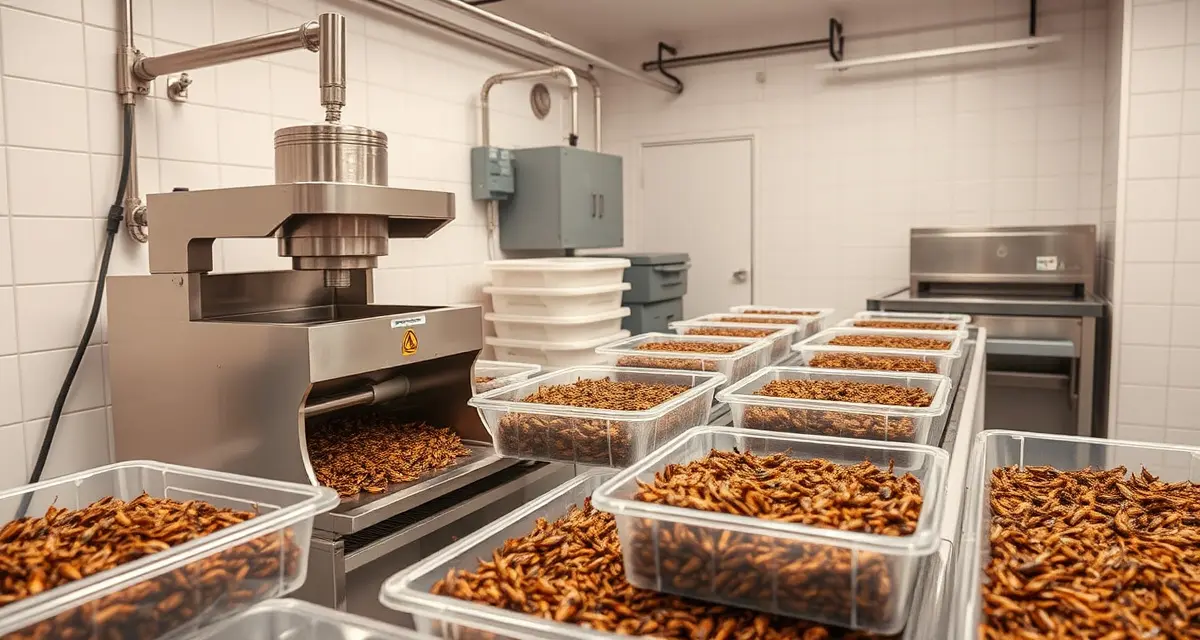
Post-Harvest Cricket Processing: From Live Crickets to Clean Dried Product
Thermal processing (blanching) at harvest is the primary intervention that reduces bioload for food-grade cricket production. This single step, done correctly, is what separates product appropriate for food-grade sale from product appropriate only for feeder use.
Post-harvest processing is the least documented step in cricket farming. Most guides cover colony management, temperature control, and feeding. Almost none cover what happens between the harvest bucket and the finished product. Quality failures that happen here are irreversible: you can't un-contaminate a batch after it's been milled or packaged.
TL;DR
- Place harvest containers in a dedicated freezer at -18°C or below
- Crickets die within 20-30 minutes and enter a state that looks like sleep before death
- Submerge crickets in boiling or near-boiling water (80-100°C) for 1-3 minutes
- CO2 displaces oxygen and anesthetizes crickets before freezing
- Requires CO2 equipment but is faster and considered more humane than freezing alone
- The processing sequence actually starts 24-48 hours before the crickets leave your bins
- The goal is to reduce moisture content to below 5% (for long shelf life and food safety) without damaging protein integrity more than necessary
Step 2: Killing
Crickets must be killed humanely and in a way that minimizes contamination and heat treatment of the product.
- The main methods:
Freezing. Place harvest containers in a dedicated freezer at -18°C or below.
- Crickets die within 20-30 minutes and enter a state that looks like sleep before death.
- Additional thermal processing is required before drying for food-grade product.
Hot water blanching. Submerge crickets in boiling or near-boiling water (80-100°C) for 1-3 minutes.
- Do not skip it for food-grade production.
CO2 anesthesia then freezing. An increasingly used welfare-focused method.
- CO2 displaces oxygen and anesthetizes crickets before freezing.
- Requires CO2 equipment but is faster and considered more humane than freezing alone.
Step 3: Washing
After killing (or after blanching for flour production), wash the cricket mass:
1.
Step 1: Starving Before Harvest
The processing sequence actually starts 24-48 hours before the crickets leave your bins.
Feed withdrawal before harvest is critical for food-grade production. Crickets that have been eating right up to harvest have full guts. Processing them immediately results in gut content contamination of the final product, higher microbial loads, and a stronger off-flavor profile.
Protocol:
- Remove feed sources from harvest-designated bins 24-48 hours before planned harvest
- Continue providing water or hydration gel during this period (dehydration causes quality problems)
- 24-hour starvation is the minimum for feeder production; 48 hours is recommended for flour production
For feeder crickets, starvation is less critical because they'll eat after delivery. For flour production, it's non-negotiable.
Step 2: Killing
Crickets must be killed humanely and in a way that minimizes contamination and heat treatment of the product. The main methods:
Freezing. Place harvest containers in a dedicated freezer at -18°C or below. Crickets die within 20-30 minutes and enter a state that looks like sleep before death. Freezing is the most widely used method for small-scale operations and for feeder cricket producers.
Limitation for flour production: Frozen-and-thawed crickets have higher microbial loads than thermally processed crickets because freezing doesn't kill surface bacteria. Additional thermal processing is required before drying for food-grade product.
Hot water blanching. Submerge crickets in boiling or near-boiling water (80-100°C) for 1-3 minutes. This kills crickets rapidly and simultaneously reduces surface microbial load. This is the preferred primary kill method for food-grade flour production.
The blanching step is the critical intervention that defines whether your product enters the food grade or feeder grade channel. The heat treatment at blanching is the primary microbial reduction step. Do not skip it for food-grade production.
CO2 anesthesia then freezing. An increasingly used welfare-focused method. CO2 displaces oxygen and anesthetizes crickets before freezing. Requires CO2 equipment but is faster and considered more humane than freezing alone.
Step 3: Washing
After killing (or after blanching for flour production), wash the cricket mass:
- Transfer to a perforated container or wire basket
- Rinse thoroughly with potable water
- Drain completely before proceeding to drying
Washing removes:
- Gut content that may have leaked during processing
- Feed particles and substrate debris
- Surface microbial contamination that wasn't addressed by blanching
For food-grade production, use potable water that meets drinking water standards. Temperature-control your wash water: cold water for washed crickets helps stop enzymatic degradation between washing and drying.
Step 4: Sorting and Inspection
Before drying, inspect your cricket mass for:
Foreign material. Remove any non-cricket material that entered during harvest: substrate pieces, dead insect parts from other species, any visible contaminants.
Quality inspection. Discard any crickets showing visible disease symptoms (abnormal color, liquefied body segments, unusual odor). These crickets failed before harvest and should not enter your product stream.
Size sorting (if applicable). For feeder crickets at mixed sizes, sorting at this stage is faster than sorting live. For flour production, size uniformity affects drying consistency.
Step 5: Drying
Drying is the most variable step in post-harvest processing. The goal is to reduce moisture content to below 5% (for long shelf life and food safety) without damaging protein integrity more than necessary.
Convection oven drying: 70-80°C for 4-8 hours depending on batch density. Affordable equipment, good results, but can slightly reduce protein per gram due to heat denaturation.
Commercial food dehydrator: Similar temperature range to convection oven, designed specifically for food drying. More energy-efficient for small batches, less efficient per pound at larger scale.
Freeze-drying: Superior protein preservation, better texture retention. Significantly more expensive equipment. Appropriate for premium product lines where nutritional profile justifies the premium price.
For a detailed comparison of drying methods and equipment, refer to the cricket flour production guide.
Step 6: Post-Dry Quality Check
Before packing or milling, verify:
Moisture content. Test with a moisture meter or water activity meter. Target below 5% moisture for dried whole crickets. Water activity below 0.6 Aw for safe packaging without further treatment.
Visual inspection. Check for complete drying. Any crickets that are still pliable or show soft spots need additional drying time.
Foreign material check. A second visual inspection after drying catches any material that wasn't visible in the wet state.
Step 7: Milling (Flour Production) or Packing (Whole Dried)
For flour: Milled in hammer or roller mill to target particle size (below 150 microns for baking applications). Sieved for consistency. Packed into appropriate barrier packaging.
For whole dried crickets: Packed directly from the drying stage into appropriate packaging with oxygen absorber if long shelf life is required.
Documenting Post-Harvest Processing for Compliance
Every step of post-harvest processing needs to be recorded for food-grade production. Your records should capture:
- Harvest batch number and weight
- Starvation duration before harvest
- Kill method and time
- Blanching temperature and duration (if applicable)
- Drying temperature, duration, and equipment used
- Post-dry moisture or water activity reading
- Inspector initials and inspection outcome
This documentation satisfies your HACCP CCP monitoring records and the lot traceability requirement for FDA-registered facilities. How to document post-harvest processing for FDA compliance is covered in detail in your food safety plan records, which you can track through your how to harvest crickets at the right time workflow in CricketOps.
Frequently Asked Questions
How do I process crickets after harvest?
Post-harvest processing follows a specific sequence: starvation (24-48 hours before harvest with water provided), killing (freezing for feeder production, blanching at 80-100°C for food-grade production), washing with potable water, visual inspection and foreign material removal, drying (70-80°C convection or freeze-drying), post-dry moisture testing, and finally milling or packaging. The blanching step is what separates food-grade from feeder-grade processing. Each step has food safety implications for flour production, and each needs to be documented with time, temperature, and inspector signature. Skipping starvation results in gut-content contamination. Skipping blanching means your microbial load reduction relies entirely on drying, which is insufficient for food-grade production.
What is the correct method for killing and processing crickets for flour production?
For food-grade flour production, the correct primary kill method is hot water blanching: submerge crickets in water at 80-100°C for 1-3 minutes. This kills crickets rapidly and simultaneously provides the primary microbial reduction step that defines food-grade product. After blanching, transfer to a perforated container, rinse with cold potable water, drain, inspect for foreign material, and move to the drying stage immediately. Do not freeze before blanching for food-grade production, as freezing doesn't reduce surface microbial load. The entire sequence from blanching to drying should be completed without extended holding at intermediate temperatures, which allows microbial growth. Document the blanching temperature and duration for each batch as a CCP monitoring record.
How do I document post-harvest processing for FDA compliance?
For FDA-registered cricket flour facilities, post-harvest processing documentation must cover at minimum: the kill method with time and temperature (blanching CCP record), visual inspection records, drying temperature and duration, post-dry moisture or water activity test results, and the batch identification that links all records to a specific production lot. These records must be retained for a minimum of 2 years under FSMA. The most practical format is a batch processing form completed for each harvest lot, signed by the operator, and filed by batch number. CricketOps allows you to attach batch-level processing notes and data to each production run, which creates a digital record that satisfies FSMA record-keeping requirements and makes recall traceability straightforward.
How do I know if I am harvesting too early or too late?
Harvesting too early means crickets have not reached peak body mass, reducing yield per bin cycle. Harvesting too late means increased mortality from natural die-off and rising ammonia that degrades product quality. Most operations find their optimal harvest window by weighing a sample of 50-100 crickets at multiple points in the grow-out cycle and identifying the window where daily weight gain falls below a meaningful threshold.
Does harvest timing affect the nutritional profile of finished crickets?
Yes. Younger adults harvested earlier tend to show a higher protein-to-fat ratio. Older adults accumulate more fat. If your buyers specify a target protein percentage or fat content, aligning harvest timing to hit those specifications consistently is important. Running periodic proximate analyses on finished product batches helps you verify you are staying within buyer tolerances over time.
What is the best method for humanely killing crickets at harvest?
Freezing is the most widely used commercial method. Placing crickets in a freezer at 0°F or below causes rapid loss of consciousness and death. CO2 stunning prior to freezing is used by some certified-humane operations to reduce the duration before unconsciousness. High-temperature methods (blanching) are also used in some flour production operations. Consult your buyer's specifications and any applicable certification standards for the methods they accept.
Sources
- Food and Agriculture Organization of the United Nations (FAO) -- Edible Insects: Future Prospects for Food and Feed Security
- North American Coalition for Insect Agriculture (NACIA)
- Entomological Society of America
- Journal of Insects as Food and Feed (Wageningen Academic Publishers)
- USDA Agricultural Research Service
Get Started with CricketOps
Consistent harvest timing and FCR improvement both require historical data on how your specific bins perform across the production cycle. CricketOps tracks growth milestones, logs harvest weights by bin, and builds the record that lets you identify which bins consistently hit your targets and which ones need attention. Try CricketOps on your next production cycle.