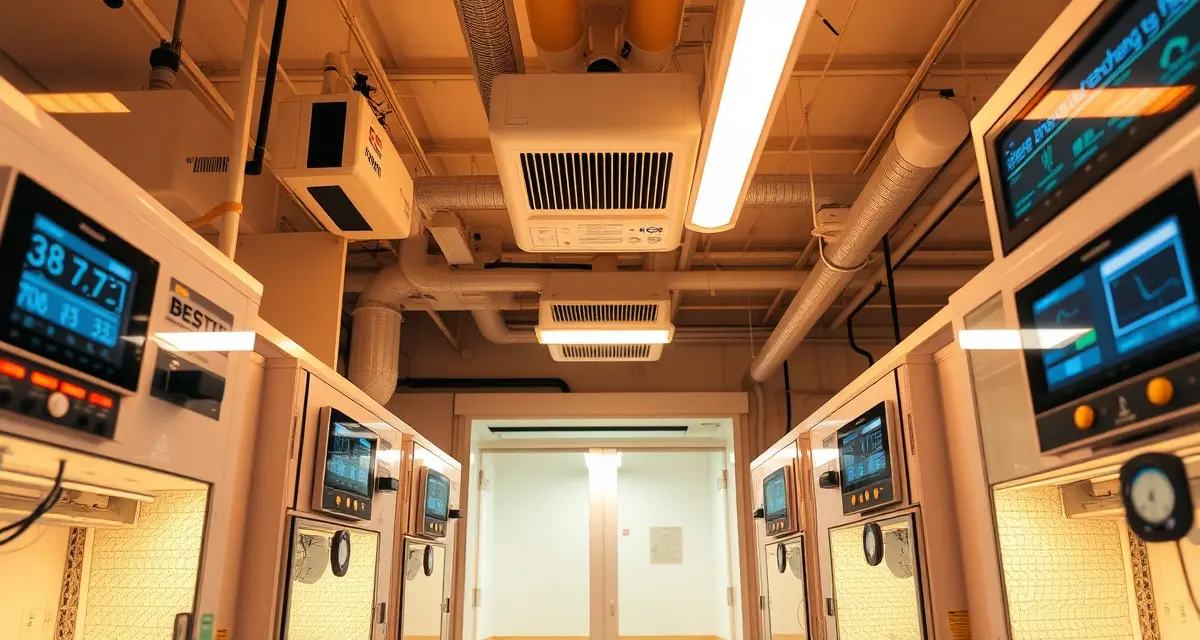
Cricket Farm Environment Management: Temperature, Humidity, Ventilation, and Ammonia
The environment inside your production rooms is as important as what you're feeding your crickets. Get temperature and humidity consistently right and you'll hit the 6-8 week grow-out timeline reliably. Let them slip and you'll see slower growth, higher mortality, and increased disease pressure. Monitoring and logging environmental data is not optional on a serious operation.
Temperature
Crickets are ectotherms. Their metabolic rate, feed consumption, growth rate, and reproductive output all track directly with ambient temperature. The sweet spot for Acheta domesticus production is 86-90F (30-32C). Below 80F growth slows noticeably. Below 70F crickets become lethargic, stop eating consistently, and mortality climbs.
Above 95F you start seeing heat stress. In densely stocked bins, the heat generated by the crickets themselves can push the local temperature inside a bin several degrees above the room ambient. This is worth accounting for in your sensor placement. A sensor mounted on the wall three feet from any bins may read 88F while the interior of a packed bin runs hotter.
Place temperature sensors at bin height, not at ceiling height where heat stratifies. If you have multiple production rooms or zones at different stages, each zone should have its own monitoring point. Pinhead bins especially benefit from tighter temperature control since young crickets are more vulnerable to cold snaps.
Heating approaches vary by facility size. Small operations often use radiant heat panels or ceramic heat emitters. Larger facilities use forced air HVAC with careful zoning. Whatever your system, know the recovery time after a door is opened or an HVAC failure. A warm night can hide a malfunction until the morning walkthrough shows you 10,000 dead pinheads.
Humidity
Target relative humidity between 40% and 70%. Crickets need moisture for hydration and molting, but excess humidity creates conditions for mold, bacterial growth, and respiratory stress. The lower end of that range, around 40-50% RH, tends to be more forgiving in practice because it's easier to add moisture than to remove it.
During the pinhead stage, humidity is more critical because pinheads desiccate quickly and can't access standing water without drowning. Many farms run slightly higher humidity in pinhead rooms, around 55-65%, and compensate with better airflow to keep mold in check.
Monitor humidity with calibrated sensors and verify with a secondary instrument periodically. Cheap sensors drift over time and an uncalibrated sensor giving you false confidence is worse than no sensor. Replace or recalibrate sensors at least once per production season.
Watering practices significantly affect local humidity around bins. Wet substrate from spilled water or overflowing gel packs creates microclimates with elevated humidity and promotes bacterial and fungal growth. Keep waterers secure and check them during every daily walkthrough.
Ventilation
Ventilation does several things simultaneously: it removes heat generated by the crickets, exhausts carbon dioxide and ammonia, brings in fresh oxygen, and helps regulate humidity. Inadequate ventilation is behind many of the secondary problems that farms attribute to disease or density.
Air should move through the production space without creating direct drafts across individual bins. Crickets, especially young instars, are sensitive to direct airflow and will cluster away from drafts. The goal is bulk air exchange for the room, not targeted airflow at bins.
For room ventilation, a common benchmark is 6-10 air changes per hour in an active production room. Adjust based on stocking density, life stage (adults produce more CO2 and ammonia than juveniles), and ambient conditions. Summer production in a hot climate requires more ventilation than winter production, which then requires more heating to compensate.
Passive ventilation through screened openings can work at small scale but becomes inadequate quickly as stocking density increases. Powered exhaust fans with controlled inlet vents give you the ability to dial in air exchange rate independently of outdoor conditions.
Ammonia
Ammonia is the environmental metric that most farms undermonitor. It builds up from cricket waste, dead crickets, and decomposing feed, and it's acutely toxic to crickets at levels that aren't yet detectable by smell to most people. At 25 ppm, you're already seeing respiratory irritation and immune suppression. At 50 ppm and above, you'll see direct mortality.
The safe threshold for continuous cricket exposure is generally cited at under 10 ppm. A basic ammonia detector or sensor in each production room is a worthwhile investment. Handheld electrochemical sensors can be found for under $100 and are accurate enough for monitoring purposes.
Ammonia sources on a cricket farm: accumulated frass (waste) in bin bottoms, uneaten wet feed left in bins, dead crickets not removed during daily checks. Managing all three through regular bin maintenance is more effective than trying to ventilate your way out of an ammonia problem. See cricket farm management for the daily and weekly cleaning tasks that keep ammonia under control.
Logging and Trend Detection
Manual spot checks are better than nothing, but automated logging gives you pattern data you can't get from twice-daily readings. CricketOps integrates with environmental sensor data so you can correlate temperature and humidity readings with batch performance outcomes. When a batch underperforms, having the environmental log for that batch's grow-out period lets you check whether a condition event contributed.
At minimum, log temperature and humidity twice daily, morning and evening. If you have ammonia sensors, log those at the same time. Flag any readings outside your acceptable range and note what corrective action you took. Over time this builds a picture of your facility's baseline and helps you detect equipment drift before it causes a production problem.