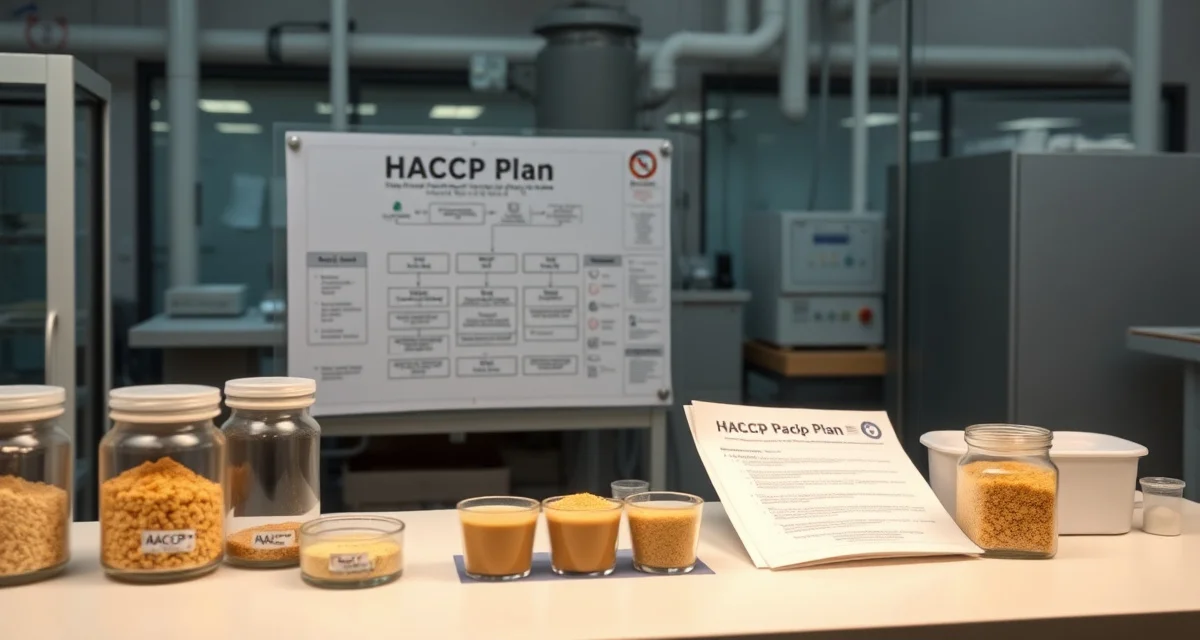
How to Build a HACCP Plan for Cricket Flour Production
FDA requires HACCP documentation for all facilities producing food-grade cricket flour operating under FSMA Preventive Controls. Even if you're technically below the revenue threshold that triggers mandatory compliance, every serious retail buyer will ask for your HACCP plan before placing an order.
This guide walks you through building one from scratch, with cricket flour-specific hazard examples and pre-filled CCP structure.
TL;DR
- Example: "If the freezer temperature log shows a temperature above -10°C (-14°F) at any point during the 24-hour freeze period, the batch is placed on hold
- The freeze period is extended until a continuous 24-hour window at -20°C or below is achieved and documented
- Under FSMA, records must be maintained for a minimum of 2 years and made available to FDA within 24 hours of a request
- For a standard cricket flour operation, the primary CCPs are the freeze kill step (controlled at -20°C for 24+ hours) and the drying step (controlled by achieving ≥165°F internal temperature and ≤5% final moisture)
- Records must be retained for a minimum of 2 years and be available to FDA within 24 hours upon request
- Process flow for cricket flour
- Biological hazards in cricket flour
3.
- Critical Control Points (CCPs), where hazards can be controlled or eliminated
4.
- No allergen-specific manufacturing controls beyond allergen labeling."
Process flow for cricket flour:
1.
- Receive live crickets from grow-out (internal or external)
2.
- Optional: blanch in boiling water (2–3 min)
6.
- Dry (convection oven or dryer, 185°F, 4–6 hours)
7.
- Label (allergen declaration, lot number, net weight)
12.
What HACCP Is (and Isn't)
HACCP. Hazard Analysis and Critical Control Points, is a systematic approach to identifying food safety hazards and controlling them at specific points in your production process.
It's not a pass/fail inspection checklist. It's a documented system that shows you've thought through the risks in your specific process and have specific controls in place for each one.
A HACCP plan consists of:
- A scope and process description
- A hazard analysis (what could go wrong and where)
- Critical Control Points (CCPs), where hazards can be controlled or eliminated
- Critical limits for each CCP
- Monitoring procedures
- Corrective actions
- Verification activities
- Record-keeping
Step 1: Define Your Product and Process Scope
Start with a clear description of what you produce and how.
Product description example:
"Whole-body cricket flour produced from Acheta domesticus, freeze-killed, oven-dried, and hammer-milled. Intended for human consumption as a food ingredient. Packaged in sealed mylar bags. No allergen-specific manufacturing controls beyond allergen labeling."
Process flow for cricket flour:
- Receive live crickets from grow-out (internal or external)
- Pre-harvest fast (24 hours)
- Harvest and sort
- Freeze kill (-20°C, 24+ hours)
- Optional: blanch in boiling water (2–3 min)
- Dry (convection oven or dryer, 185°F, 4–6 hours)
- Mill (hammer mill)
- Sift
- Moisture test
- Package in moisture-barrier bags
- Label (allergen declaration, lot number, net weight)
- Store and ship
Step 2: Conduct Hazard Analysis
For each step in your process, identify potential biological, chemical, and physical hazards.
Biological hazards in cricket flour:
- Salmonella, E. coli, potential in live crickets; controlled by kill step (freezing/heat)
- Acheta domesticus densovirus, controlled by kill step; not a human health hazard but a quality/source concern
- Mold, controlled by moisture content in finished product
- Spoilage organisms, controlled by drying and packaging
Chemical hazards:
- Veterinary drugs or pesticides from feed (if sourcing feed externally), controlled by feed sourcing and documentation
- Cleaning chemical residue, controlled by rinse verification
- Allergens, controlled by allergen labeling
Physical hazards:
- Metal fragments from milling equipment, controlled by visual inspection or metal detection
- Foreign material (plastic, substrate fragments), controlled by sifting
Not every hazard requires a CCP. A CCP is only needed when the hazard is significant and can be controlled at that specific step. Most biological and physical hazards in cricket flour are controlled at the kill step (freezing) and the drying step.
Step 3: Identify Critical Control Points
For a standard small-to-medium cricket flour operation, the CCPs are typically:
CCP 1. Freeze kill step
- Hazard controlled: Pathogenic bacteria (Salmonella, E. coli), insect pathogens
- Critical limit: -20°C (-4°F) minimum, held for minimum 24 hours
- Monitoring: Freezer temperature log (automated sensor) + time log per batch
- Corrective action: If freezer temperature not achieved, extend freeze time and verify temperature before proceeding
- Verification: Monthly calibration of freezer thermometer; periodic testing of final product
CCP 2. Drying step
- Hazard controlled: Pathogenic bacteria survival, mold from excess moisture
- Critical limit: Internal product temperature reaches minimum 165°F AND final moisture content ≤5%
- Monitoring: Temperature probe records per batch + moisture meter reading per finished lot
- Corrective action: If moisture above 5%, return to dryer for additional drying; if temperature not achieved, extend drying time
- Verification: Calibrate moisture meter quarterly; verify oven temperatures monthly with independent thermometer
CCP 3. Metal detection (if applicable)
- Hazard controlled: Metal fragments from milling
- Critical limit: No metal fragments ≥2mm
- Monitoring: Pass every production lot through metal detector before packaging
- Corrective action: Hold and inspect any lot that triggers detector; reject or rework if source of contamination not isolated
- Verification: Test metal detector with test piece before each production run
Step 4: Build Your Monitoring Records
For each CCP, you need a paper trail showing that monitoring happened and what the results were.
Template: Freeze Kill Log
| Batch # | Date In | Freezer Temp (°F) | Time In | Time Out | Hours Frozen | Verified By | Action Taken |
|---|---|---|---|---|---|---|---|
Template: Drying Step Log
| Batch # | Date | Oven Temp (°F) | Start Time | End Time | Final Moisture % | Verified By | Action Taken |
|---|---|---|---|---|---|---|---|
These records must be completed in real time, not reconstructed from memory after the fact. FDA expects to see records that look like they were made during production.
Step 5: Write Your Corrective Action Procedures
For each CCP, document what you do when the critical limit isn't met. This doesn't have to be elaborate. It does have to exist.
Example: "If the freezer temperature log shows a temperature above -10°C (-14°F) at any point during the 24-hour freeze period, the batch is placed on hold. The freeze period is extended until a continuous 24-hour window at -20°C or below is achieved and documented. The batch is labeled 'HOLD' until released by the production supervisor."
Step 6: Implement Verification Activities
HACCP verification confirms that your HACCP system is working as designed.
Ongoing verification:
- Calibrate monitoring equipment (thermometers, moisture meters) on a scheduled basis
- Review monitoring records regularly (weekly) to confirm all critical limits are being met
- Conduct periodic testing of finished product for target pathogens
Periodic verification:
- Annual review of the full HACCP plan to confirm it reflects current processes
- Document any process changes and update the HACCP plan accordingly
Record-Keeping Requirements
Under FSMA, records must be maintained for a minimum of 2 years and made available to FDA within 24 hours of a request. Records to retain:
- Written HACCP plan (current version + all prior versions)
- Monitoring records for each CCP (all production batches)
- Corrective action records (whenever a deviation occurs)
- Verification records (equipment calibration logs, review documentation)
CricketOps generates production batch records that link grow-out data (bin hatch dates, FCR, mortality, environmental logs) to processing lots. These upstream records supplement your HACCP documentation and are valuable during an FDA audit or buyer due diligence review.
FAQ
What are the critical control points for cricket flour production?
For a standard cricket flour operation, the primary CCPs are the freeze kill step (controlled at -20°C for 24+ hours) and the drying step (controlled by achieving ≥165°F internal temperature and ≤5% final moisture). Metal detection may be a third CCP for commercial-scale operations using industrial milling equipment.
Does a small cricket flour producer need a HACCP plan?
FDA mandates a written food safety plan including hazard analysis and preventive controls for operations above the small business threshold under FSMA. Below that threshold, a HACCP plan isn't legally required at the federal level, but retail buyers (especially grocery chains and food manufacturers) will require it before placing orders. The practical answer is: if you want commercial accounts, you need a HACCP plan.
What records does FDA require for cricket flour facilities?
Under FSMA, registered food facilities must maintain records of their food safety plan, hazard analysis, monitoring records for preventive controls, corrective action records, and verification activities. Records must be retained for a minimum of 2 years and be available to FDA within 24 hours upon request.
Do federal regulations differ from state regulations for cricket farming?
Yes. Federal oversight of insect production for human food falls primarily under FDA authority, including Food Safety Modernization Act (FSMA) requirements. State regulations vary widely -- some states have specific insect production permits, others treat cricket farming under broader agricultural licensing frameworks. Operations selling across state lines must comply with both their state of production and the destination state's requirements. Check with your state department of agriculture and an attorney familiar with food law for current requirements.
What documentation should I keep to demonstrate regulatory compliance?
Maintain records of feed ingredient sourcing with supplier documentation, batch production records, environmental monitoring logs (temperature, humidity), mortality records, sanitation logs, and any third-party audit results. Buyers from food manufacturing companies increasingly require these records as part of their supplier qualification process, so keeping them organized from the start saves significant effort later.
How often should a cricket farm conduct internal food safety audits?
A minimum of one formal internal audit per quarter is a reasonable starting point for a commercial operation. The audit should cover environmental monitoring records, sanitation log completeness, pest control documentation, and critical control point records for your HACCP plan. Operations seeking third-party certification (SQF, BRC, or similar) should align internal audit frequency and format with the standard's requirements.
Sources
- Food and Agriculture Organization of the United Nations (FAO) -- Edible Insects: Future Prospects for Food and Feed Security
- North American Coalition for Insect Agriculture (NACIA)
- U.S. Food and Drug Administration (FDA) -- Food Safety Modernization Act (FSMA)
- USDA National Organic Program
- Global Food Safety Initiative (GFSI)
Get Started with CricketOps
Maintaining organized compliance records is much easier when you build the system from day one rather than reconstructing it before an audit. CricketOps keeps your batch records, environmental monitoring logs, and traceability data in one place so that responding to a buyer documentation request or a regulatory inquiry does not require hunting through spreadsheets and paper files.